
Double Board Certified · Rhinology
Chronic Sinusitis — when sinus symptoms become the rule, not the exception.
Chronic sinusitis is defined by symptoms persisting beyond twelve weeks despite medical therapy. It is a real medical diagnosis with established imaging and endoscopic criteria — and one whose treatment plan is highly individual.
ABFPRS
Facial Plastic & Reconstructive Surgery
ABOto
Otolaryngology — Head & Neck Surgery
AAFPRS
Fellowship Director
In Consultation
"Chronic sinusitis is not just a bad cold that lingers — it is a distinct clinical condition that deserves a careful workup."
A Note from Dr. Mourad
"Chronic sinusitis is defined by symptoms persisting beyond twelve weeks despite medical therapy. It is a real medical diagnosis with established imaging and endoscopic criteria — and one whose treatment plan is highly individual."
— Dr. Moustafa Mourad, MD
Overview
What is chronic sinusitis?
Chronic sinusitis (chronic rhinosinusitis) is inflammation of the sinus and nasal lining that persists for twelve weeks or longer, despite ordinary treatment. It is classified by whether nasal polyps are present (CRSwNP) or absent (CRSsNP), and is an inflammatory disease — not a simple infection.
Patients typically experience two or more of: nasal obstruction, thick nasal or post-nasal discharge, facial pressure or pain, and reduced sense of smell. Diagnosis is confirmed with nasal endoscopy showing inflammation, edema, or polyps, and/or a CT scan showing mucosal disease in the sinuses.
Management is layered and long-term. First-line therapy is medical: high-volume saline irrigation, intranasal steroids, treatment of allergic and asthmatic comorbidities, and — for select polyp patients — biologic therapy. Endoscopic sinus surgery is considered when optimised medical therapy has not controlled the disease.
An Established Academic Authority
Double board certification. Fellowship director. Published author. A surgeon's surgeon.
ABFPRS
Board Certified
American Board of Facial Plastic & Reconstructive Surgery
ABOto
Board Certified
American Board of Otolaryngology — Head & Neck Surgery
AAFPRS
Fellowship Director
American Academy of Facial Plastic and Reconstructive Surgery
Textbook
Published Author
Contributions to the academic literature of facial plastic surgery
Dual board certification in both Facial Plastic & Reconstructive Surgery and Otolaryngology — a combination held by a small number of physicians nationally.
02 · Symptoms
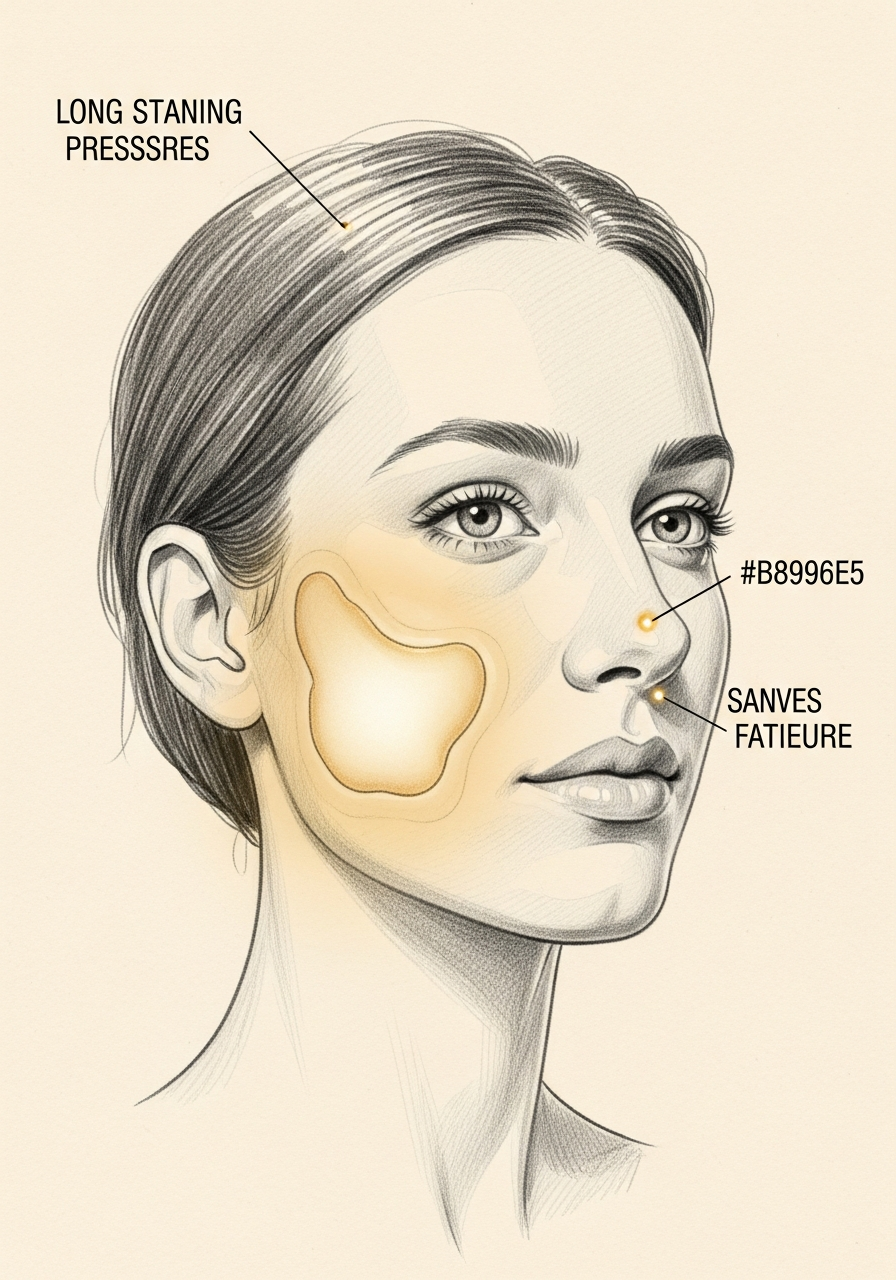
How this condition typically presents.
Three patterns are most common. Patients often recognise themselves in one or more of these.
I
Persistent Pressure
Facial pressure, pain, or fullness over the cheeks or forehead that persists for weeks or months.
II
Nasal Drainage & Congestion
Thick discoloured drainage, post-nasal drip, congestion, and a chronic reduction in the sense of smell.
III
Fatigue & Quality of Life
Chronic fatigue, disturbed sleep, and a meaningful impact on day-to-day energy and work.
03 · Diagnosis
How the diagnosis is made.
Diagnosis begins with a careful history — when symptoms started, what makes them better or worse, and what has been tried.
Examination includes anterior rhinoscopy and, where appropriate, nasal endoscopy with a small flexible scope to visualise the deeper nasal cavity and sinus outflow tracts.
Imaging — typically a focused sinus CT — is obtained when the examination and history warrant it, and is reviewed in detail at the visit.
04 · Treatment Options
Treatments matched to the diagnosis.
Treatment is individual. The right answer ranges from continued medical therapy to a focused minimally-invasive procedure to definitive structural surgery.
01 · Why Dr. Mourad
Diagnosis first, treatment second.
Dr. Moustafa Mourad is double board-certified in Facial Plastic & Reconstructive Surgery and in Otolaryngology — a combination uniquely suited to evaluating both the structural and the medical components of nasal and sinus disease.
Every evaluation begins with a careful history, examination, and — where indicated — endoscopy and imaging. The diagnosis is made before any treatment plan is discussed.
Medical therapy is exhausted before surgery is recommended. When surgery is the right answer, the operation is the one your anatomy and disease actually require.
When to Seek Care
When to seek care promptly.
Severe facial pain, high fever, or visual changes — these warrant urgent evaluation.
Significant facial swelling or redness around the eye — evaluate immediately.
New or worsening obstruction after a recent injury — evaluate within days.
Persistent symptoms beyond a few weeks despite over-the-counter measures — a careful evaluation is reasonable.
Outlook
What to expect.
When the diagnosis is correct and the right treatment is applied, the outlook is generally good. Many patients describe meaningful improvement in sleep, exercise tolerance, and day-to-day energy.
When symptoms persist despite treatment, the workup is re-opened. Persistent symptoms with no answer almost always mean the diagnosis is incomplete.

Living Well
Day-to-day measures that help.
Daily saline irrigation, control of indoor allergens, and good sleep hygiene meaningfully reduce day-to-day symptoms for most patients.
Medical therapy, when prescribed, works best when used consistently rather than as needed — this is one of the most common reasons treatment seems to fail.
Frequently Asked
Patient questions, honestly answered.
Diagnosis requires a compatible history of sinonasal symptoms for at least 12 weeks plus objective findings on nasal endoscopy or sinus CT. In clinic Dr. Mourad performs flexible or rigid nasal endoscopy to document polyps, mucopus, edema, or ostial obstruction. A dedicated sinus CT is reviewed with the patient to map involved sinuses and anatomical contributors. Diagnosis and the subsequent plan integrate symptom pattern, endoscopic findings, and imaging together.
The Most Important Step
Get an expert evaluation.
A careful evaluation by a double board-certified physician is the right first step. The conversation is unhurried, the diagnosis is honest, and treatment is matched to what you actually have.