MouradNYC Education Center
Septoplasty & the Deviated Septum
A ten-page physician-authored guide to septal anatomy, the nature of nasal obstruction, surgical technique, recovery, and what septoplasty can and cannot achieve. Written for the patient who wishes to understand the procedure before deciding upon it.
Key takeaways
- This physician-authored guide covers septal anatomy, nasal obstruction, surgical technique, recovery, and realistic limits.
- It explains how the septum — the wall between the nostrils — supports airflow and symmetry.
- A deviated septum can narrow the airway, and the guide describes how obstruction is assessed.
- Septoplasty technique is explained, including how the septum is accessed and reshaped.
- Turbinate reduction and other airflow procedures are often paired with septoplasty, as the guide notes.
Cover — Septoplasty / Deviated Septum
Septal anatomy, obstruction, surgery, recovery, risks, and expectations.
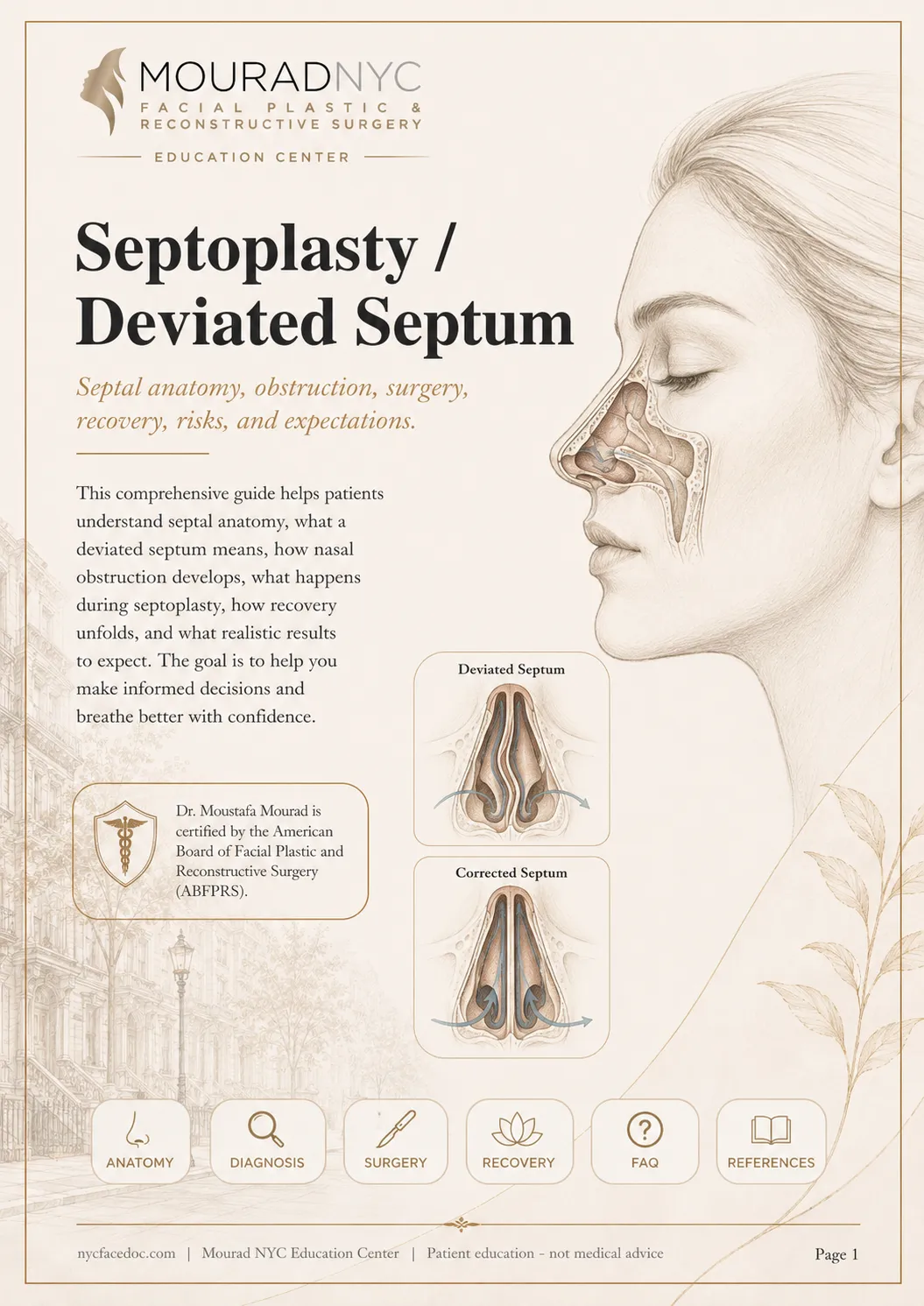
This comprehensive guide helps patients understand septal anatomy, what a deviated septum means, how nasal obstruction develops, what happens during septoplasty, how recovery unfolds, and what realistic results to expect. The goal is to help you make informed decisions and breathe better with confidence.
Dr. Moustafa Mourad is double board-certified by the American Board of Facial Plastic and Reconstructive Surgery (ABFPRS) and the American Board of Otolaryngology–Head and Neck Surgery.
How to Use This Guide
Septal anatomy, obstruction, surgery planning, recovery, and expectations.
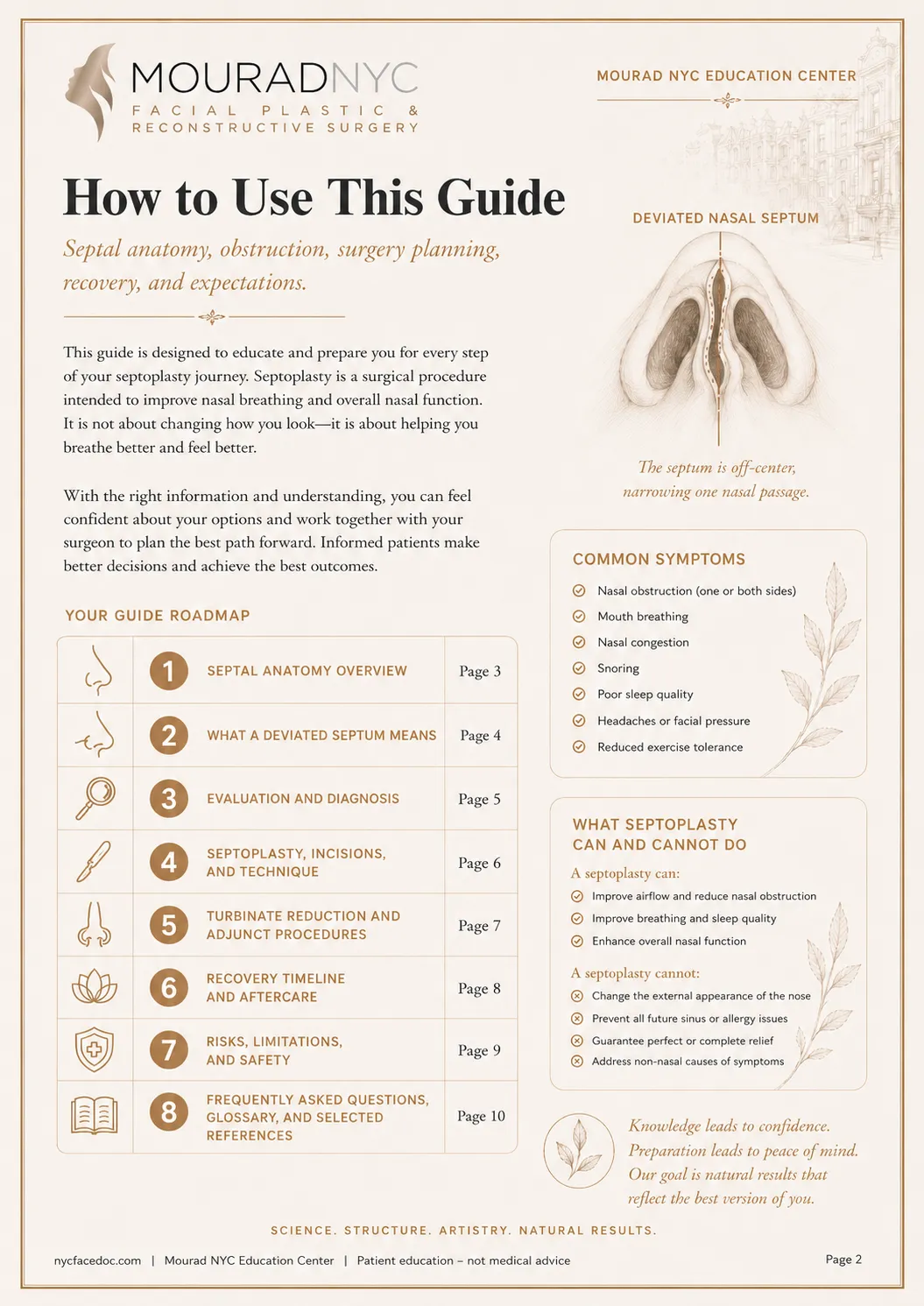
This guide is designed to educate and prepare you for every step of your septoplasty journey. Septoplasty is a surgical procedure intended to improve nasal breathing and overall nasal function. It is not about changing how you look — it is about helping you breathe better and feel better. With the right information and understanding, you can feel confident about your options and work together with your surgeon to plan the best path forward.
Common symptoms of a deviated septum: nasal obstruction (one or both sides), mouth breathing, nasal congestion, snoring, poor sleep quality, headaches or facial pressure, and reduced exercise tolerance.
A septoplasty can: improve airflow and reduce nasal obstruction; improve breathing and sleep quality; enhance overall nasal function.
A septoplasty cannot: change the external appearance of the nose; prevent all future sinus or allergy issues; guarantee perfect or complete relief; address non-nasal causes of symptoms.
Septal Anatomy Overview
How the septum supports airflow, symmetry, and nasal function.
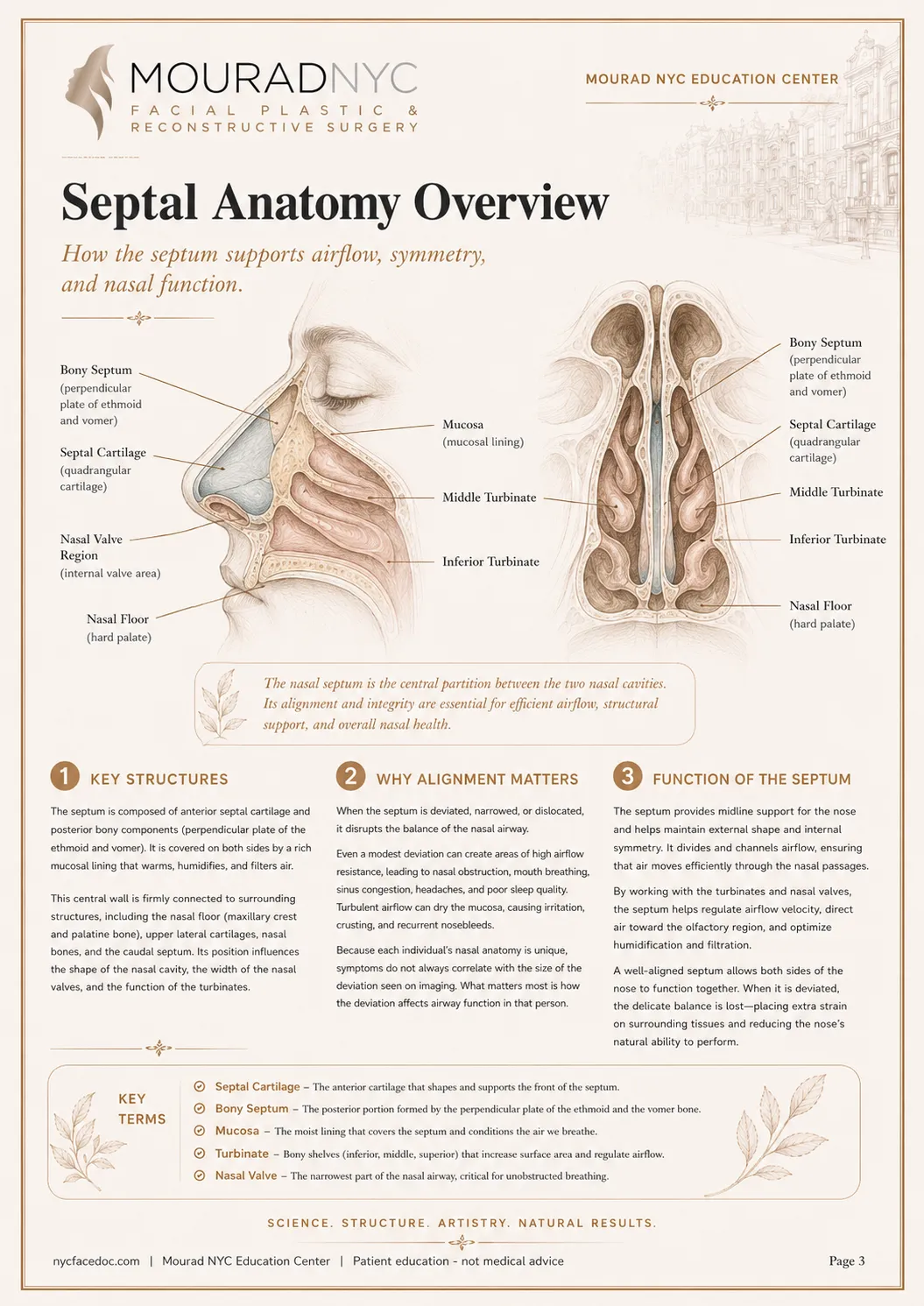
The nasal septum is the central partition between the two nasal cavities. Its alignment and integrity are essential for efficient airflow, structural support, and overall nasal health.
Key structures. The septum is composed of anterior septal cartilage and posterior bony components (the perpendicular plate of the ethmoid and the vomer). It is covered on both sides by a rich mucosal lining that warms, humidifies, and filters air. This central wall is firmly connected to surrounding structures, including the nasal floor (maxillary crest and palatine bone), the upper lateral cartilages, the nasal bones, and the caudal septum. Its position influences the shape of the nasal cavity, the width of the nasal valves, and the function of the turbinates.
Why alignment matters. When the septum is deviated, narrowed, or dislocated, it disrupts the balance of the nasal airway. Even a modest deviation can create areas of high airflow resistance, leading to nasal obstruction, mouth breathing, sinus congestion, headaches, and poor sleep quality. Turbulent airflow can dry the mucosa, causing irritation, crusting, and recurrent nosebleeds. Because each individual's nasal anatomy is unique, symptoms do not always correlate with the size of the deviation seen on imaging. What matters most is how the deviation affects airway function in that person.
Function of the septum. The septum provides midline support for the nose and helps maintain external shape and internal symmetry. It divides and channels airflow so air moves efficiently through the nasal passages. Working with the turbinates and nasal valves, it helps regulate airflow velocity, direct air toward the olfactory region, and optimize humidification and filtration. When it is deviated, that balance is lost — placing extra strain on surrounding tissues.
Key terms. Septal cartilage — the anterior cartilage that shapes and supports the front of the septum. Bony septum — the posterior portion formed by the perpendicular plate of the ethmoid and the vomer. Mucosa — the moist lining that covers the septum and conditions the air we breathe. Turbinate — bony shelves (inferior, middle, superior) that increase surface area and regulate airflow. Nasal valve — the narrowest part of the nasal airway, critical for unobstructed breathing.
What a Deviated Septum Means
How deviation narrows the airway and contributes to symptoms.
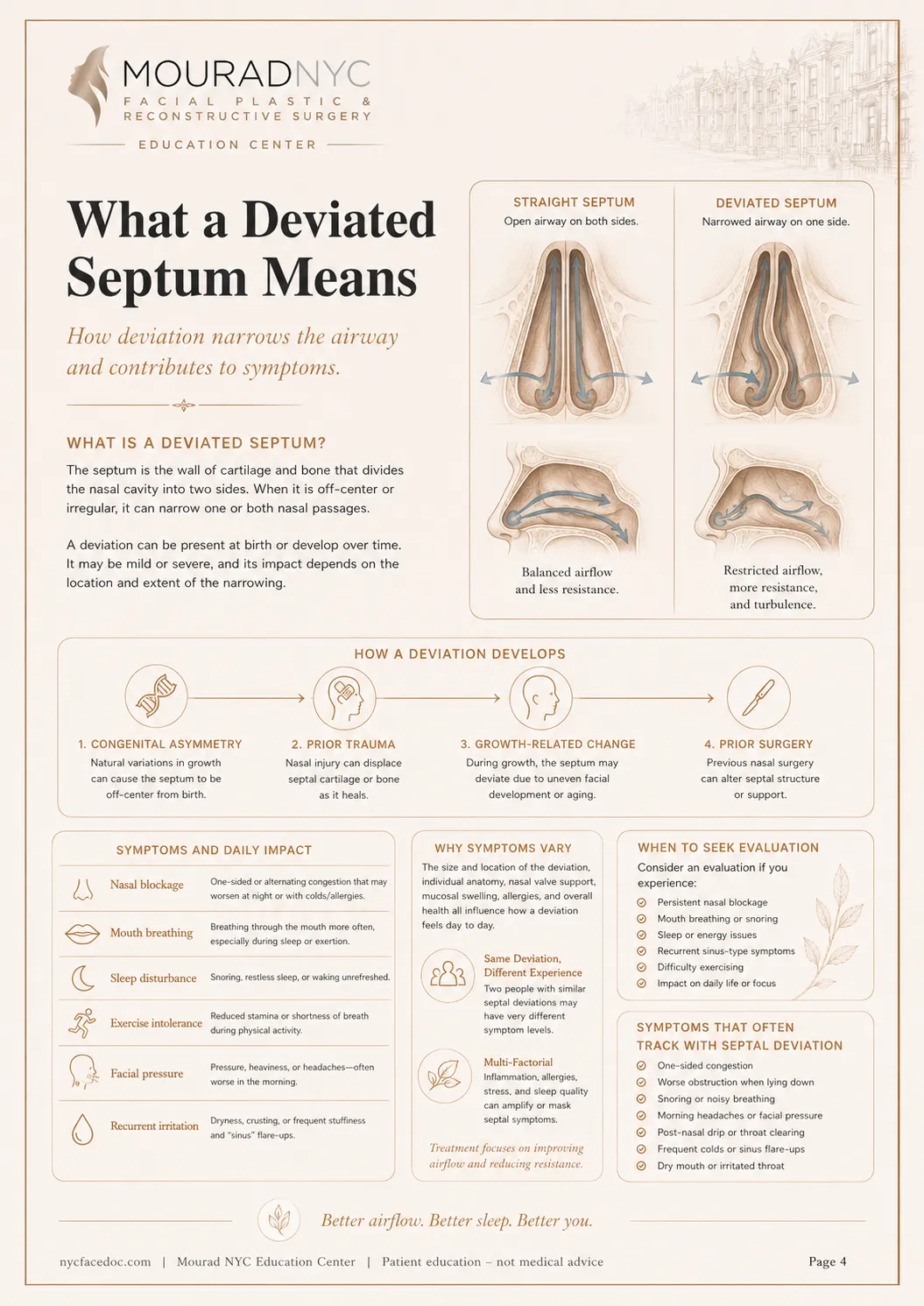
The septum is the wall of cartilage and bone that divides the nasal cavity into two sides. When it is off-center or irregular, it can narrow one or both nasal passages. A deviation can be present at birth or develop over time. It may be mild or severe, and its impact depends on the location and extent of the narrowing.
How a deviation develops: congenital asymmetry (natural variations in growth); prior trauma (injury can displace septal cartilage or bone as it heals); growth-related change (uneven facial development or aging); and prior surgery (previous nasal surgery can alter septal structure or support).
Symptoms and daily impact: nasal blockage — one-sided or alternating congestion that may worsen at night or with colds and allergies; mouth breathing, especially during sleep or exertion; sleep disturbance — snoring, restless sleep, or waking unrefreshed; exercise intolerance — reduced stamina or shortness of breath during activity; facial pressure, heaviness, or headaches, often worse in the morning; and recurrent irritation — dryness, crusting, frequent stuffiness, and "sinus" flare-ups.
Why symptoms vary. The size and location of the deviation, individual anatomy, nasal valve support, mucosal swelling, allergies, and overall health all influence how a deviation feels day to day. Two people with similar deviations may have very different symptom levels, and inflammation, allergies, stress, and sleep quality can amplify or mask septal symptoms.
When to seek evaluation: persistent nasal blockage, mouth breathing or snoring, sleep or energy issues, recurrent sinus-type symptoms, difficulty exercising, or an impact on daily life or focus.
Evaluation and Diagnosis
How septal obstruction is assessed and treatment is planned.
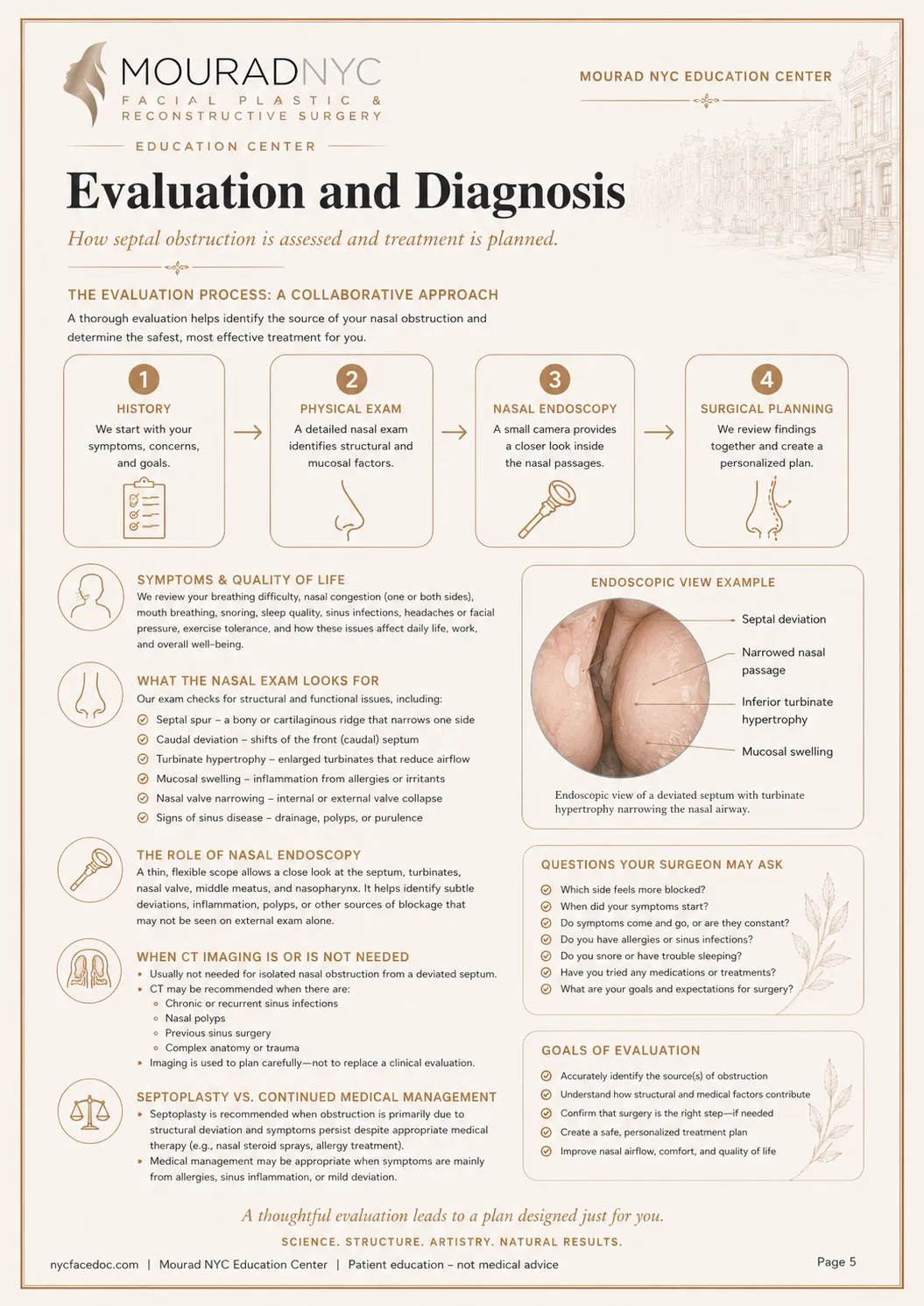
A thorough evaluation identifies the source of your nasal obstruction and the safest, most effective treatment. It follows four steps: history (your symptoms, concerns, and goals), physical exam (structural and mucosal factors), nasal endoscopy (a small camera gives a closer look inside the nasal passages), and planning (reviewing findings together and creating a personalized plan).
What the nasal exam looks for: a septal spur (a bony or cartilaginous ridge that narrows one side); caudal deviation (a shift of the front of the septum); turbinate hypertrophy; mucosal swelling from allergies or irritants; nasal valve narrowing; and signs of sinus disease such as drainage, polyps, or pus.
The role of nasal endoscopy. A thin, flexible scope allows a close look at the septum, turbinates, nasal valve, middle meatus, and nasopharynx, identifying deviations, inflammation, polyps, or other sources of blockage that may not be seen on external exam alone.
When CT imaging is or is not needed. CT is usually not needed for isolated nasal obstruction from a deviated septum. It may be recommended when there are chronic or recurrent sinus infections, nasal polyps, previous sinus surgery, or complex anatomy or trauma. Imaging is used to plan carefully — not to replace a clinical evaluation.
Septoplasty vs. continued medical management. Septoplasty is recommended when obstruction is primarily due to structural deviation and symptoms persist despite appropriate medical therapy, such as nasal steroid sprays and allergy treatment. Medical management may be appropriate when symptoms come mainly from allergies, sinus inflammation, or a mild deviation.
Septoplasty, Incisions, and Technique
How the septum is accessed, reshaped, and stabilized.
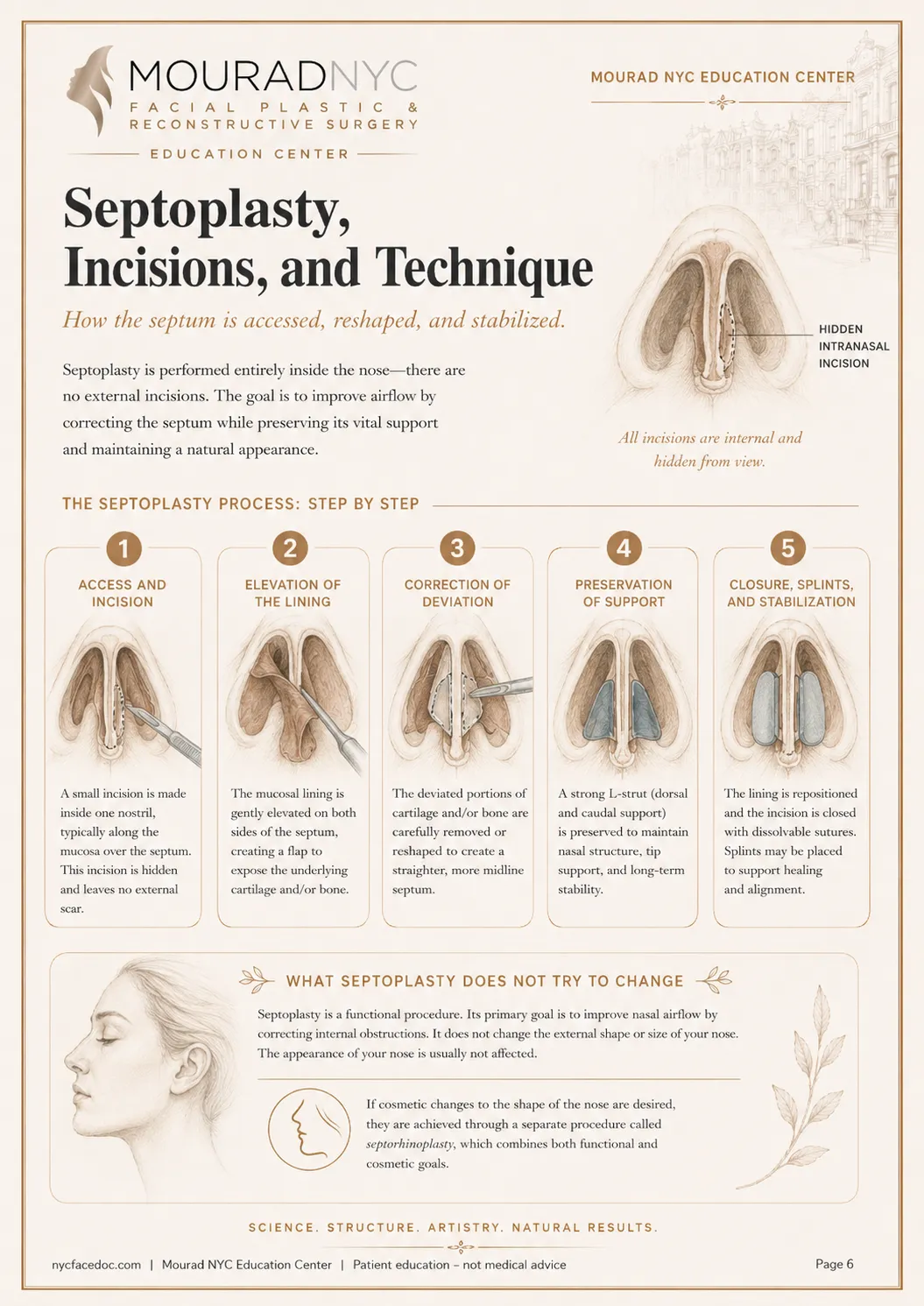
Septoplasty is performed entirely inside the nose — there are no external incisions. The goal is to improve airflow by correcting the septum while preserving its vital support and maintaining a natural appearance.
- Access and incision. A small incision is made inside one nostril, typically along the lining over the septum. It is hidden and leaves no external scar.
- Elevation of the lining. The mucosal lining is gently elevated on both sides of the septum, creating a flap that exposes the underlying cartilage and bone.
- Correction of the deviation. The deviated portions of cartilage and bone are carefully removed or reshaped to create a straighter, more midline septum.
- Preservation of support. A strong L-strut — the dorsal and caudal supports — is preserved to maintain nasal structure, tip support, and long-term stability.
- Closure, splints, and stabilization. The lining is repositioned and the incision closed with dissolvable sutures. Splints may be placed to support healing and alignment.
What septoplasty does not try to change. Septoplasty is a functional procedure. Its goal is to improve airflow by correcting internal obstruction; it does not change the external shape or size of the nose. If cosmetic changes are desired, they are achieved through septorhinoplasty, which combines functional and cosmetic goals.
Turbinate Reduction and Adjunct Procedures
Why septoplasty is often paired with other airflow procedures.
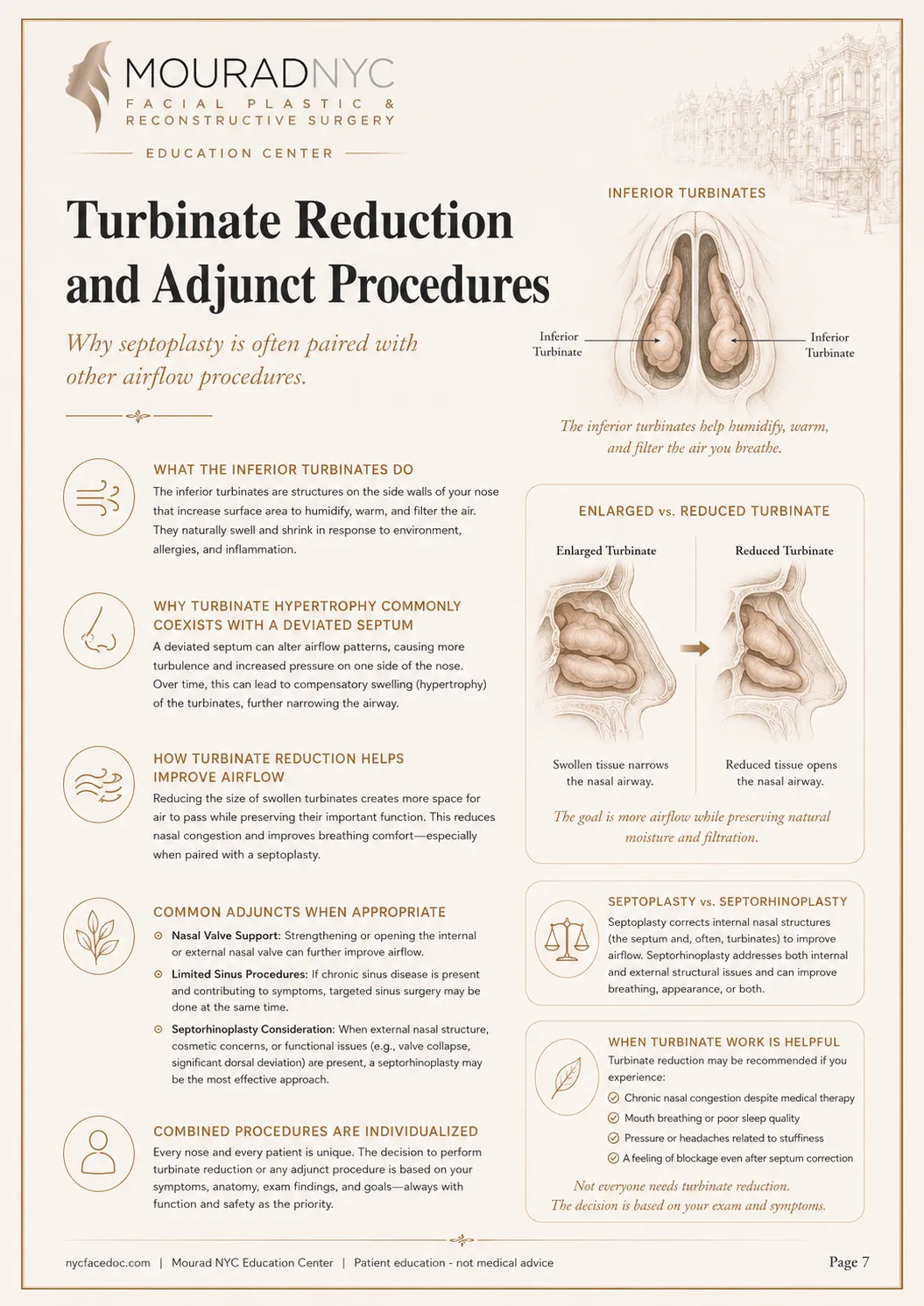
What the inferior turbinates do. The inferior turbinates are structures on the side walls of the nose that increase surface area to humidify, warm, and filter the air. They naturally swell and shrink in response to environment, allergies, and inflammation.
Why turbinate enlargement often coexists with a deviated septum. A deviated septum alters airflow, causing more turbulence and pressure on one side of the nose. Over time this can lead to compensatory swelling of the turbinates, further narrowing the airway.
How turbinate reduction helps. Reducing the size of swollen turbinates creates more space for air to pass while preserving their important function — especially when paired with septoplasty. The goal is more airflow while preserving natural moisture and filtration.
Common adjuncts when appropriate: nasal valve support to strengthen or open the internal or external valve; limited sinus procedures when chronic sinus disease contributes to symptoms; and septorhinoplasty when external nasal structure, cosmetic concerns, or functional issues such as valve collapse or significant dorsal deviation are present.
When turbinate work is helpful: chronic congestion despite medical therapy, mouth breathing or poor sleep, pressure or headaches related to stuffiness, or a feeling of blockage even after septal correction. Not everyone needs turbinate reduction; the decision is based on your exam and symptoms.
Recovery Timeline and Aftercare
What to expect from healing, breathing, and return to routine.
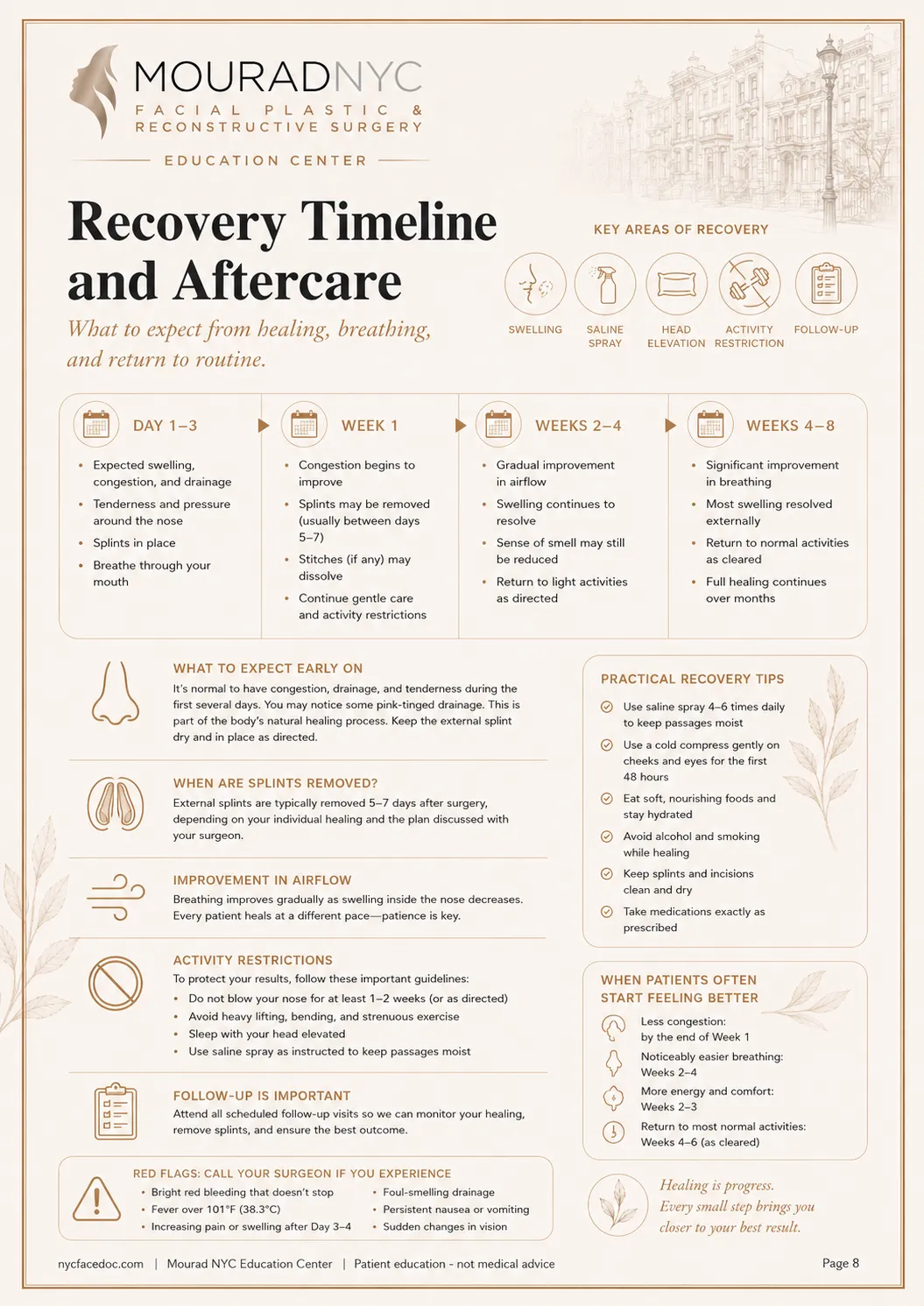
- Days 1–3: expected swelling, congestion, and drainage; tenderness and pressure around the nose; splints in place; breathing through your mouth.
- Week 1: congestion begins to improve; splints are usually removed between days 5 and 7; any stitches may dissolve; continue gentle care and activity restrictions.
- Weeks 2–4: gradual improvement in airflow; swelling continues to resolve; sense of smell may still be reduced; return to light activities as directed.
- Weeks 4–8: significant improvement in breathing; most swelling resolved; return to normal activities as cleared; full healing continues over months.
What to expect early on. Congestion, drainage, and tenderness during the first several days are normal, as is some pink-tinged drainage. External splints are typically removed five to seven days after surgery. Breathing improves gradually as swelling inside the nose decreases.
Activity restrictions: do not blow your nose for at least one to two weeks (or as directed); avoid heavy lifting, bending, and strenuous exercise; sleep with your head elevated; use saline spray as instructed.
Practical recovery tips: use saline spray four to six times daily to keep the passages moist; use a cold compress gently on the cheeks and eyes for the first 48 hours; eat soft, nourishing foods and stay hydrated; avoid alcohol and smoking; keep splints and incisions clean and dry; take medications exactly as prescribed. See the septoplasty recovery timeline for milestones.
When patients often start feeling better: less congestion by the end of week one; noticeably easier breathing in weeks two to four; more energy and comfort in weeks two to three; return to most normal activities in weeks four to six, as cleared.
Call your surgeon for: bright red bleeding that doesn't stop, fever over 101°F (38.3°C), increasing pain or swelling after day 3–4, foul-smelling drainage, persistent nausea or vomiting, or sudden changes in vision.
Risks, Limitations, and Safety
What surgery can achieve, and what patients should understand before proceeding.
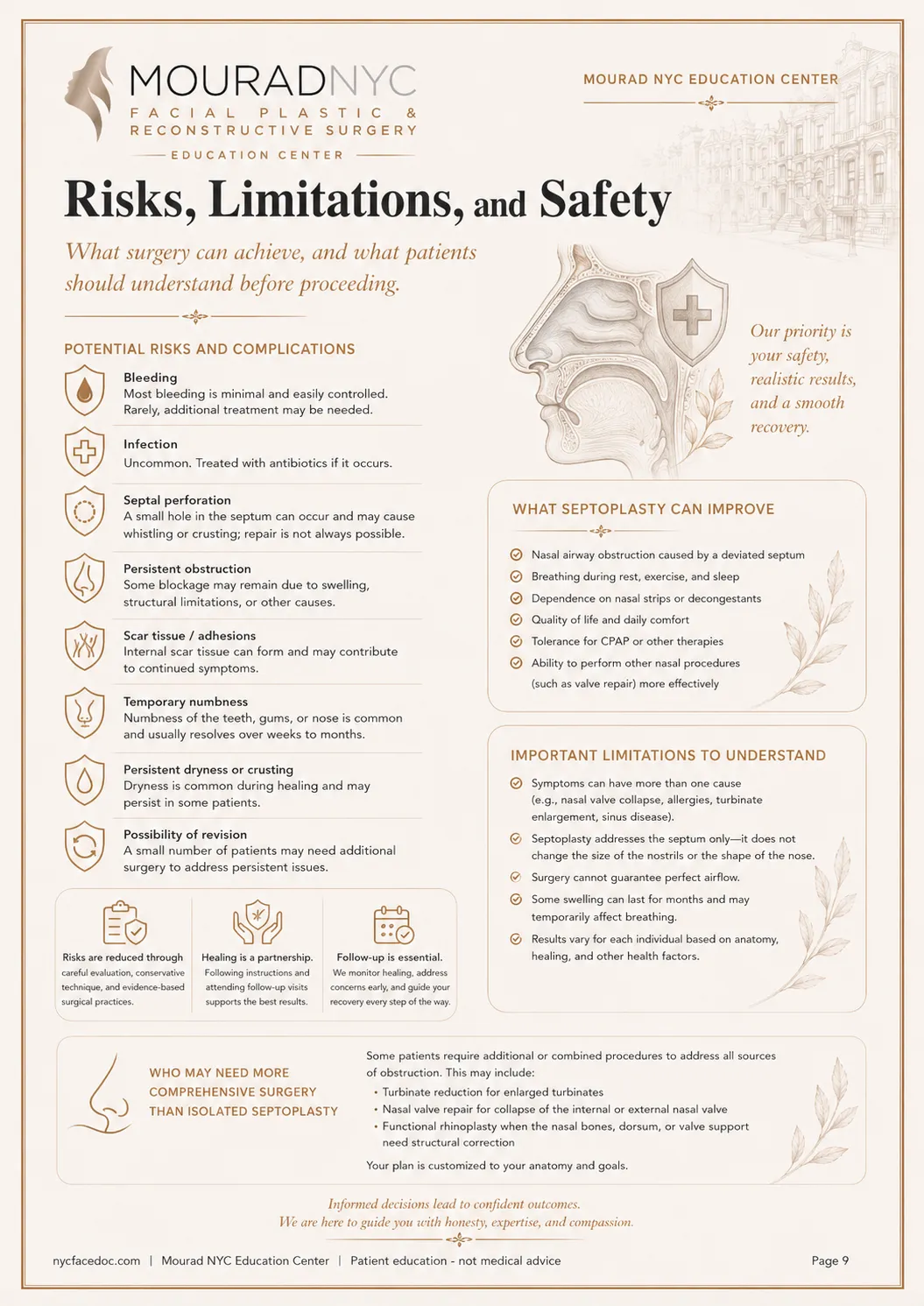
Potential risks and complications: bleeding (usually minimal; rarely needs additional treatment); infection (uncommon; treated with antibiotics); septal perforation (a small hole that may cause whistling or crusting; repair is not always possible); persistent obstruction from swelling, structural limits, or other causes; scar tissue or adhesions; temporary numbness of the teeth, gums, or nose, usually resolving over weeks to months; persistent dryness or crusting; and the possibility of revision surgery in a small number of patients.
What septoplasty can improve: nasal obstruction caused by a deviated septum; breathing at rest, during exercise, and during sleep; dependence on nasal strips or decongestants; quality of life and daily comfort; tolerance of CPAP or other therapies; and the effectiveness of other nasal procedures such as valve repair.
Important limitations: symptoms can have more than one cause (nasal valve collapse, allergies, turbinate enlargement, sinus disease); septoplasty addresses the septum only and does not change the size of the nostrils or the shape of the nose; surgery cannot guarantee perfect airflow; some swelling can last for months; and results vary with anatomy, healing, and other health factors.
Who may need more comprehensive surgery: some patients need combined procedures — turbinate reduction for enlarged turbinates, nasal valve repair for internal or external valve collapse, or functional rhinoplasty when the nasal bones, dorsum, or valve support need structural correction.
Frequently Asked Questions, Glossary, and References
Common answers and helpful terminology for patients considering septoplasty.
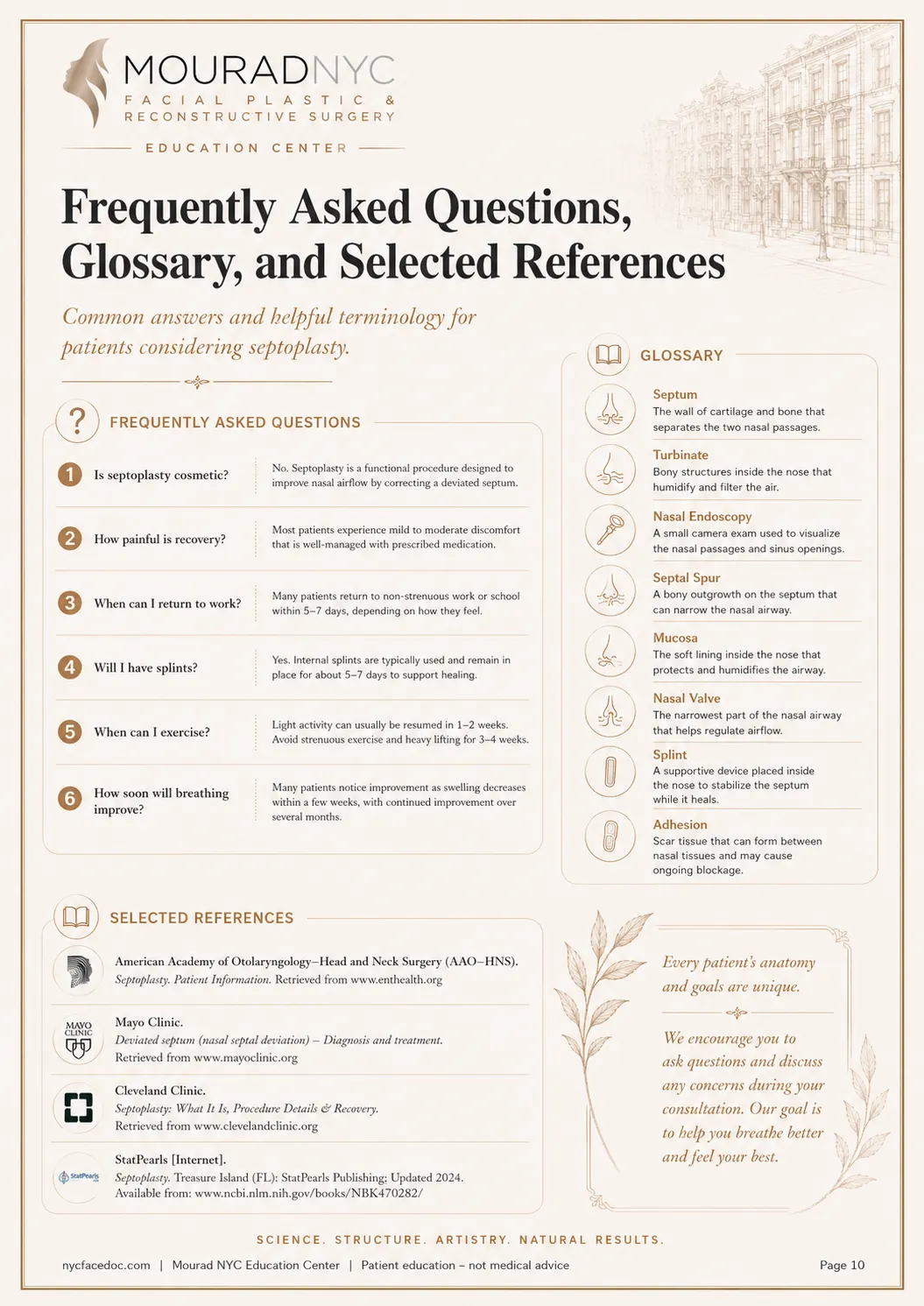
Is septoplasty cosmetic? No. It is a functional procedure designed to improve airflow by correcting a deviated septum.
How painful is recovery? Most patients experience mild to moderate discomfort that is well managed with prescribed medication.
When can I return to work? Many patients return to non-strenuous work or school within five to seven days, depending on how they feel.
Will I have splints? Internal splints are typically used and remain in place for about five to seven days to support healing.
When can I exercise? Light activity can usually resume in one to two weeks. Avoid strenuous exercise and heavy lifting for three to four weeks.
How soon will breathing improve? Many patients notice improvement as swelling decreases within a few weeks, with continued improvement over several months.
Glossary. Septum — the wall of cartilage and bone that separates the two nasal passages. Turbinate — structures inside the nose that humidify and filter the air. Nasal endoscopy — a small camera exam of the nasal passages and sinus openings. Septal spur — a bony outgrowth on the septum that can narrow the airway. Mucosa — the soft lining inside the nose. Nasal valve — the narrowest part of the nasal airway. Splint — a supportive device placed inside the nose to stabilize the septum while it heals. Adhesion — scar tissue between nasal tissues that may cause blockage.
Selected references. American Academy of Otolaryngology–Head and Neck Surgery, Septoplasty patient information (enthealth.org). Mayo Clinic, Deviated septum — diagnosis and treatment. Cleveland Clinic, Septoplasty: what it is, procedure details & recovery. StatPearls, Septoplasty (NCBI Bookshelf, NBK470282, updated 2024).
This guide is for patient education only and does not constitute medical advice. Outcomes vary by patient anatomy and circumstance. Medical content reviewed by Moustafa Mourad, MD, FACS.