
MouradNYC
Facial Plastic Surgery Procedures in NYC
Facial rejuvenation, refined.
Dr. Moustafa Mourad provides surgical evaluation and treatment for facial aging, eyelid and brow concerns, neck and jawline contour, cheek and chin balance, and selected revision problems at 923 Fifth Avenue in Manhattan. The starting point is not a procedure name. It is an examination of which layer has changed—skin, fat, muscle, retaining ligaments, or bone—and which change is actually responsible for the concern.
A Clinical Vocabulary
The Signs of Facial Aging
Facial aging does not occur in one layer or at one pace. A softened jawline may reflect tissue descent, neck laxity, chin projection, or several factors together. Tired-looking eyes may come from eyelid skin, brow descent, eyelid ptosis, volume change, or lower-lid support. These illustrations identify common patterns, but the consultation determines which anatomy is responsible and whether surgery, a limited procedure, non-surgical care, or no treatment is the appropriate next step.
Read the Facelift Guide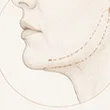
Jowling
Sagging along the jawline as cheek fat descends past the mandibular border.
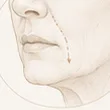
Nasolabial Folds
Deepening creases from nose to mouth as midface volume shifts downward.
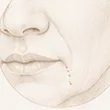
Marionette Lines
Vertical grooves from the corners of the mouth that reshape the lower face.
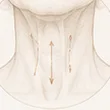
Platysmal Bands
Muscle laxity and thinning skin producing visible cords across the neck.
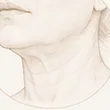
Submental Laxity
Loss of the cervico-mental angle as skin and platysma descend below the chin.
Concerns centered on the eyes, brow, cheeks, chin, jawline, or neck often require different operations; use the procedure descriptions below to begin with the page that most closely matches the anatomy rather than the most familiar procedure name. For planning context, read the facelift guide, non-surgical alternatives, or facelift timing journal.
Surgical procedures
Facial procedures
Structural, education-first facial surgery — from deep-plane facelift to eyelid and chin refinement.
1 of 17 · Facelift
Facelift
Broad lower-face and neck rejuvenation for established jowling, jawline laxity, and tissue descent, with the operative technique selected after examination.
Read moreDeep Plane Facelift
A technique-specific facelift that releases selected retaining ligaments beneath the SMAS so deeper tissues can be repositioned together in appropriate anatomy.
Read moreMini Facelift
A limited-scope lower-face operation for selected early changes. “Mini” describes a smaller surgical plan, not a universally shorter recovery or a substitute for a full facelift.
Read moreSMAS Facelift
Repositions or tightens the superficial musculoaponeurotic system through plication, imbrication, or another SMAS-based plan matched to the degree and location of laxity.
Read moreRevision Facelift
Re-evaluation after prior facelift surgery for recurrent aging, scar concerns, contour distortion, asymmetry, or an over-tightened result.
Read moreMale Facelift
Facelift planning for patients seeking a traditionally masculine or personally defined result, with attention to beard-bearing skin, sideburns, hairline, scars, jawline, and hematoma risk.
Read moreJawline & Jowl Rejuvenation
A decision page for a softened lower face. It separates tissue descent, neck laxity, chin or jaw support, fat distribution, and non-surgical options before selecting a treatment.
Read moreNeck Lift
Neck-specific evaluation of skin, platysma, superficial and deeper fullness, cervicomental angle, and skeletal support—with or without a facelift.
Read moreEndoscopic Mid-Face Lift
Elevation of selected midface tissues through small hidden incisions. It targets cheek descent and the lid-cheek junction, not established jowling or neck laxity.
Read moreBlepharoplasty
Upper and lower eyelid surgery planned after distinguishing excess skin, fat prolapse, brow descent, eyelid ptosis, lower-lid laxity, and dry-eye risk.
Read moreBrow Lift
Repositions a descended brow through an approach selected for hairline, forehead length, brow shape, asymmetry, and the amount of elevation required.
Read moreCheek Augmentation
Improves midface projection or volume after determining whether the concern is skeletal deficiency, soft-tissue volume loss, tissue descent, or a combination.
Read moreChin Augmentation
Evaluation of chin projection, height, width, asymmetry, lip competence, and bite to choose among implant, sliding genioplasty, filler, or jaw-surgery referral.
Read moreMale Chin Implant
Chin-implant planning for patients seeking a more projected, defined, or traditionally masculine lower face—without assuming one universal width or shape.
Read moreBuccal Fat Removal
Conservative evaluation of lower-cheek fullness after separating buccal fat from superficial fat, muscle, bone width, skin laxity, and normal youthful facial volume.
Read moreMale Buccal Fat Removal
Individualized lower-cheek contouring for male patients and others seeking a traditionally masculine result, with particular caution against over-hollowing.
Read moreSliding Genioplasty
Bone-based three-dimensional chin repositioning for projection, retrusion, vertical height, asymmetry, or selected functional and skeletal concerns.
Read moreEducation
Guides & resources
Physician-written references to read before a consultation — no sales pressure, just clear information.
1 of 9 · The Facelift Guide
The Facelift Guide
A physician-written overview of facial-aging anatomy, candidacy, technique selection, recovery, scars, risks, and the limits of surgery.
Read moreFacelift Cost in NYC
Typical surgical investment ranges for mini, SMAS, deep-plane, face-and-neck, revision, and endoscopic mid-face lift procedures.
Read moreCosmetic Blepharoplasty Cost
Typical investment ranges for cosmetic upper, lower, combined, and revision blepharoplasty, with consultation and payment planning.
Read moreBrow Lift or Eyelid Surgery?
How an examination separates brow descent, excess eyelid skin, and true eyelid ptosis before choosing a cosmetic plan.
Read moreDeep Plane vs SMAS Facelift
An evidence-based comparison explaining how the dissection planes differ and why no technique is automatically best for every face.
Read moreFacelift vs Neck Lift
A practical anatomy guide for distinguishing lower-face descent from neck-specific skin, platysma, fat, and cervicomental-angle concerns.
Read moreFacelift Recovery Timeline
A staged recovery guide covering swelling, bruising, activity, scar maturation, temporary asymmetry, and signs that require a call to the surgeon.
Read moreFacelift Scars & Incisions
Where facelift and neck-lift incisions may be placed, how hairline, sideburn, ear, and beard anatomy affect planning, and how scars mature.
Read moreNon-Surgical Facelift Alternatives
What injectables, energy devices, and skin treatments may improve—and what they cannot do when deeper tissue descent is the primary problem.
Read moreThis hub is a directory, not a recommendation that every concern requires surgery. The individual procedure pages explain what each operation can and cannot change. A consultation may lead to a combined plan, a more limited procedure, non-surgical care, observation, or a recommendation not to operate.
Start with the concern, not the procedure name.
| What you notice | Where to start |
|---|---|
| Jowls, a blurred jawline | Jowls & jawline |
| Loose skin under the chin | Neck lift |
| Heavy upper eyelids | Eyelid surgery or brow lift |
| Flat or descended cheeks | Cheek augmentation · mid-face lift |
| A weak or receding chin | Chin augmentation |
| Round lower face | Buccal fat removal |
| An earlier facelift you are unhappy with | Revision facelift |
Advanced techniques. Natural results. Always with function in mind.