Education
Facelift Scars & Incisions
Where facelift incisions are placed, how they are designed to stay discreet, and how scars typically mature — an honest, physician-written explanation.
ABFPRS
Facial Plastic & Reconstructive Surgery
ABOto
Otolaryngology — Head & Neck Surgery
AAFPRS
Fellowship Director
Overview
Every facelift involves incisions, and therefore scars. The goal of careful planning is not to eliminate them — that is not possible — but to place them where they fall along natural contours and mature discreetly.
Scope and planning
Incision planning depends on sideburn, temporal hairline, ear anatomy, prior scars, skin quality, sex and gender goals, beard-bearing skin, and whether the neck is included. A scar may be concealed but is not invisible. Tension, blood supply, nicotine, sun exposure, infection, genetics, and postoperative care affect maturation.
Where facelift incisions are placed
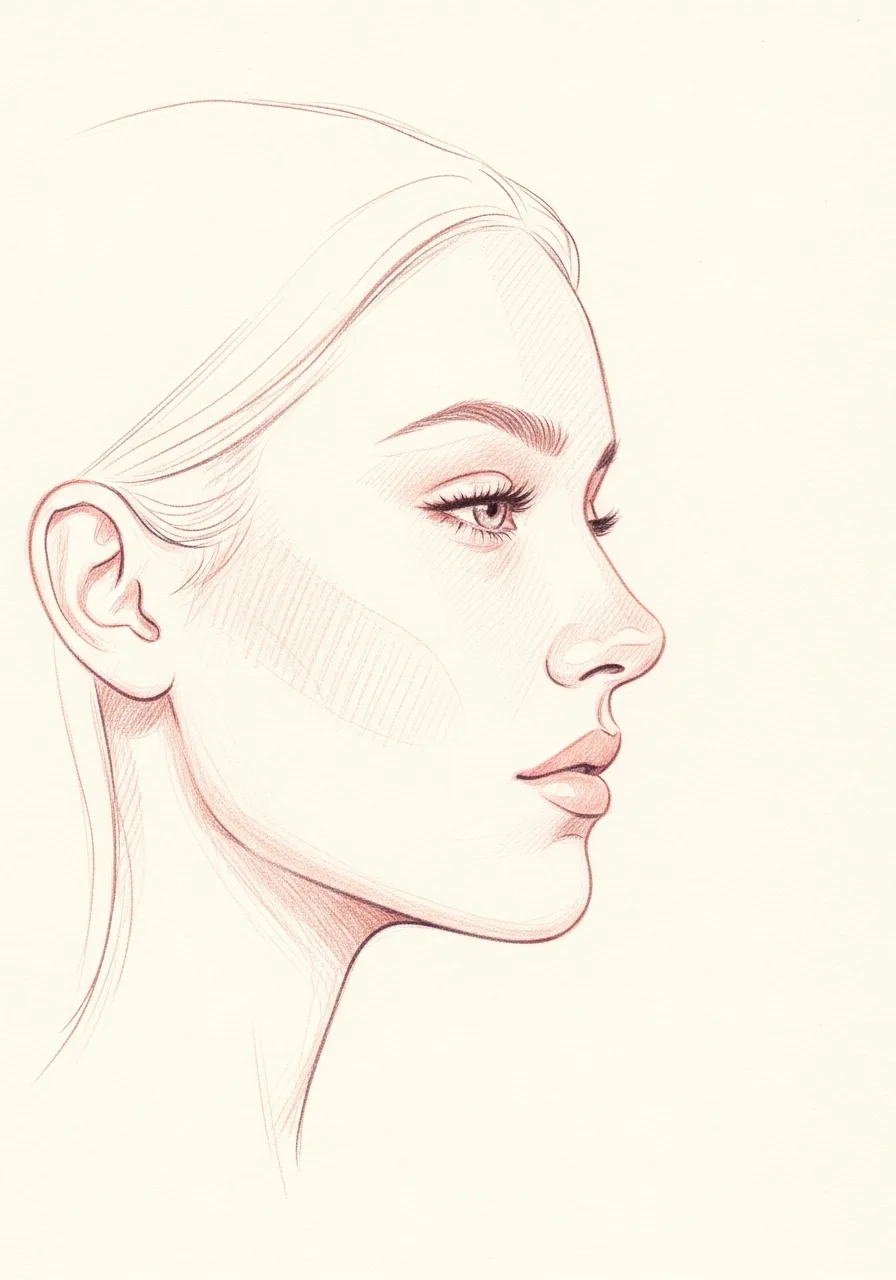
Facelift incisions are generally designed to follow the natural creases around the ear. They typically begin in or along the hairline at the temple, run in front of the ear following its natural folds, curve around the earlobe, and continue behind the ear into the hairline.
This placement allows much of the incision to sit within the contours of the ear and the hair, where it is least conspicuous as it heals.
Incision planning for individual anatomy
Exact incision design is individualized. Hairline position, the shape of the ear, skin quality, and whether the patient wears their hair short or long all influence the plan. For men, incisions are also planned around beard-bearing skin — discussed further on the male facelift page.
Thoughtful planning at the outset is the single most important factor a surgeon controls in how the final scars look.
How scars mature over time
Fresh incision lines look their most noticeable in the early weeks and then fade gradually. Scar maturation is a slow process: lines typically continue to soften and lighten over many months, often up to a year or more.
This is why the appearance of incisions immediately after surgery is not a reliable indication of how they will ultimately look.
Caring for incisions
- Follow your surgeon's specific wound-care instructions precisely.
- Protect healing incisions from sun exposure, which can darken scars.
- Avoid tension on the incisions during early healing by respecting activity limits.
- Raise any concerns about healing promptly rather than waiting.
Individual healing varies, and factors such as genetics and smoking influence scar quality. A nicotine-free window before and after surgery is required for this reason.
Why scar design is three-dimensional
A facelift scar is not simply a line drawn around the ear. It is a transition between facial skin, the ear's natural folds, the sideburn or temporal hairline, and the skin behind the ear. The direction of tension, the thickness of the flap, the patient's hair pattern, and the amount of movement in the area all influence how a scar is seen. Good planning considers the whole transition rather than hiding one segment at the expense of another.
A typical facelift incision may begin near the temple or within the hairline, travel in front of or within the natural contours of the ear, curve around the earlobe, and continue behind the ear into the hairline. Exact placement is individualized. The goal is not to promise an invisible scar; it is to place the incision where normal folds, hair, shadow, and viewing distance make a mature line less conspicuous.
Pre-tragal and post-tragal placement are terms for whether a segment lies in front of the tragus or follows the tragal contour. The choice depends on skin quality, ear anatomy, the amount of skin being redraped, and the surgeon's design. Men require particular attention because beard-bearing skin can be displaced onto the tragus or sideburn if tension and incision placement are not planned carefully. The male facelift page discusses those considerations.
Hairline preservation is part of scar planning. Excessive tension, aggressive undermining, or an incision that crosses the hairline without a reason can alter the sideburn or temporal hairline. Surgeons may design the incision to preserve existing hair, but individual healing and future hair loss still influence visibility. A patient should ask where the sideburn will sit and what changes are possible rather than assuming every hairline can be preserved identically.
The earlobe is another important landmark. Downward pull on the lobe or a scar that tethers it to the cheek can create a stretched or pixie-like appearance. Avoiding this problem involves flap design, tension distribution, and careful closure around the lobule. If an earlobe becomes tethered after prior surgery, correction may require revision planning and adequate time for the tissues to mature. See the revision facelift page for a broader discussion.
Neck, brow, and eyelid procedures have different incision maps. A neck lift may use a submental incision or access around the ear. A brow lift may use a hairline incision or small endoscopic ports. Cosmetic upper-eyelid surgery generally uses the natural crease, while lower-eyelid access may be below the lashes or through the inside of the lid. These scars should not be conflated with a facelift scar, and combining procedures requires a coordinated plan.
Scar maturation has stages. Early lines may be red, pink, raised, firm, itchy, or uneven. As collagen remodels, the line usually softens and fades, but this process takes months and sometimes longer than a year. Color and texture vary with skin type, sun exposure, tension, inflammation, nicotine exposure, and individual biology. The first postoperative photograph is not a reliable prediction of the final scar.
Care should follow the operating team's instructions. Once the wound is closed, silicone tape or silicone gel may be recommended for selected patients. Sun protection helps reduce persistent discoloration. Massage is not appropriate for every incision and should begin only when the surgeon says the tissue is ready. Picking, stretching, smoking, or applying irritants can worsen a healing line. A scar that becomes increasingly painful, open, draining, or inflamed needs clinical review.
A visible scar does not automatically mean the operation failed. Some visibility reflects normal maturation, and some reflects the patient's healing biology rather than placement alone. If a scar remains unusually wide, raised, depressed, painful, or malpositioned after sufficient maturation, options may include observation, injections, resurfacing, revision, or a combination. The appropriate treatment depends on the problem and should not be selected before the tissue has healed.
Patients with prior facelift scars should bring photographs or operative notes when available. Revision planning must account for altered blood supply, scar tissue, hairline changes, earlobe position, and how much skin remains. A revision can improve a scar or contour, but it also creates new incisions and carries its own risks. Honest planning includes what can be improved, what may remain, and whether waiting is safer than intervening early.
Scar visibility also depends on where a patient looks. A line that is difficult to see in conversation may be easier to see in a close-up photograph, strong overhead light, or a pulled-back hairstyle. The goal is a scar that becomes unobtrusive in ordinary life, not a claim that no one will ever see it. Discuss work, hair, makeup, facial hair, and social priorities during planning.
The incision is only one part of the result. Excessive tension can affect the scar and the surrounding contour, while insufficient redraping can leave residual skin. A surgeon balances the amount of skin removed with the direction in which deeper tissues are repositioned. That balance is why the shortest possible scar is not always the safest or most effective design.
A scar concern should be assessed in person if it is painful, increasingly raised, open, draining, numb beyond the expected pattern, or associated with facial weakness or swelling. Online descriptions cannot distinguish normal maturation from infection, hematoma, hypertrophic scarring, or a contour problem. Early contact gives the surgical team the best opportunity to advise appropriate care.
Scar expectations should be discussed before consent, including the possibility of a line that remains visible, a difference between sides, a change in hair-bearing skin, or the need for prolonged care. Patients with a history of hypertrophic scars, keloids, pigment changes, poor wound healing, or nicotine use should disclose it. Risk cannot always be eliminated, but it can be planned for.
The most reassuring scar is usually the result of several quiet decisions: a well-matched incision, gentle tissue handling, appropriate tension, careful closure, sensible aftercare, and enough time. No single cream or device can replace those fundamentals. The patient and surgeon should judge the scar in the context of the whole face and the original problem rather than chasing perfect invisibility.
Ask to see how the planned incision relates to your own ear, hairline, and sideburn rather than relying on a generic diagram. Anatomy differs even between the left and right sides of one face. The final design should be documented during planning, with room for the surgeon to adjust it safely during the operation if the tissue behaves differently than expected.
Scar care is individualized, but every plan benefits from protecting the incision, avoiding nicotine, and attending follow-up. A mature scar is judged after the biology of healing has had time to work.
The same principles apply to a scar behind the ear or within the hairline, even when it is less visible at first. Hair, sun, and time change how those areas are seen.
Frequently Asked
Facelift Scars & Incisions — patient questions, honestly answered.
Facelift incisions are placed along the natural creases of the ear and within the hairline so that, once matured, they are designed to be discreet. They do not disappear entirely, but careful placement and time generally make them difficult to notice in everyday settings.
Scar maturation is gradual. Incision lines look most noticeable in the first weeks and then soften and lighten over many months, often up to a year or more. The early appearance is not a reliable guide to the final result.
Continue exploring
Related facelift and scar-care resources
Facelift (Overview)
The main facelift page — techniques, candidacy, and what to expect.
Male Facelift
Incision planning around beard-bearing skin and the male hairline.
Facelift Recovery Timeline
How healing progresses week by week.
Request a Consultation
Discuss incision planning with Dr. Mourad's office.
Next step
Plans are individualized. The consultation is where that begins.
Reach the Manhattan office to schedule a private consultation with Dr. Mourad.