Double Board Certified · Periorbital Aesthetics
Blepharoplasty in NYC — refreshing the eyes without changing the gaze.
Cosmetic blepharoplasty can remove or reposition selected eyelid skin and fat, but a tired or heavy appearance may also come from brow descent, true eyelid ptosis, lower-lid laxity, tear-trough anatomy, dry eye, or midface descent. The examination distinguishes those problems before an upper, lower, combined, or nonoperative cosmetic plan is recommended.
ABFPRS
Facial Plastic & Reconstructive Surgery
ABOto
Otolaryngology — Head & Neck Surgery
AAFPRS
Fellowship Director
In Consultation
"The eyes are how others read our energy. A well-done blepharoplasty makes a person look rested — not different."

A Note from Dr. Mourad
"Eyelid surgery is one of the most delicate operations in facial plastic practice. Restraint is the defining virtue — small, anatomically-correct changes that refresh the eyes without altering the way a person looks."
— Dr. Moustafa Mourad, MD
Key takeaways
- Blepharoplasty addresses excess skin, herniated fat, and lax muscle of the upper and/or lower eyelids.
- Upper blepharoplasty removes hooding skin; lower blepharoplasty treats bags, hollows, and looseness.
- Modern lower-lid surgery often repositions fat rather than removing it, avoiding a hollowed under-eye.
- The practice performs cosmetic eyelid surgery. Functional eyelid surgery and insurance preauthorization are not offered.
- The aim is a rested, natural appearance — not a wide-eyed or hollowed look.
Overview
Upper and lower eyelid surgery address different concerns.
Upper blepharoplasty evaluates excess eyelid skin and, when relevant, fullness. A low brow or a drooping eyelid margin can create a similar complaint, so those structures need separate assessment. Removing eyelid skin alone is not the answer to every heavy-looking upper lid.
Lower blepharoplasty focuses on the lower-lid contour, including bags, the lid–cheek transition, skin, and eyelid support. Dark circles do not always result from a surgically correctable fat or skin problem. The consultation considers eye comfort, dry-eye history, lid position, and previous eye or facial treatment before an approach is selected.
Upper and lower surgery may be considered separately or together. Bring photographs or examples that explain your concern, but expect a plan based on your own eyelids rather than a promise of a particular eye shape.
Anatomy & planning
Upper eyelid skin
Redundant skin may rest on the lashes or reduce the visible lid platform. Conservative excision should preserve closure and avoid excessive hollowing.
Anatomy & planning
Brow descent
A low brow can create apparent upper-eyelid excess. Removing skin without addressing the brow may under-correct the heaviness or lower the brow further in some patients.
Anatomy & planning
Eyelid ptosis
A low eyelid margin is not corrected by skin removal alone. Ptosis requires eyelid-position evaluation and may need a separate repair.
Anatomy & planning
Lower-lid fat and contour
Fat prolapse, tear-trough hollowing, cheek descent, skin texture, and lower-lid support can create similar shadows. Fat removal, repositioning, grafting, skin treatment, or support procedures are selected according to the anatomy.
Anatomy & planning
Dry eye and closure
Tear-film symptoms, contact-lens use, prior eye surgery, eyelid closure, and surface health affect candidacy and the amount of tissue that can be safely treated.
Anatomy & planning
Clarify upper versus lower blepharoplasty
Upper and lower blepharoplasty are different operations. The upper procedure commonly addresses skin and selected fat while preserving closure and lid function. The lower procedure may involve transconjunctival or skin approaches, fat repositioning or reduction, skin treatment, and support of the lower lid. They should not be described as one standardized operation.
Anatomy & planning
Cosmetic eyelid surgery and functional concerns
The practice performs cosmetic eyelid surgery only. Concerns about visual obstruction, eyelid position, or ptosis should be discussed with an appropriate medical specialist; this practice does not perform functional eyelid surgery or handle insurance preauthorization for it.
Anatomy & planning
The conservative-tissue principle
Modern eyelid surgery prioritizes preservation. Excessive skin, muscle, or fat removal can contribute to hollowing, closure problems, dryness, lower-lid malposition, or an operated appearance. The goal is not maximum removal; it is the smallest change that addresses the documented problem while protecting function.
An Established Academic Authority
Double board certification. Fellowship director. Published author. A surgeon's surgeon.
ABFPRS
Board Certified
American Board of Facial Plastic & Reconstructive Surgery
ABOto
Board Certified
American Board of Otolaryngology — Head & Neck Surgery
NYMC
Clinical Assistant Professor
Otolaryngology · Clinician Scholar Pathway
AAFPRS
Fellowship Director
American Academy of Facial Plastic and Reconstructive Surgery
Textbook
Published Author
Contributions to the academic literature of facial plastic surgery
Dual board certification in both Facial Plastic & Reconstructive Surgery and Otolaryngology — Head & Neck Surgery.
01 · Why Dr. Mourad
A surgeon trusted by surgeons for this operation.
Dr. Moustafa Mourad is double board-certified by the American Board of Facial Plastic & Reconstructive Surgery and the American Board of Otolaryngology — Head & Neck Surgery, and serves as an AAFPRS Fellowship Director.
The practice concentrates on the operations of the face, nose, and sinuses — and on the patients other surgeons have found challenging.
Every consultation is unhurried, every plan is individual, and no operation is recommended unless it is the right one.
02 · Ideal Candidates
Who benefits most from this operation.
Candidacy is determined together at consultation. The most satisfied patients share three things in common.
I
Upper Lid Hooding
Excess upper-eyelid skin that touches or rests on the lashes and creates a heavy upper-face appearance.
II
Lower Lid Bags or Hollows
Lower-lid fat pseudoherniation (bags), tear-trough hollowing, or both — often requiring transposition of fat rather than removal.
III
Healthy & Realistic
Patients in good general health with realistic expectations about the subtle, refreshing nature of the change.
Before & After
Eyelid Surgery (Blepharoplasty) Before and After
Documented eyelid surgery (blepharoplasty) results from the Manhattan practice — including a focused blepharoplasty case and a combined facelift, neck lift, and eyelid surgery case — photographed in standardized studio conditions with written consent on file. Individual results vary with anatomy and goals.
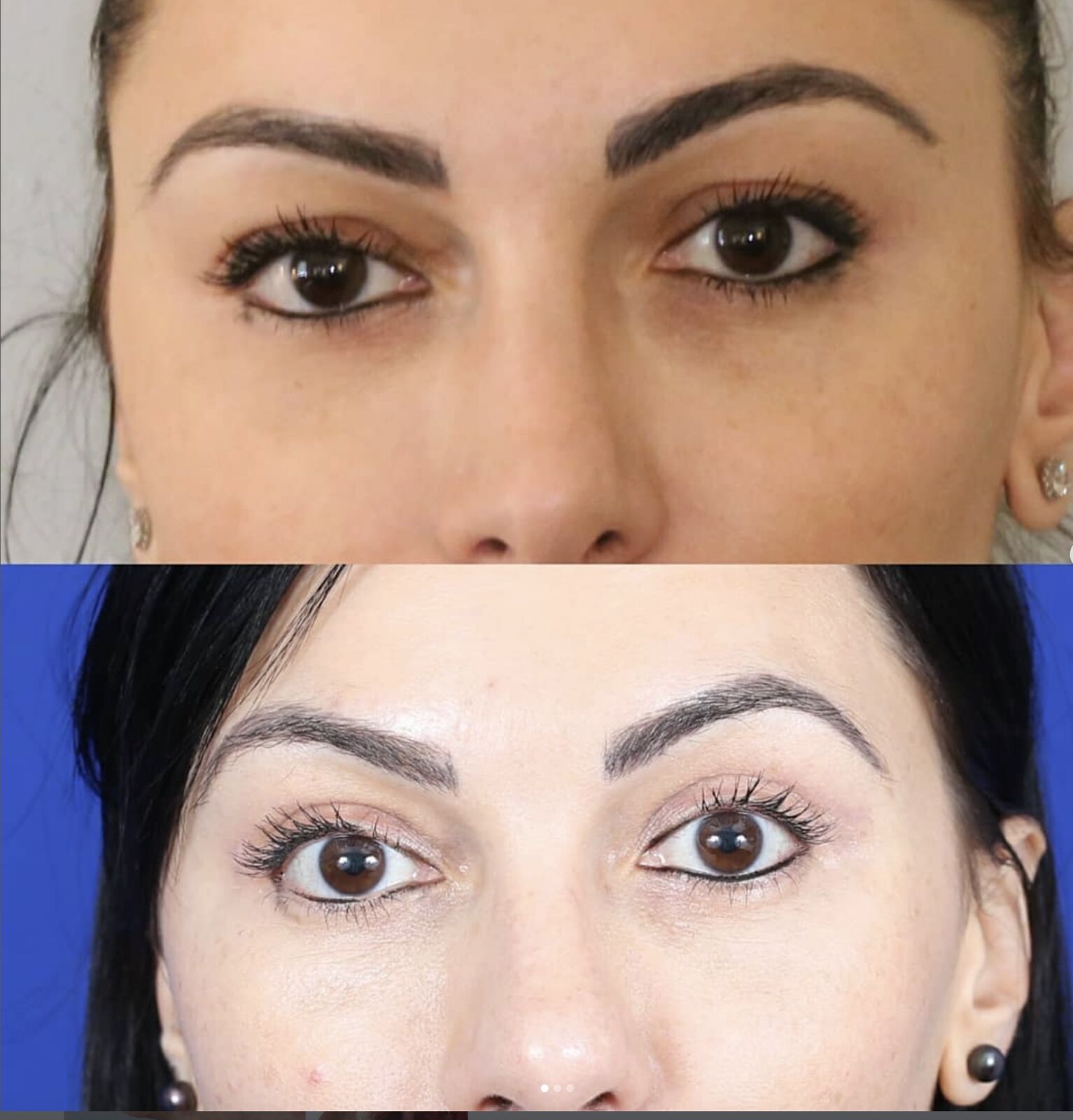
Blepharoplasty · 30s · Female
Eyelid surgery (blepharoplasty) for a female patient in her 30s to refresh the appearance of the eyes, addressing periorbital fullness while preserving a natural look. Documented in a frontal view before and after surgery; photographed with written consent on file. Results vary by patient; this case is representative, not predictive.
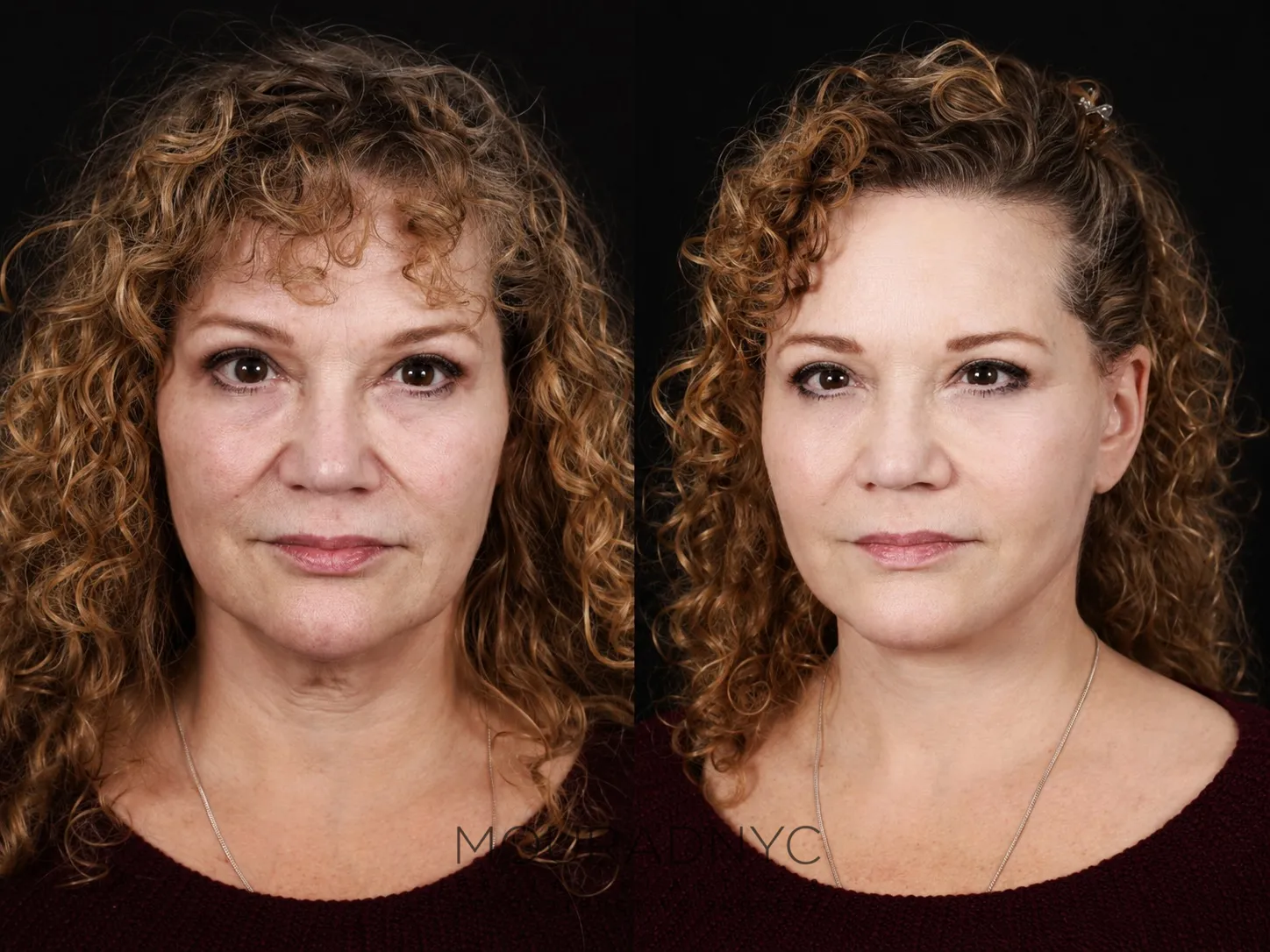
Facelift + Neck Lift + Blepharoplasty · 50s · Female
Facelift combined with a neck lift and blepharoplasty for a female patient in her 50s to address midface and jawline laxity along with periorbital aging. Documented in frontal and oblique views before and after surgery; photographed in standardized studio conditions with written consent on file.
Pre and post-operative comparison · Photographed in standardized studio conditions · Written consent on file
If this describes you, the next step is a quiet, unhurried conversation — not a sales call.
An Honest Note
When this operation may not be right for you.
Patients with significant brow descent may need brow lift first, or in combination — addressing only the upper lid in those patients rarely satisfies.
Active dry eye disease or significant ocular surface disorders require ophthalmologic optimization before elective lid surgery.
Smokers face elevated risk of impaired healing and require a planned nicotine-free window.
Patients with thyroid eye disease or other periorbital pathology are managed in coordination with their treating physician.
03 · Approaches
The full range of options.
Blepharoplasty is rarely a single technique. The right plan combines upper and lower lid work, lid support, and — when proportions warrant — companion procedures to balance the upper face.
1 of 6 · Upper Blepharoplasty
04 · Technique
Structural vs reductive approaches.
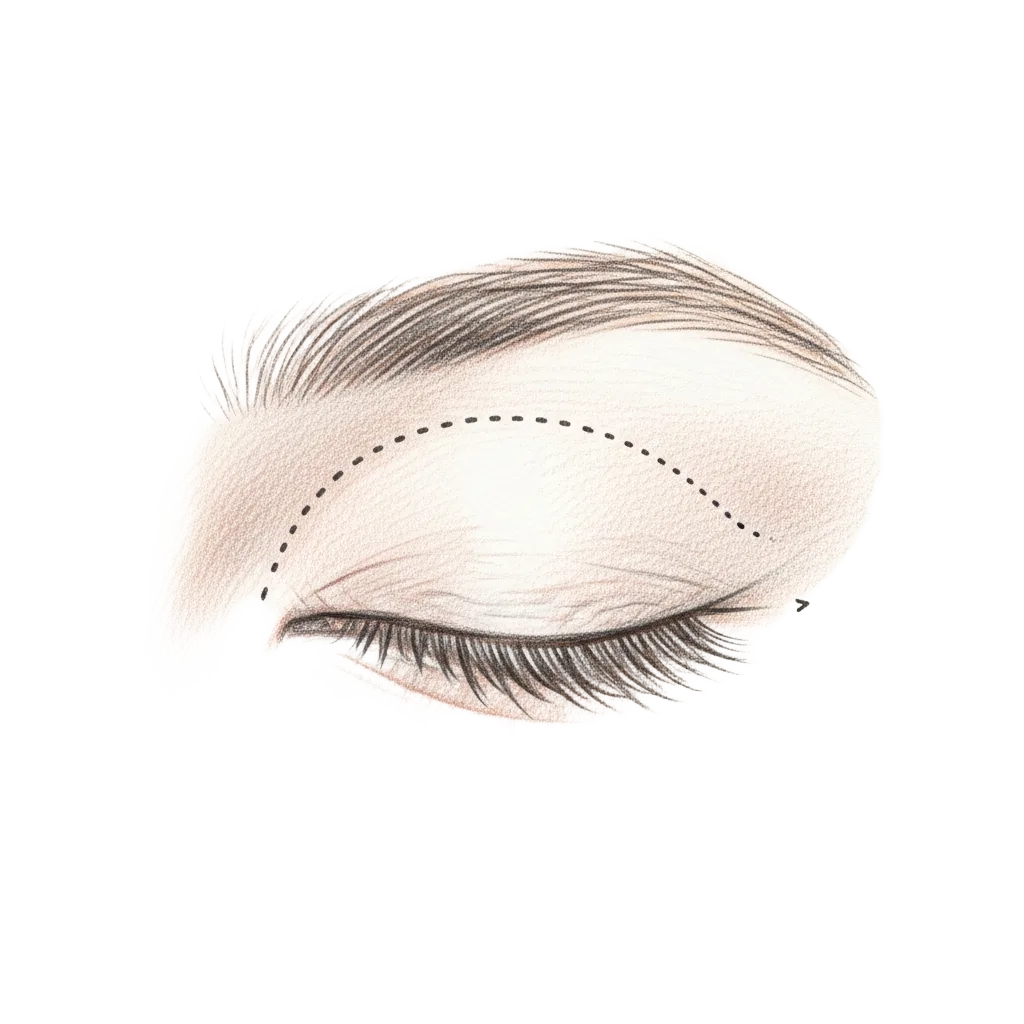
Modern blepharoplasty is structural — preserving and repositioning anatomy whenever possible, removing only what is genuinely in excess.
Structural
Preserve & Reposition
On the lower lid in particular, fat is often repositioned over the orbital rim to fill the tear trough rather than excised. The shape of the lid is preserved and the under-eye contour is restored.
Conservative skin excision and gentle canthal support maintain the original eye shape — never opening it up or pulling it tight.
Reductive
Targeted Excision
On the upper lid, the appropriate operation is usually a conservative excision of redundant skin through a hidden lid-crease incision. Muscle and fat are touched only where genuinely indicated.
Reductive technique done with restraint produces a clean, refreshed upper lid without any visible operative signature.
Illustrative diagrams. The right balance is patient-specific; restraint is the defining principle.
Begin the conversation
Refresh the eyes — never change the gaze.
Cost & Insurance
How Much Does Blepharoplasty Cost in NYC?
Typical surgical investment is $6,000–$8,500+ for upper blepharoplasty, $7,500–$10,000+ for lower blepharoplasty, $11,000–$15,000+ for combined upper and lower blepharoplasty, and $12,000–$20,000+ for revision blepharoplasty. Blepharoplasty cost depends on which lids are treated and the techniques required.
Eyelid surgery at this practice is cosmetic and self-pay. Functional eyelid surgery and insurance preauthorization are not offered. After consultation, our office provides a personalized estimate. Payment is arranged directly with the practice. Payment terms and any required deposit are reviewed when surgery is scheduled.
| Operation | Typical surgical investment |
|---|---|
| Upper blepharoplasty | $6,000–$8,500+ |
| Lower blepharoplasty | $7,500–$10,000+ |
| Combined upper and lower | $11,000–$15,000+ |
| Revision blepharoplasty | $12,000–$20,000+ |
What May Affect Cost
- Whether upper, lower, or both eyelids are treated
- Techniques required
- Upper, lower, or combined cosmetic goals
- Type of anesthesia
- Surgical setting
The prices listed are provided as general estimates of typical surgical investment and are not guaranteed quotes. Surgical fees vary based on the patient's anatomy, the complexity of the procedure, previous surgery, operative time, anesthesia and facility requirements, implants or hardware, virtual surgical planning when applicable, and whether multiple procedures are performed together. An exact surgical fee is provided following consultation and development of an individualized treatment plan.
06 · Recovery
What healing actually looks like.
Stage 01
First 24 Hours
Cold compresses and head elevation through the first 24 hours. Discomfort is generally mild and well managed with non-narcotic medications.
Stage 02
Week 1
Through the first week, bruising and swelling steadily resolve. Sutures from upper-lid incisions are typically removed at five to seven days.
Stage 03
Weeks 2 – 4
Through weeks two to four, residual swelling fades and the refreshed appearance becomes clear. Light makeup is permitted as the incisions mature.
Stage 04
Months 1 – 12
Final result is appreciated through three to six months as the scars settle and the soft tissues fully adapt.
Have a specific question?
Send a brief note describing your anatomy or concerns — the office will route it directly to Dr. Mourad for review.

Before You Arrive
Your consultation, prepared.
Bring photographs of yourself from your 20s and 30s if available.
List any history of dry eye, prior eyelid surgery, or LASIK.
Note current medications, eye drops, and supplements.
Be prepared to discuss whether brow lift should be considered concurrently.
Allow 45 minutes for a focused periorbital and ocular examination.
Bring questions about scarring, downtime, and what to expect.
In Their Words
From patients of the practice.
My upper eyelids had started making me look exhausted even when I felt fine. After the procedure, my eyes look lighter and more awake. People notice something is different, but they can't tell what.
I had extra skin on my lids that made eyeliner almost impossible. Now my eyes look open again, and the scars healed beautifully. I wish I had done it sooner.
The improvement is subtle but really meaningful. I don't look like I had surgery; I just look less worn out. That was exactly the goal.
I traveled in for eyelid surgery because I wanted a careful, conservative result. My eyes still look like my eyes, just cleaner and more refreshed.
Individual experiences. Results and recovery vary by patient. Testimonials shared with written consent.
Frequently Asked
Patient questions, honestly answered.
Blepharoplasty treats eyelid tissue; a brow lift repositions a descended brow. Some patients have one problem, others have both. Brow position should be assessed before upper-eyelid skin is removed.
No. Brow descent, eyelid ptosis, swelling, asymmetry, and orbital anatomy can create similar symptoms. The eyelid margin and brow must be examined.
Clinical references
This page draws on published clinical practice guidelines and public-health references. These sources inform general patient education and do not replace an individual evaluation with Dr. Mourad.
- 01Upper blepharoplasty randomized-trial systematic review/meta-analysis PubMed PMID: 40152471
- 02Lower-lid fat repositioning/grafting systematic review PubMed PMID: 39158343
- 03Large lower blepharoplasty/fat-repositioning cohort PubMed PMID: 38353810
- 04Brow position after upper blepharoplasty meta-analysis PubMed PMID: 36890345
- 05Functional and visual outcomes of upper-eyelid surgery PubMed PMID: 39392642
Explore Further
Related procedures & resources
Eyelid surgery is often considered alongside the brow and the wider face. These pages explain how the procedures relate.
brow lift
Learn how brow lift may relate to your goals and treatment plan.
Read moreendoscopic mid-face lift
Learn how endoscopic mid-face lift may relate to your goals and treatment plan.
Read moreFacelift
For combined upper-face and lower-face rejuvenation.
Read moreBefore & After Gallery
Representative eyelid surgery cases, photographed with written consent on file.
Read morePatient Reviews
Read experiences from patients of the practice.
Read moreRequest a Consultation
Begin with an unhurried clinical evaluation.
Read moreThe Most Important Step
Your expert consultation.
A blepharoplasty consultation is a careful periorbital examination — evaluating skin, muscle, fat, lid position, brow position, and the ocular surface before any operation is recommended.