
Double Board Certified · AAFPRS Fellowship Director
Neck Lift in NYC — restore the line of the jaw, naturally.
Dr. Moustafa Mourad evaluates neck contour by separating skin laxity, platysmal bands, superficial and deeper fullness, cervicomental angle, jaw and chin support, and prior treatment effects. A neck lift may involve skin redraping, platysmaplasty, fat treatment, deeper contouring, or combination with a facelift; the exact scope is determined in person.
ABFPRS
Facial Plastic & Reconstructive Surgery
ABOto
Otolaryngology — Head & Neck Surgery
AAFPRS
Fellowship Director

In Consultation
"A defined neck line is the quietest signal of a youthful face."

A Note from Dr. Mourad
"In Manhattan, I meet many patients who tell me they feel their face still looks young — but their neck doesn't. The neck is often the first area to age and the last to be addressed. A thoughtful neck lift can restore a generation of definition without ever looking surgical."
— Dr. Moustafa Mourad, MD
Key takeaways
- A neck lift treats loose skin, separated platysma bands, sub-platysmal fat, and an obtuse neck angle.
- It typically combines a small incision under the chin with incisions hidden behind the ears.
- It may be combined with a lower facelift when jowling and neck changes are both part of the treatment plan.
- Submentoplasty addresses the central neck; lateral cervicoplasty tightens skin that has migrated laterally.
- Selected patients with isolated submental fullness and suitable skin quality may be candidates for a more limited submentoplasty.
Overview
Choosing the extent of your neck lift.
A neck-lift consultation separates skin laxity, muscle-band concerns, fullness beneath the chin, and the relationship between the jaw and neck. These findings do not all respond to the same operation, and not every neck concern calls for deep dissection.
When jowling and lower-face descent accompany the neck changes, a combined face-and-neck plan may be more appropriate than a neck-only procedure. When the concern is more limited, the consultation should explain what a smaller operation can and cannot address.
Prior surgery, injections, energy-based treatments, scars, and medical factors may affect planning. Ask which anatomical findings the proposed procedure treats, what it leaves unchanged, and how the recovery and risks differ from alternatives. Men comparing beard-bearing incision planning can also review the male facelift in NYC page.
Jowls are primarily a jawline problem, while submental fullness and platysmal banding are neck problems; many patients have both. The facelift versus neck lift guide explains how the two operations are selected.
Meet Dr. Mourad
A neck lift surgeon focused on jawline definition, anatomy, and natural neck contour.
Dr. Moustafa Mourad evaluates the neck the same way he evaluates the face: as a structural system rather than a surface problem. A neck lift in NYC may involve loose skin, submental fullness, platysma bands, loss of the cervicomental angle, jowl contribution, chin support, or a combination of these factors. Because the neck is closely connected to the jawline and lower face, his consultation begins with anatomy rather than a one-size-fits-all procedure recommendation.
As a dual board-certified Facial Plastic and Reconstructive Surgeon and Otolaryngologist–Head and Neck Surgeon, Dr. Mourad works in an anatomic region he knows from both aesthetic and reconstructive surgery. That experience informs his neck lift planning — including when a limited neck procedure is appropriate, when a facelift-and-neck-lift combination is more honest, and when nonsurgical or conservative treatment is the better choice.
His philosophy is to create definition without an operated look. A neck lift should improve the transition from chin to neck, reduce visible banding when present, and refine the jawline while preserving natural movement and facial character. He discusses incision placement, scar concealment, realistic recovery, and the limits of surgery carefully so patients understand whether their concerns come from skin, muscle, fat, chin projection, or lower-face descent.
- Dual board-certified in facial plastic surgery and otolaryngology–head and neck surgery
- Structural approach to jawline, platysma, and neck contour
- Experience balancing neck lift with facelift and chin support when appropriate
- Practice focused on the face, neck, nasal airway, and reconstructive surgery
Anatomy & planning
What is creating the neck contour?
Similar-looking neck concerns can arise from different anatomy. Loose skin may require redraping; visible bands may reflect platysma; fullness may be superficial, deep, glandular, muscular, or related to skeletal support; and a short or retrusive chin can blunt the angle even when soft tissue is treated. The examination determines which layers can be changed safely and which are part of the patient’s normal anatomy.
Deeper structures such as the digastric muscles or salivary glands may influence contour in selected patients. Treatment of deeper anatomy is not automatic and carries distinct tradeoffs that should be discussed separately.
Anatomy & planning
Neck lift versus facelift
A neck lift is the better starting page when the concern is centered below the jaw with limited cheek or lower-face descent. A facelift is the broader operation when jowls and lower-face tissues have descended. Because the same continuous tissue envelope crosses the jawline, many patients require a combined plan—but combining procedures should follow the examination, not be assumed.
Anatomy & planning
Prior treatment and tissue planes
Prior neck liposuction, injectable fat-dissolving treatment, thread lifting, ultrasound, radiofrequency, surgery, or filler should be disclosed. These treatments may change fat distribution, skin behavior, or tissue planes and can create fibrosis that affects dissection and expectations.
Anatomy & planning
Open and limited approaches
Neck rejuvenation can be performed through different access patterns. A limited or “closed” approach may suit selected fat or platysmal concerns, while open access beneath the chin and around the ears may be required for skin redraping, direct muscle work, or broader contouring. Neither access pattern is automatically superior; the anatomy and planned correction determine the approach.
An Established Academic Authority
Double board certification. Fellowship director. Published author. A surgeon's surgeon.
ABFPRS
Board Certified
American Board of Facial Plastic & Reconstructive Surgery
ABOto
Board Certified
American Board of Otolaryngology — Head & Neck Surgery
NYMC
Clinical Assistant Professor
Otolaryngology · Clinician Scholar Pathway
AAFPRS
Fellowship Director
American Academy of Facial Plastic and Reconstructive Surgery
Textbook
Published Author
Contributions to the academic literature of facial plastic surgery
Dual board certification in both Facial Plastic & Reconstructive Surgery and Otolaryngology — Head & Neck Surgery.
01 · Why Dr. Mourad
An anatomy-led plan for the face and neck.
Evaluation begins with a focused history and structured physical exam emphasizing proportion, tissue quality, and prior interventions. I, Dr. Moustafa Mourad, document platysmal tone, submental fat distribution, skin elasticity, and chin projection to build an individualized plan. Photographs in upright and reclined positions, objective measurements of the cervicomental angle, and review of prior imaging or operative reports when available form the foundation of shared decision‑making. This process converts anatomy into technical options that align with patient goals.
During the consultation I palpate the neck to assess platysmal separation and fat compartments, and I evaluate the marginal mandibular nerve trajectory and superficial vascular landmarks to plan safe dissection. Functional elements such as airway symptoms or a history of sleep apnea are recorded and integrated into the surgical strategy. When dental or occlusal relationships affect chin projection, I coordinate with oral maxillofacial colleagues or refer to the chin augmentation page (https://www.nycfacedoc.com/chin-augmentation/) for combined planning when indicated.
I present clear options—limited submental approaches, open neck lift with platysmaplasty, liposuction alone, or staged combinations—outlining expected scars, downtime, and tradeoffs for each choice. Preparation guidance includes smoking cessation, anticoagulant management, and any necessary medical clearance. For patients who desire literature context, I reference an external platysma anatomy review (PubMed search) (https://pubmed.ncbi.nlm.nih.gov/?term=platysma+anatomy+review) and clinic summaries of platysmaplasty outcomes (https://www.nycfacedoc.com/journal/platysmaplasty-review/).
02 · Ideal Candidates
Who benefits most from a neck lift.
A neck lift addresses laxity of the platysma muscle, excess submental fat, and skin descent below the jaw. The best candidates have noticeable change in the neck specifically — and the structural anatomy to tolerate elegant correction.
I
Submental Fullness
Fullness or fatty deposit beneath the chin (the submental region), often resistant to weight loss and stubborn to non-surgical treatments like Kybella.
II
Platysmal Banding
Visible vertical bands running down the front of the neck — separation and laxity of the platysma muscle that becomes more pronounced with age.
III
Lost Jaw Definition
An obtuse cervicomental angle, jowling that extends below the jawline, and loss of the crisp transition between face and neck — the structural signs of midline descent.
Before & After
A representative case.
Primary rhinoplasty combined with a neck lift for a female patient in her 30s — note the refined cervicomental angle and jawline definition in profile. Photographed in standardized studio conditions with written consent on file.
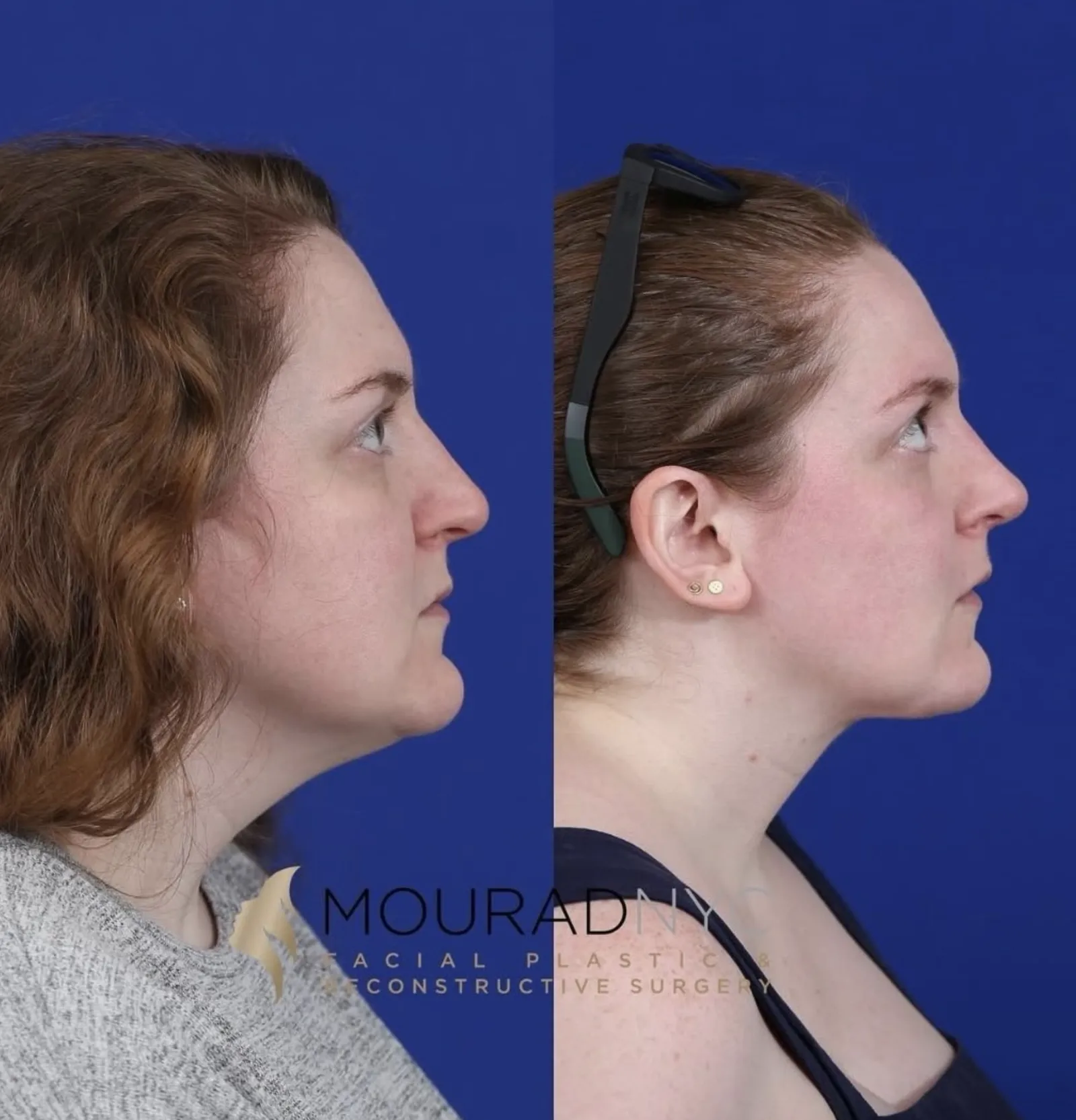
Lateral profile · Pre and post-operative comparison · Written consent on file
If this describes you, the next step is a quiet, unhurried conversation — not a sales call.
An Honest Note
When a neck lift may not be right for you.
Patients with isolated mild submental fullness and good skin quality may do better with non-surgical options — Kybella, Coolsculpting, or radiofrequency tightening — before considering surgery.
Significant facial aging that extends well above the jawline is generally addressed together with a facelift in the same operation; a neck lift in isolation can leave the face looking unbalanced.
Active smokers face significantly higher risk of skin necrosis and impaired healing along the neck flap. A nicotine-free window is required.
Patients with unrealistic expectations about how a neck lift can change overall facial appearance benefit from a longer consultation conversation before committing to surgery.
03 · Approaches
Six neck lift techniques.
The right approach depends on which structures are contributing to the change — skin, muscle, fat, or all three. The plan combines the techniques that match the patient's anatomy.
1 of 6 · Submentoplasty
04 · Technique
Submentoplasty vs lateral cervicoplasty.
Neck contouring techniques lie along a spectrum from minimally invasive, submental‑focused procedures to open neck lifts with lateral release and skin redraping. A limited or "mini" neck lift typically combines targeted submental liposuction and an anterior platysmal plication performed through a small incision beneath the chin. This closed approach reduces visible scarring and suits patients with good skin recoil and isolated submental fullness. It is insufficient for extensive lateral laxity or wide platysmal separation.
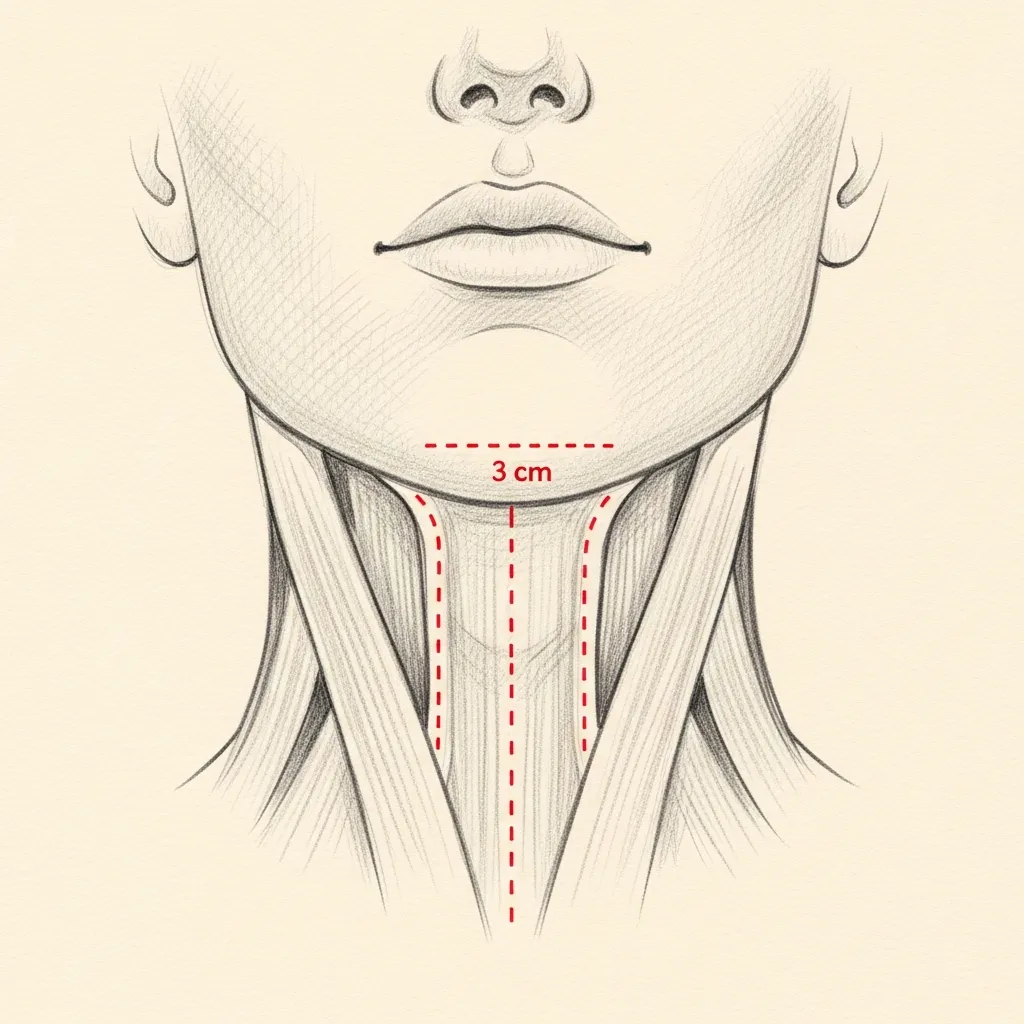
Submental
Through a hidden chin crease
Open neck lift approaches use longer incisions—often with postauricular extensions—to permit release of lateral platysma and redundant skin. Structural options within open techniques include anterior midline platysmal suturing (corset or central plication), lateral imbrication, or selective muscle reorientation. Preservation‑oriented strategies emphasize vascular supply and minimal tissue resection to maintain sensation and function. The choice between conservative repositioning and modest resection depends on anatomy and the goal to preserve natural neck movement.
This approach is ideal for patients whose primary concern is midline banding and submental fullness, with good lateral skin elasticity.
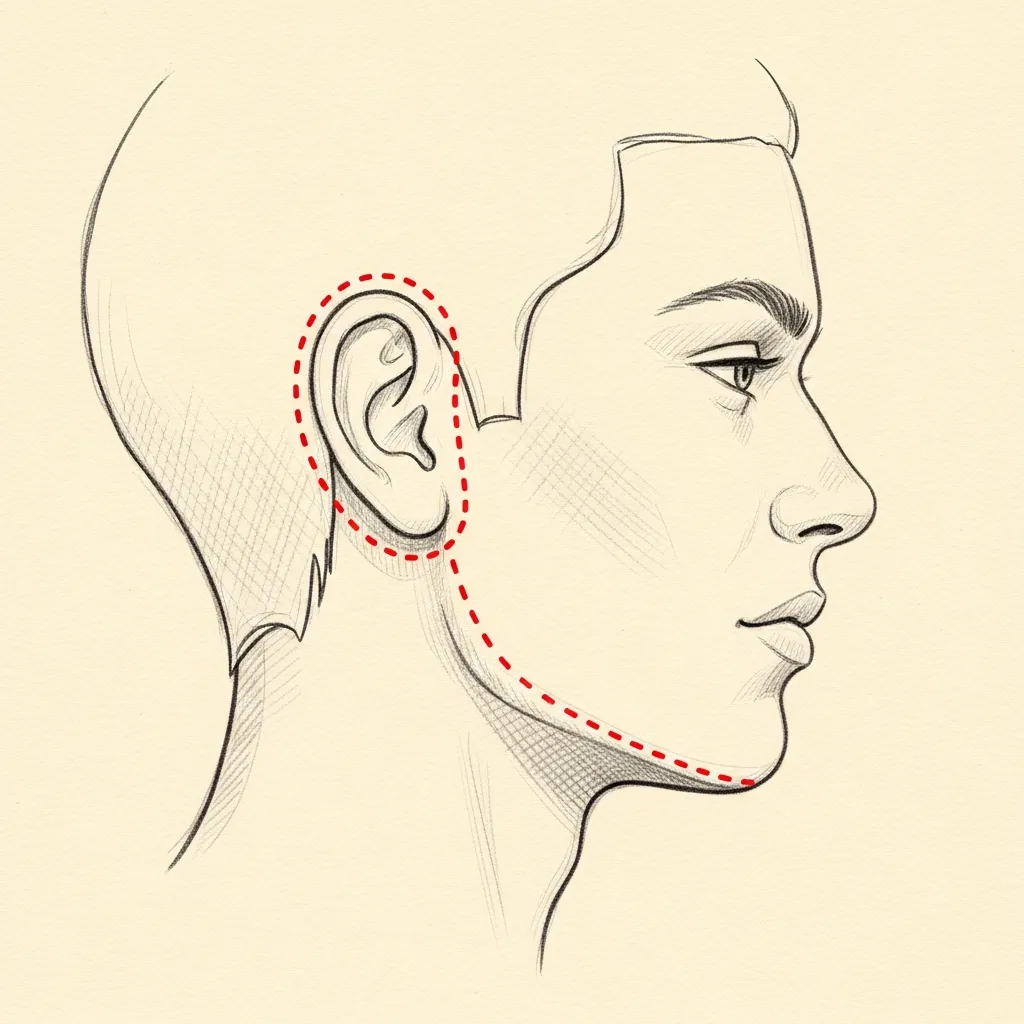
Lateral
Around-the-ear elevation
Liposuction alone reduces localized fat but does not reliably tighten skin or eliminate platysmal bands. Energy‑assisted devices (radiofrequency, laser) may be used adjunctively to encourage skin contraction, but their role is complementary when significant laxity requires mechanical support. Patients considering isolated fat reduction should compare expected gains from liposuction with combined muscle repair or skin excision options, and they can review the neck liposuction resource for technique‑specific details (https://www.nycfacedoc.com/neck-liposuction/).
The lateral technique is frequently combined with submentoplasty in a single operation to address both midline and lateral changes — and is almost always part of a combined facelift / neck lift in patients with broader lower-face aging.
Illustrative diagrams. Incision design is individualized to the patient's anatomy and combined procedures.
Begin the conversation
A consultation is a clinical evaluation — not a sales conversation.
Cost & Insurance
How Much Does a Neck Lift Cost in NYC?
An isolated neck lift typically ranges from $20,000 to $30,000+. When the neck is addressed together with a deep-plane facelift, the combined operation typically ranges from $50,000 to $75,000+.
A neck lift is generally considered cosmetic and is usually not covered by insurance. After consultation, our office provides a personalized estimate based on the surgical plan, anesthesia, facility setting, and postoperative care. Payment is arranged directly with the practice. Payment terms and any required deposit are reviewed when surgery is scheduled.
| Operation | Typical surgical investment |
|---|---|
| Isolated neck lift | $20,000–$30,000+ |
| Deep-plane face and neck lift | $50,000–$75,000+ |
What May Affect Cost
- Amount of skin laxity
- Platysmal banding
- Submental fullness
- Whether liposuction is included
- Whether facelift is combined
- Anesthesia and facility fees
The prices listed are provided as general estimates of typical surgical investment and are not guaranteed quotes. Surgical fees vary based on the patient's anatomy, the complexity of the procedure, previous surgery, operative time, anesthesia and facility requirements, implants or hardware, virtual surgical planning when applicable, and whether multiple procedures are performed together. An exact surgical fee is provided following consultation and development of an individualized treatment plan.
06 · Recovery
What healing actually looks like.
Stage 01
First 24 Hours
Day 0, the day of surgery, typically involves postoperative monitoring until patients are stable for discharge, usually within a few hours. Expect tightness across the neck, moderate dull ache, and visible swelling and bruising. A compressive dressing or chin strap may be in place to reduce edema. Oral analgesics are provided for pain control during the first 24 to 48 hours. Ice applied intermittently over the cheeks and submental area can reduce discomfort and swelling, and gentle head elevation while resting is recommended.
Stage 02
Week 1
By postoperative day four most patients notice that the peak bruising and swelling begin to soften. Expect residual tenderness along incision lines and under the chin, with numbness or altered sensation (hypoesthesia) in portions of the neck and lower face. If drains were placed, they are commonly removed between day one and day three; by day four most patients have no drains. Continue cold compresses for comfort and keep the head elevated while sleeping to reduce dependent swelling. Avoid heavy bending, straining, and lifting more than 10–15 pounds to limit the risk of bleeding beneath the skin (hematoma).
Stage 03
Weeks 2 – 4
Between weeks two and four, bruising typically resolves and much of the visible swelling recedes. Sutures placed at the skin surface are commonly removed during this period, and incision edges generally appear closed and less tender. Numbness and pins‑and‑needles around the chin, lower face, and anterior neck frequently persist but usually improve week by week. The repaired platysma muscle (a thin superficial neck muscle) often feels firm as it heals; this firmness softens over subsequent weeks. Continue scar protection and avoid ultraviolet exposure to minimize pigment changes in healing scars.
Stage 04
Months 1 – 12
During months one through three the neck’s contour becomes progressively clearer as residual swelling resolves and tissues settle on the repaired anatomy. Many patients return to most normal daily activities by four weeks, with graduated return to more strenuous exercise after clearance. Sensation continues to improve; however, areas of diminished feeling may remain for several months. Scar lines are maturing but still pink and slightly raised; topical silicone and sun avoidance remain important. The repaired platysma (platysmaplasty, which is the suturing or re‑approximation of the platysma to restore central neck support) softens progressively and integrates with surrounding tissues. Between six and twelve months after surgery most soft‑tissue remodeling is complete and scars have reached a mature appearance. Scar color usually fades and thickness decreases, though individual scar behavior varies with genetics and skin type. The cervicomental angle and jawline contour commonly stabilize in this window, offering a clearer view of the long‑term result. Some subtle improvements may continue beyond one year as residual fluid resolves and tissues further integrate over the platysma and underlying skeleton. Photographic comparison at six and twelve months helps the surgeon and patient assess whether additional refinement is necessary.
Have a specific question?
Send a brief note describing your anatomy or concerns — the office will route it directly to Dr. Mourad for review.
Six Months to a Year
Long-term results.
Neck lift results evolve through distinct, measurable phases rather than appearing final immediately after surgery. Early photographs show change but remain confounded by swelling and tissue tightness. Over the first three months the cervicomental angle sharpens as edema resolves and the repaired platysma (the thin superficial neck muscle) integrates with surrounding soft tissue. Scar lines begin to soften between three and six months. By six to twelve months most remodeling is complete and the neck reads as part of the patient’s overall facial proportions, though subtle refinements may continue beyond a year.
Durability relates to underlying structure as much as surgical technique. Adequate chin projection improves perceived neck definition; conversely, a recessed chin can limit visible improvement despite excellent neck surgery. When appropriate, combining a neck lift with chin augmentation (sliding genioplasty or an implant) is considered to balance skeletal and soft‑tissue relationships. Similarly, submental liposuction alone can address isolated fullness but cannot correct significant skin laxity or platysmal banding; review the submental liposuction page (https://www.nycfacedoc.com/submental-liposuction/) for indications and limitations.

Safety
Risks, complications, and red flags.
Neck lift surgery carries specific, named risks that patients should understand before consenting. Hematoma — a collection of blood under the skin — can present as rapid, tense swelling and requires urgent evaluation because early evacuation reduces skin compromise risk. Seroma (a fluid pocket) may occur and is typically managed with office aspiration or drains. Infection can present with increasing redness, warmth, purulent drainage, or fever and sometimes needs antibiotics or drainage. Contour irregularity, including step‑offs or asymmetry, can require revision surgery once healing and scar maturation are complete.
Nerve injuries are an important category of risk. The marginal mandibular branch of the facial nerve controls lower lip movement and lies near the mandible; injury can cause lower lip weakness, affecting expression and oral competence. Sensory nerves supplying the neck and chin can be stretched or cut, producing prolonged numbness or dysesthesia. Most neuropraxic injuries improve over weeks to months, but persistent deficits are possible and may need electromyography or further management. Meticulous dissection and knowledge of regional anatomy reduce nerve risk but cannot eliminate it entirely.

Before You Arrive
Your consultation, prepared.
Bring photographs of yourself from earlier years if you have them.
Note any prior neck or facial surgery, liposuction, or injectable treatments.
List current medications, supplements, and any blood-thinning agents.
Allow 60 minutes; expect a thorough examination of the neck, jawline, and face.
Bring questions. Consultations are designed for a real conversation.
No decisions are made at the first visit — that is by design.
In Their Words
From patients of the practice.
My neck bothered me in photos more than anything else. After surgery, the change is noticeable but not obvious, which I really appreciate. I feel much more comfortable in pictures now.
I used to angle my face in every photo to hide my neck. Now I don't think about it. The improvement under my chin and along my jawline made a bigger difference than I expected.
I wanted my neck to match how active and healthy I feel. The result is clean and natural, not tight. It gave me back a lot of confidence.
I came from Florida after seeing neck lift results that looked believable. The consultation was very straightforward, and I appreciated that no one overpromised. I'm very happy I made the trip.
Individual experiences. Results and recovery vary by patient. Testimonials shared with written consent.
Patient Reviews
Neck Lift Patient Experiences
Selected public patient reviews. Individual experiences vary.
“My results are natural and stunning.”
Real patient experiences
Selected public reviews from patients of the practice.
Your privacy matters
We never share personal health information.
Board-certified expertise
Dual board-certified facial plastic and reconstructive surgeon.
Individual results vary. Reviews reflect individual experiences and are not a guarantee of outcome.
Frequently Asked
Patient questions, honestly answered.
Only when the cause is identified. Superficial fat, deep fullness, skin laxity, platysma, chin projection, and deeper anatomy can all create a double-chin appearance. Liposuction alone will not correct every cause.
Platysmaplasty refers to surgical treatment of the platysma muscle, which may include central tightening, lateral support, release, or another maneuver. The exact technique depends on banding, laxity, neck shape, and the rest of the operation.
Clinical references
This page draws on published clinical practice guidelines and public-health references. These sources inform general patient education and do not replace an individual evaluation with Dr. Mourad.
- 01Neck-lift systematic review and pooled analysis PubMed PMID: 39406360
- 02Open versus closed neck rejuvenation systematic review/meta-analysis PubMed PMID: 42500364
- 03Prior nonsurgical neck treatment and surgical fibrosis/complexity PubMed PMID: 40712094
- 04Three-dimensional neck-lift outcome study PubMed PMID: 41635725
Explore Further
Related procedures & resources
Neck rejuvenation is frequently considered together with the lower face and jawline. These pages explain the related options.
facelift versus neck lift
Learn how facelift versus neck lift may relate to your goals and treatment plan.
Read moreFacelift NYC
Learn how Facelift NYC may relate to your goals and treatment plan.
Read morejawline and jowl rejuvenation
Learn how jawline and jowl rejuvenation may relate to your goals and treatment plan.
Read moreBlepharoplasty
Eyelid surgery to complement lower-face rejuvenation.
Read moreChin Augmentation
Improving chin projection can sharpen the jawline and neckline definition.
Read moreBefore & After Gallery
Representative neck lift and facelift cases, photographed with written consent on file.
Read morePatient Reviews
Read experiences from patients of the practice.
Read moreRequest a Consultation
Begin with an unhurried clinical evaluation.
Read moreThe Most Important Step
Your expert consultation.
A neck lift consultation is a careful evaluation of skin, muscle, fat, and bony anatomy. The visit is unhurried, the conversation is honest, and any surgical plan is built around the patient — never the other way around.