Double Board Certified · Ethnic Rhinoplasty
Ethnic Rhinoplasty in NYC
Ethnic rhinoplasty in NYC that refines your nose without erasing your identity — planned around your features, not a one-size template.
ABFPRS
Facial Plastic & Reconstructive Surgery
ABOto
Otolaryngology — Head & Neck Surgery
AAFPRS
Fellowship Director

In Consultation
"The goal is your nose, better — never someone else's nose. Identity is not the thing we are operating on."

A Note from Dr. Mourad
"Ethnicity does not determine one anatomy, one technique, or one ideal result. The plan begins with the patient's own features, airway, and definition of what should change and what should remain recognizable."
— Dr. Moustafa Mourad, MD
Medically reviewed by Moustafa Mourad, MD, FACS — dual board-certified in Facial Plastic & Reconstructive Surgery and Otolaryngology–Head & Neck Surgery; Clinical Assistant Professor of Otolaryngology at New York Medical College; AAFPRS Fellowship Director. The medical review identifies the anatomy, evidence, limits, and questions patients should understand before choosing a procedure.
Last reviewed: June 2026
Overview
What is ethnic rhinoplasty?
Ethnic rhinoplasty is rhinoplasty planned around an individual patient's anatomy, features, heritage, and goals. It does not assume that people from one background share one nose or want one result. The term is useful only when it reminds the surgeon to ask what identity means to the patient and to reject a universal aesthetic template.
Skin thickness, cartilage strength, bridge height, tip support, nostril shape, and facial proportions vary widely within every population. Some patients need reduction, some need augmentation, some need stronger support, and some need only a small change. Appearance is never used to infer ethnicity or assign a standard technique.
The operation uses the same structural and functional principles as any rhinoplasty — including osteotomies, septal work, tip refinement, and grafting when indicated. Technique is selected for the anatomy found on examination and the amount of change requested, with particular attention to the features the patient wants to preserve.
It may be considered when a patient wants to refine the bridge, tip, nostrils, symmetry, or airway without losing the familial, cultural, or personally important character of the face. The goal is harmony with the patient's own features, not conversion to a different aesthetic. For a focused explanation of why nostrils flare, see the linked guide; patients with prior implants can also read about removing a nasal implant.
Population-level research can inform questions for consultation, but it cannot prescribe an individual patient's anatomy, priorities, or operative plan.
The philosophy is identity-preserving: ethnic background can influence skin thickness, cartilage strength, nasal-base width, tip support, and dorsal shape, but there is no single ideal nose for any ethnicity. The plan starts with what the individual patient wants to change while preserving features they value and creating a result harmonious with the rest of the face—not a standardized or “Westernized” nose.
Consultation
How do we decide what should stay unchanged?
During consultation, the patient identifies the features that feel familial, cultural, or personally important. Standardized photographs are reviewed from the front, profile, base, and three-quarter views, and the discussion separates the changes the patient wants from the features that should remain.
Examples may include maintaining bridge character, avoiding over-narrowing, preserving nostril shape, limiting tip rotation, retaining projection, or keeping the nose proportionate to the lips, chin, forehead, and facial width. Digital simulation may help communicate a direction, but it is not a guarantee or a substitute for an anatomy-based plan.
- —Document the patient's own goals in their own words
- —Identify views and features where change is requested
- —Record the characteristics the patient wants preserved
- —Confirm that the proposed direction is structurally realistic
Structural Planning
Reduction, augmentation, or both
Not every rhinoplasty is a reduction. A high bridge or hump may be lowered conservatively, while a low bridge or a tip needing more support may require augmentation. Some noses need a hybrid plan: selective reduction in one area and added support in another.
Septal cartilage is often the first graft source considered when sufficient material is available. Ear or rib cartilage may be used for selected contour or larger structural needs. The graft source is based on the reconstruction required, donor availability, and the patient's plan — not on ethnicity alone.
Alar-base or nostril-width refinement, when appropriate, is measured conservatively and planned in relation to the tip, columella, upper lip, facial width, and airway. Over-resection can create visible scarring, asymmetry, or functional narrowing. The goal is proportionate change rather than making every nasal base conform to one width.
- —Selective bridge or tip reduction
- —Structural support or proportionate augmentation
- —A hybrid plan combining reduction and support
- —Measured alar-base refinement only when indicated
An Established Academic Authority
Double board certification. Fellowship director. Published author. A surgeon's surgeon.
ABFPRS
Board Certified
American Board of Facial Plastic & Reconstructive Surgery
ABOto
Board Certified
American Board of Otolaryngology — Head & Neck Surgery
NYMC
Clinical Assistant Professor
Otolaryngology · Clinician Scholar Pathway
AAFPRS
Fellowship Director
American Academy of Facial Plastic and Reconstructive Surgery
Textbook
Published Author
Contributions to the academic literature of facial plastic surgery
Dual board certification in both Facial Plastic & Reconstructive Surgery and Otolaryngology — Head & Neck Surgery.
01 · Why Dr. Mourad
Diagnosis first, then a plan that fits.
Dr. Mourad approaches every rhinoplasty without a default endpoint — there is no template, only the individual nose, the individual face, and the patient's own goals.
Structural grafting is used when the individual anatomy requires added support, augmentation, contour control, or airway reconstruction; it is not automatic.
The conversation about goals is unhurried and honest: westernisation is never an objective; identity-respectful refinement is.
02 · Ideal Candidates
Who benefits most from this operation.
Candidacy is determined together at consultation. The most satisfied patients share three things in common.
I
Anatomy-Specific Goals
Patients whose requested bridge, tip, nostril, or profile changes can be planned while preserving the features they identify as important.
II
Documented Functional Concerns
Patients whose examination identifies a structural breathing problem that can appropriately be addressed in the same operation.
III
Identity-Respectful Goals
Patients seeking refinement of their own nose, not transformation into a different face. The most satisfied patients want their own nose, better.
From the Patient Gallery
Ethnic Rhinoplasty Before and After Photos
These cases are displayed only when the category is documented and the patient has consented to its use. Descriptions reflect documented concerns and treatment; ethnicity is never inferred from photographs, names, or appearance, and no case is relabeled merely to populate this page. Individual results vary; these cases are representative, not predictive.
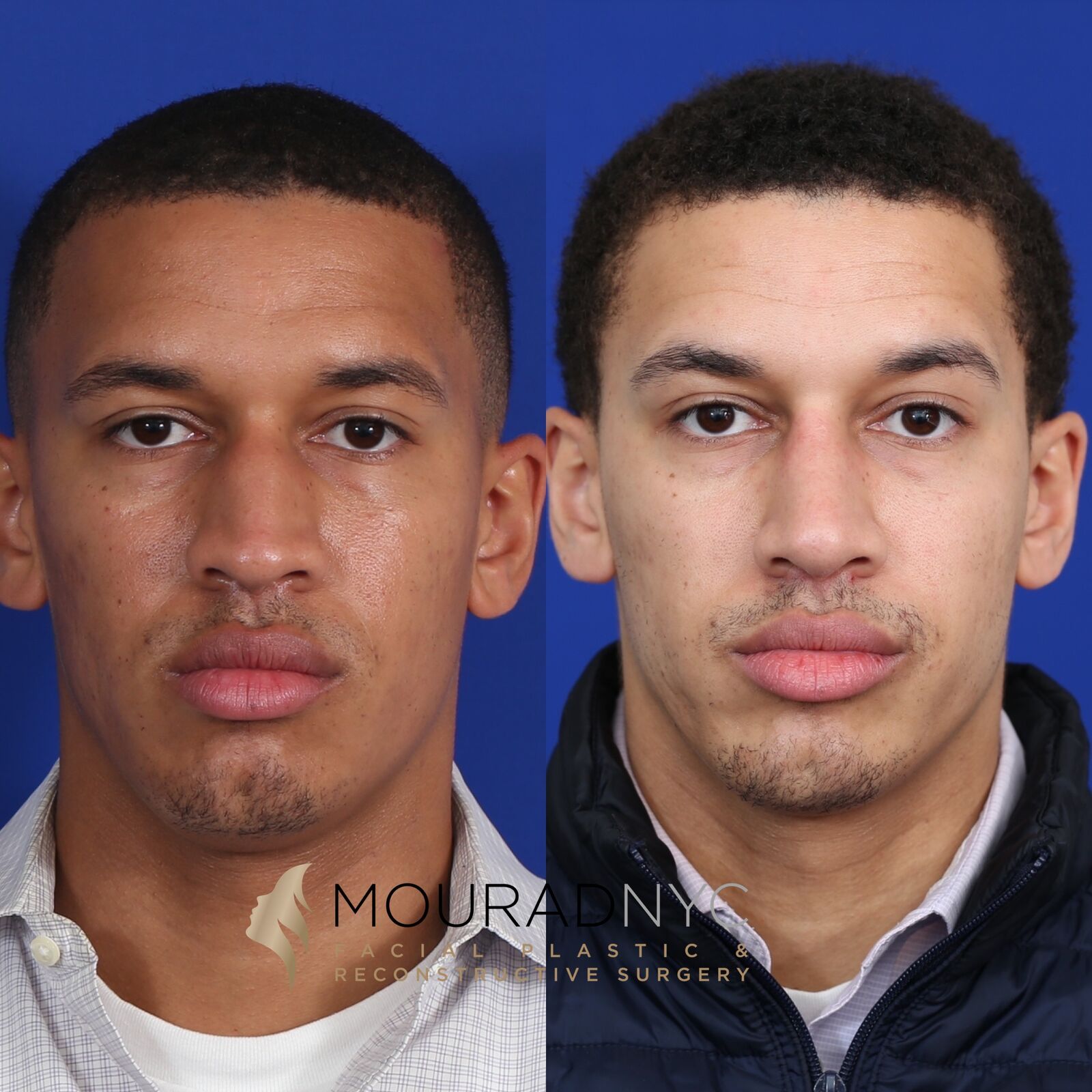
Ethnic Rhinoplasty · 30s · Male
Ethnic rhinoplasty using a costal cartilage (rib) graft for structural support, with the goal of refining the dorsal contour and tip while preserving the patient's ethnic identity and masculine facial proportions.
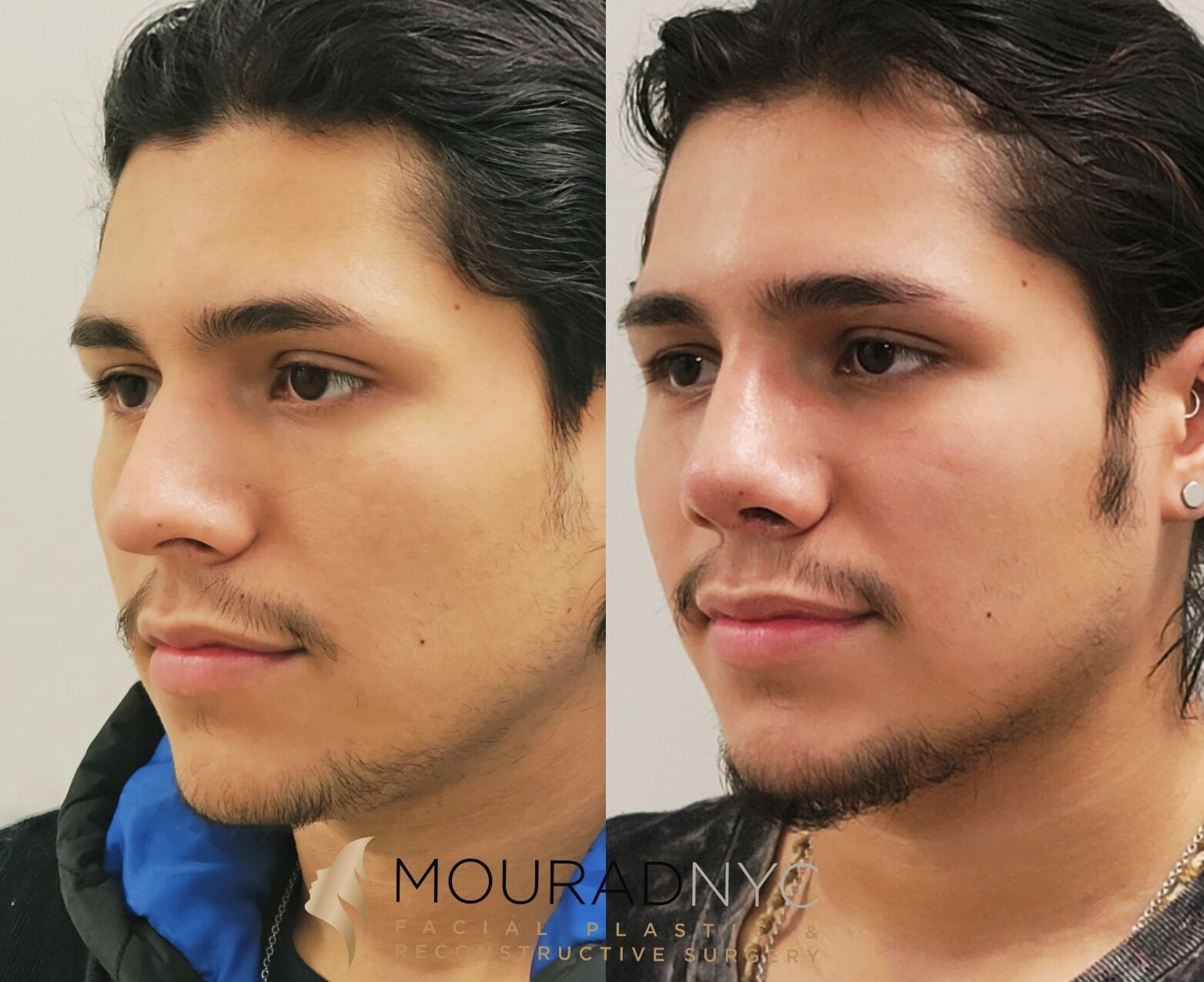
Ethnic Rhinoplasty · 20s · Male
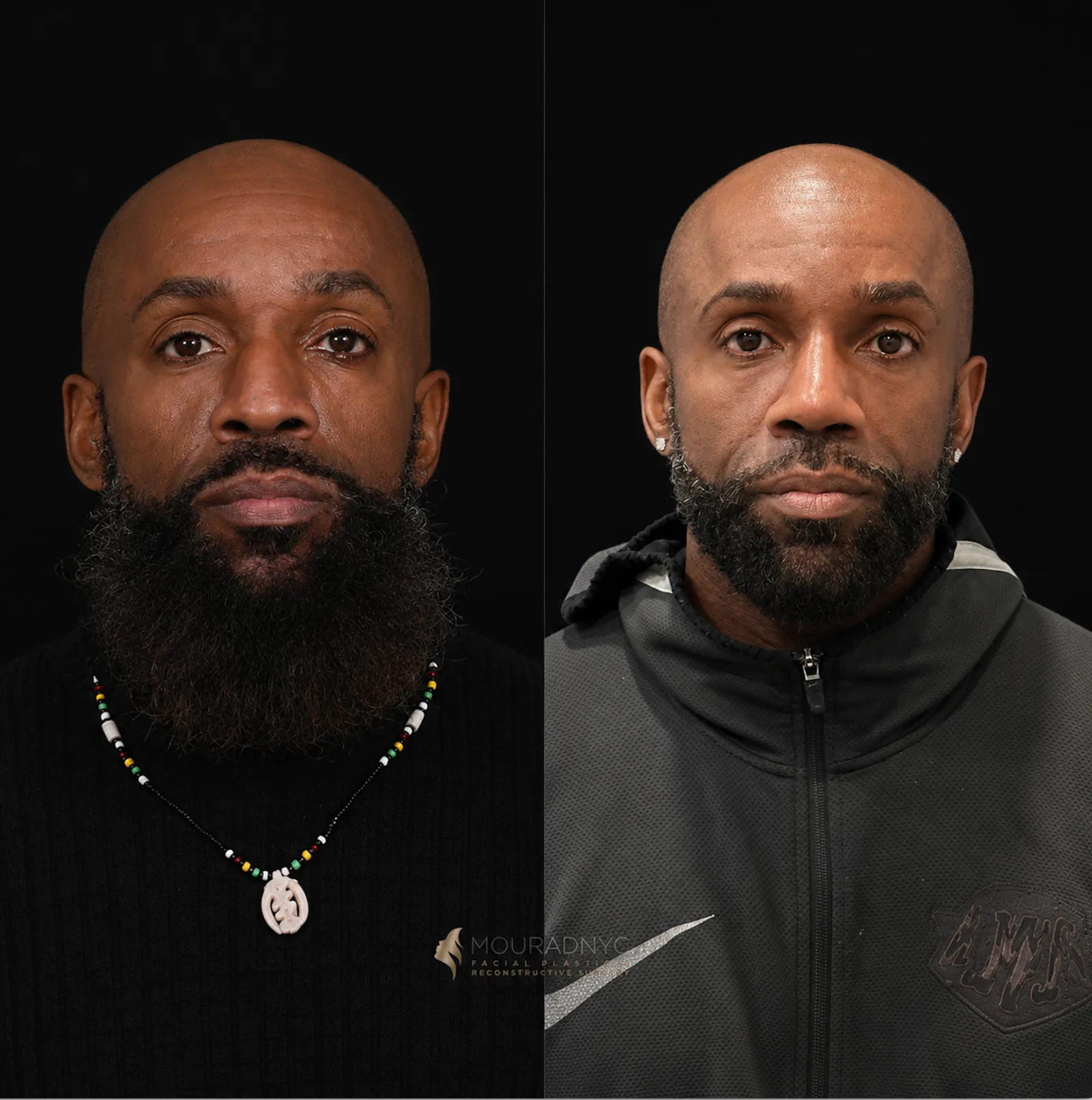
Ethnic Rhinoplasty · 40s · Male
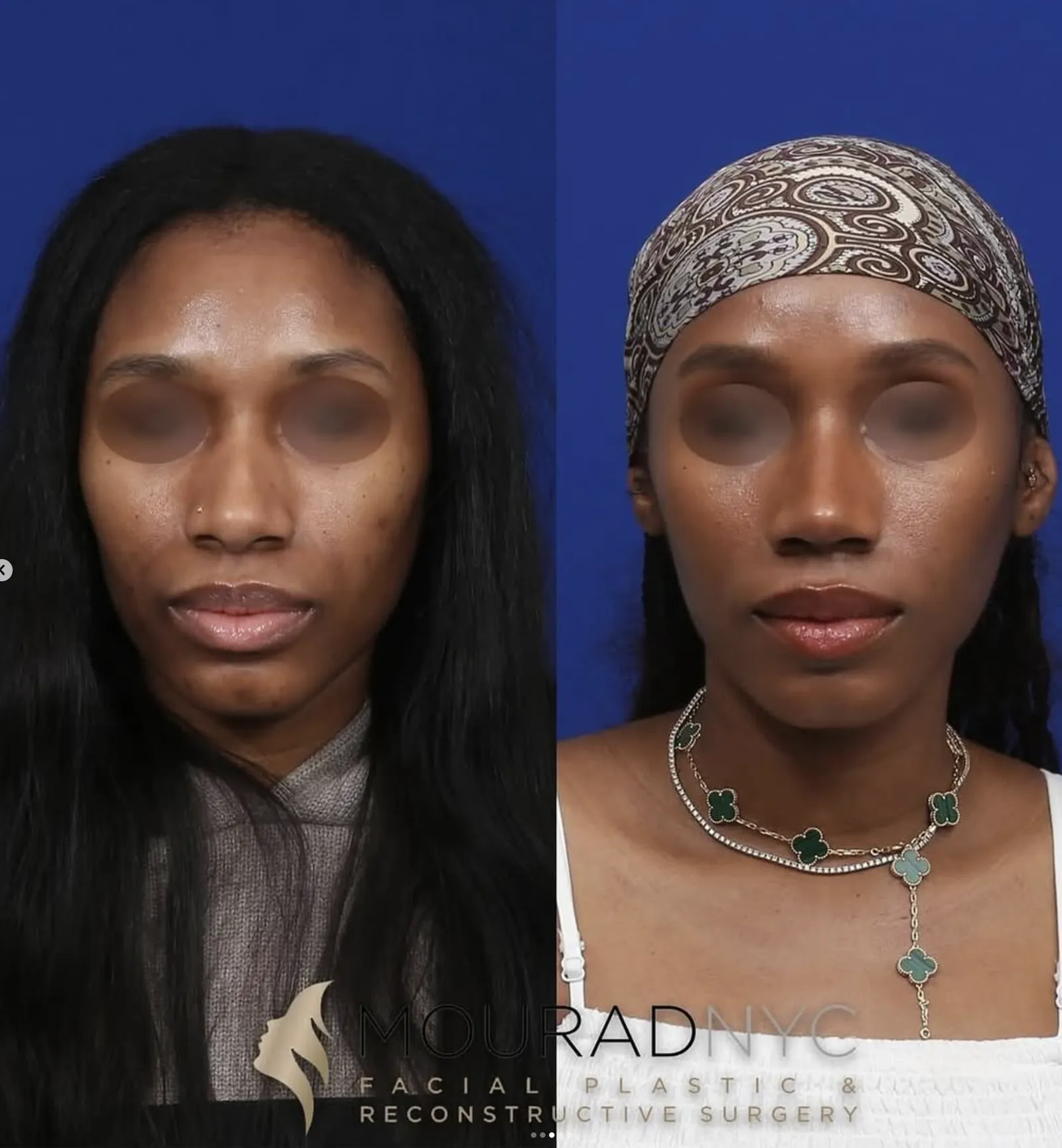
Ethnic Rhinoplasty + Sinus Surgery + Broken Nose Repair · 30s · Female
Pre and post-operative comparison · Photographed in standardized studio conditions · Written consent on file
If this describes you, the next step is a quiet, unhurried conversation — not a sales call.
An Honest Note
When this operation may not be right for you.
Patients whose stated goal is to copy a specific celebrity or who cannot identify their own priorities are encouraged to take more time before deciding.
Patients seeking dramatic projection or reduction beyond what their tissues can support are counseled candidly.
Body dysmorphic features around the nose are screened for and managed with appropriate referral when present.
Smokers and patients on certain medications need a planned optimization window before any nasal surgery.
03 · Approaches
Three paths to ethnic refinement.
Ethnic rhinoplasty is identity-conscious planning, not a fixed technique or a universal endpoint. The right plan respects the patient's stated priorities and individual anatomy.
1 of 3 · Structural Rhinoplasty
04 · Technique
Tip & dorsal refinement.
Two of the most-requested refinements in ethnic rhinoplasty. Both require structural cartilage support to produce a result that holds shape under the long term.
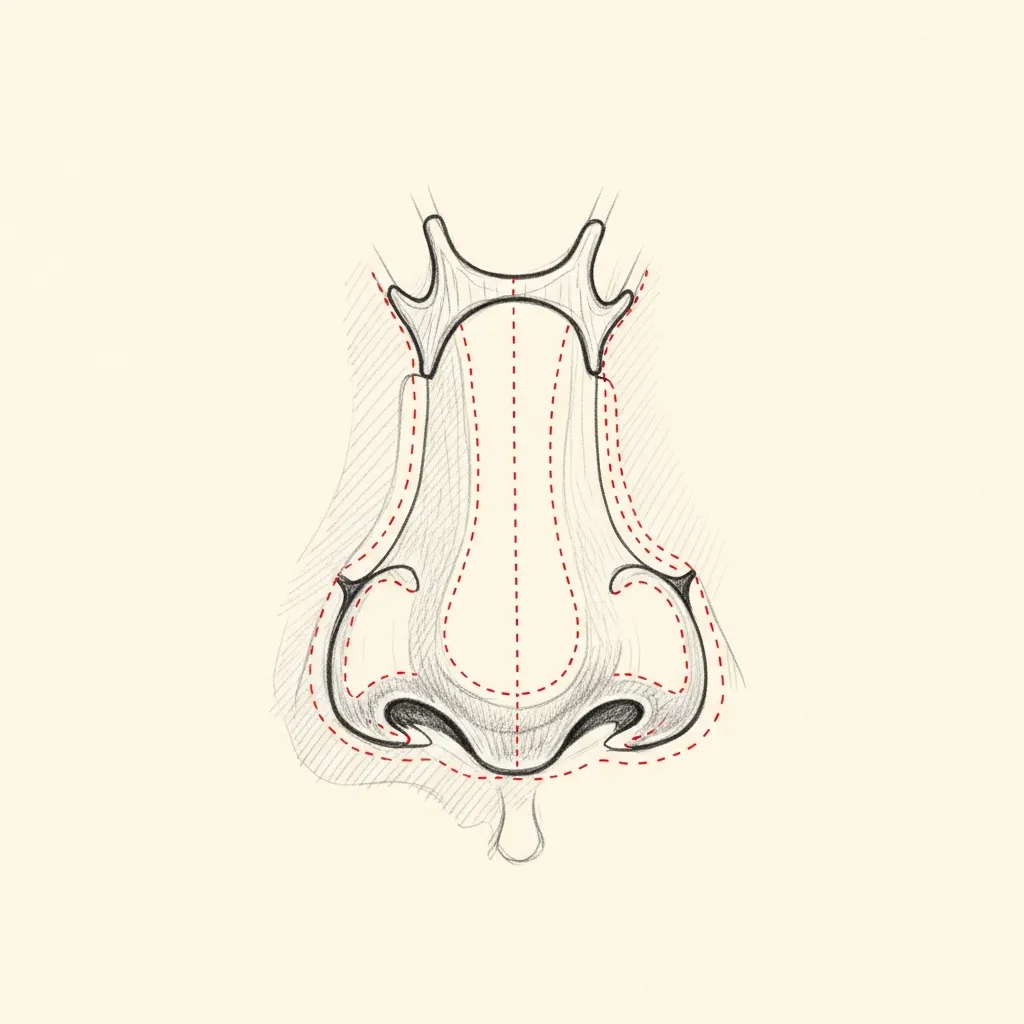
Tip
Cartilage support and refinement
A columellar strut graft and refining sutures produce tip definition and modest projection without aggressive reduction of native cartilage.
When the skin-soft-tissue envelope limits definition or the cartilage needs reinforcement, structural support can help the planned contour remain stable through healing.
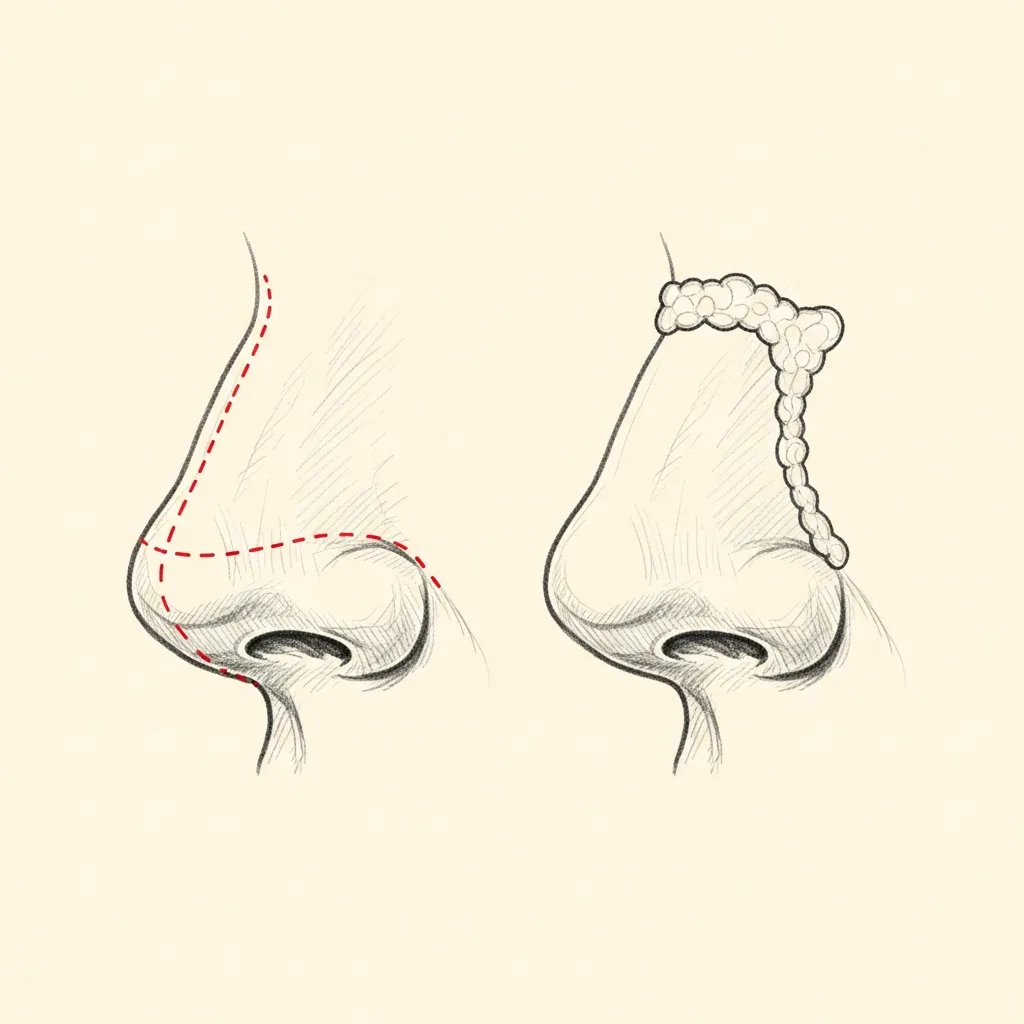
Dorsal
Reduction or augmentation
The dorsum is either refined down or augmented up — the right answer depends on the starting dorsal profile and the patient's aesthetic preference.
When augmentation is appropriate, autologous cartilage may be selected according to the contour and support required; implant and donor-site choices are discussed individually.
Illustrative diagrams. Every rhinoplasty is individual.
Begin the conversation
A careful, honest evaluation is the right first step.
Cost & Insurance
Ethnic Rhinoplasty Cost & Insurance
Ethnic rhinoplasty cost depends on the patient’s anatomy, skin thickness, bridge support, tip structure, nostril shape, cartilage grafting needs, and whether functional breathing concerns are addressed. The goal is not to erase identity, but to refine the nose while preserving facial harmony and the patient’s natural features.
Ethnic rhinoplasty performed for cosmetic refinement is self-pay. As an out-of-network practice, a functional breathing component — such as septal deviation, nasal valve collapse, or turbinate enlargement — may be submitted to insurance only for the medically necessary portion, when the patient's plan includes applicable out-of-network benefits; coverage is not guaranteed. A personalized quote is provided after consultation.
What May Affect Cost
- Skin thickness
- Bridge height and support
- Tip structure
- Nostril or alar base refinement
- Cartilage grafting needs
- Functional breathing concerns
The prices listed are provided as general estimates of typical surgical investment and are not guaranteed quotes. Surgical fees vary based on the patient's anatomy, the complexity of the procedure, previous surgery, operative time, anesthesia and facility requirements, implants or hardware, virtual surgical planning when applicable, and whether multiple procedures are performed together. An exact surgical fee is provided following consultation and development of an individualized treatment plan.
05 · In Dr. Mourad's Words
Educational videos.
Short educational films and patient perspectives from the Manhattan practice.
Dr. Mourad in Practice
An overview of the practice and philosophy.
Patient Perspective
A patient discusses her experience before, during, and after surgery.
Inside the Consultation
How Dr. Mourad evaluates anatomy, goals, and candidacy.
06 · Recovery
What healing actually looks like.
Stage 01
First 24 Hours
Initial recovery focuses on rest, hydration, and following all post-operative instructions exactly. Pain is managed with multi-modal non-narcotic protocols where appropriate.
Stage 02
Week 1
Swelling and bruising peak in the first few days and improve steadily through the first week. Most patients are presentable for casual social activity by the end of week two.
Stage 03
Weeks 2 – 4
Through weeks two to four the early result begins to settle. Light cardio resumes around three weeks; vigorous exertion and contact activities are deferred per the operative plan.
Stage 04
Months 1 – 6
The final refined result emerges progressively over the following months as residual swelling continues to resolve. Follow-up visits are scheduled across the first year.
Have a specific question?
Send a brief note describing your anatomy or concerns — the office will route it directly to Dr. Mourad for review.

Before You Arrive
Your consultation, prepared.
Bring photographs relevant to your concern, when available.
Bring records from any prior surgery, when available.
List current medications, supplements, and blood-thinning agents.
Note any prior anesthesia issues or chronic medical conditions.
Allow 60 minutes for the first consultation.
Bring questions; no decisions are made at the first visit.
Frequently Asked
Patient questions, honestly answered.
No. It may use structural, preservation, open, endonasal, reduction, augmentation, or hybrid methods. The term describes an identity-conscious planning approach, not a fixed operation.
That should not be the goal. The consultation identifies what the patient wants refined and what should remain recognizable. The plan is built around facial harmony and the patient’s own preferences rather than a universal nose shape.
Clinical references
This page draws on published clinical practice guidelines and public-health references. These sources inform general patient education and do not replace an individual evaluation with Dr. Mourad.
- 01Ishii LE, et al. Clinical Practice Guideline: Improving Nasal Form and Function after Rhinoplasty. Otolaryngology–Head and Neck Surgery. 2017;156(2 Suppl):S1–S30. PMID: 28145823. DOI: 10.1177/0194599816683153. AAO-HNSF guideline
- 02Reid D, et al. Ethnic Variations and Surgical Outcomes in Rhinoplasty: A Systematic Review. Aesthetic Plastic Surgery. 2025;49(24):6877–6885. PMID: 40494973. DOI: 10.1007/s00266-025-04939-0. PubMed
- 03Hashemipour Y, Danesh HA. Ethnic Considerations in Rhinoplasty: A Meta-Analysis of Outcomes and Complications in Caucasian Versus Non-Caucasian Patients. Aesthetic Plastic Surgery. 2026;50(4):1537–1546. PMID: 40906288. DOI: 10.1007/s00266-025-05189-w. PubMed
- 04van Zijl FVWJ, et al. Evaluation of Measurement Properties of Patient-Reported Outcome Measures After Rhinoplasty: A Systematic Review. JAMA Facial Plastic Surgery. 2019;21(2):152–162. PMID: 30605215. DOI: 10.1001/jamafacial.2018.1639. PubMed
- 05Chen K, Zhou L. The Effect of Functional Rhinoplasty on Quality of Life: A Systematic Review and Meta-Analysis. Aesthetic Plastic Surgery. 2024;48(5):847–854. PMID: 37173413. DOI: 10.1007/s00266-023-03390-3. PubMed
Explore Further
Related procedures & resources
Ethnic rhinoplasty sits within Dr. Mourad's wider rhinoplasty practice. These pages explain how the work relates.
Rhinoplasty
The full rhinoplasty practice — cosmetic, functional, preservation, and revision nose surgery.
Read moreMale Rhinoplasty
Individualized planning for bridge, tip, trauma, facial balance, breathing, and the result each patient personally wants.
Read moreRevision Rhinoplasty
Correction of the appearance, structure, or breathing of the nose after prior surgery.
Read morePreservation Rhinoplasty
A conservative approach that lowers the dorsum as a unit to preserve surface anatomy.
Read moreBefore & After Gallery
Representative cases, photographed with written consent on file.
Read moreRequest a Consultation
Begin with an unhurried clinical evaluation.
Read moreThe Most Important Step
Your expert consultation.
A careful evaluation by a double board-certified physician is the right first step. The conversation is unhurried, the diagnosis is honest, and the operative plan is built around what your anatomy can sustain and what you actually want.