Education
Why Do My Nostrils Flare?
Nostrils flare when you need more air, but flaring at rest can signal a blocked nose. What is normal, what is not, and what can help.
ABFPRS
Facial Plastic & Reconstructive Surgery
ABOto
Otolaryngology — Head & Neck Surgery
AAFPRS
Fellowship Director

Overview
Nostril flaring — the outward widening of the nostrils as you breathe — can be completely normal, or it can be a clue that the nasal airway is narrower than it should be. The meaning depends on when it happens and whether breathing feels restricted.
An Established Academic Authority
Double board certification. Fellowship director. Published author. A surgeon's surgeon.
ABFPRS
Board Certified
American Board of Facial Plastic & Reconstructive Surgery
ABOto
Board Certified
American Board of Otolaryngology — Head & Neck Surgery
AAFPRS
Fellowship Director
American Academy of Facial Plastic and Reconstructive Surgery
Textbook
Published Author
Contributions to the academic literature of facial plastic surgery
Dual board certification in both Facial Plastic & Reconstructive Surgery and Otolaryngology — Head & Neck Surgery.
Castle Connolly Top Doctor — Plastic Surgery, 20261. Normal flaring
Muscles around the nostrils widen them when you need more air — during exercise, exertion, or strong emotion. It's a normal reflex. Flaring that only happens with effort and settles at rest is nothing to worry about.
2. Flaring as a sign of blocked breathing
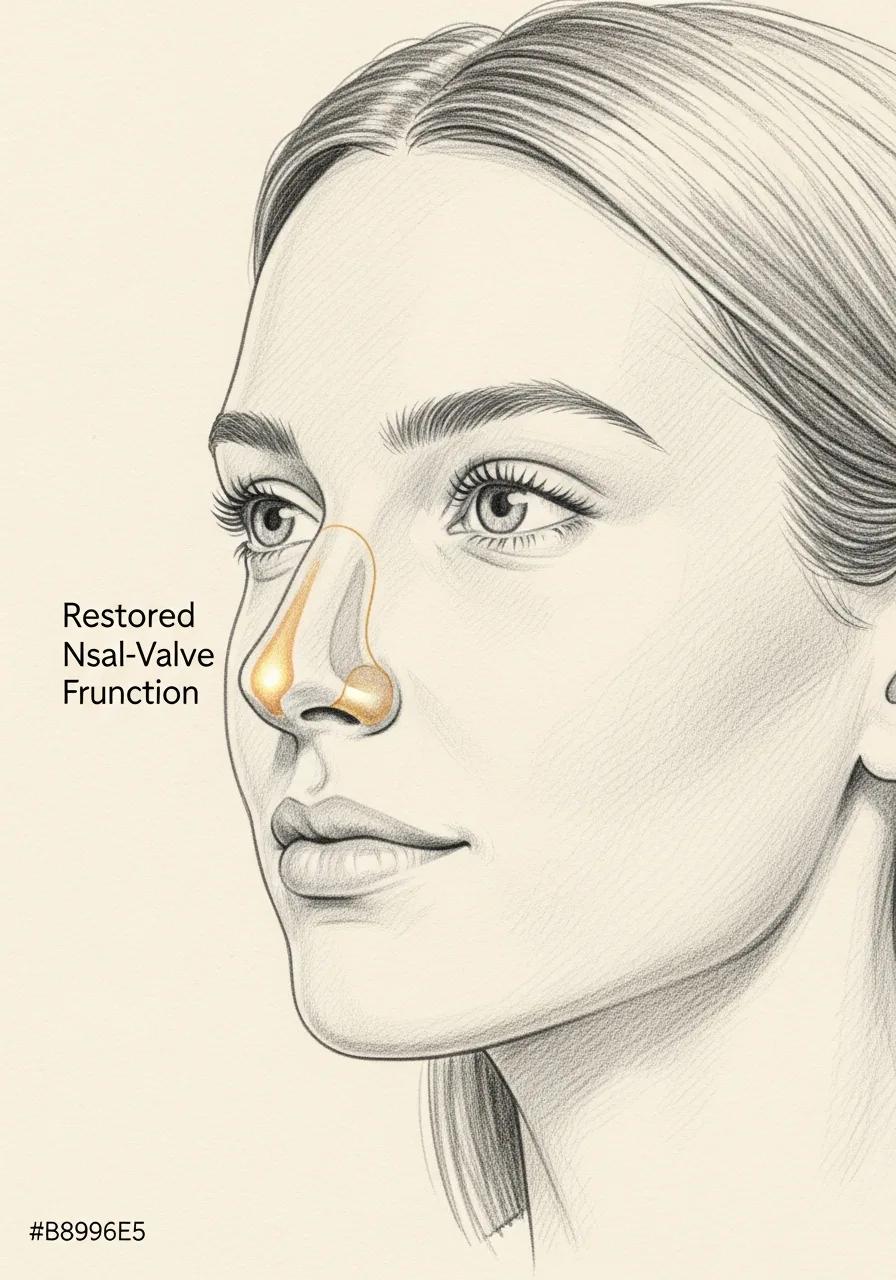
If your nostrils flare during ordinary, restful breathing, or you feel you're not getting enough air through your nose, the flaring may be compensating for obstruction further inside — a deviated septum, enlarged turbinates, or narrowing at the nasal valve.
Flaring vs. collapse: flaring is the nostrils actively pulling *open*. The opposite — the side of the nose getting sucked *inward* as you breathe in — is a sign of nasal valve collapse. People sometimes notice both: their muscles flare to fight a sidewall that's collapsing.
In a child, persistent flaring with fast or labored breathing is a sign of breathing difficulty and needs prompt medical attention.
3. Flaring as a shape concern
Some people have wide nostrils or a wide base to the nose, or nostrils that spread noticeably when they smile. This is anatomy and movement, not a breathing problem. When it bothers someone, it can be refined.
What can help
Concern Approach
--- ---
Flaring from blocked breathing Treat the cause — steroid sprays for inflammation; septoplasty, turbinate reduction, or valve support for structural problems
Wide nostrils or wide nasal base Alar base reduction — removing a small wedge at the base of the nostrils, with the scar hidden in the natural crease where the nostril meets the cheek; often done with rhinoplasty
Nostrils that flare when smiling Alar base reduction can reduce flaring width; in selected cases, small doses of botulinum toxin can soften the muscle pull
Nostril narrowing is kept conservative — over-narrowing can make the nostrils look unnatural and can restrict breathing.
Selective treatment for dynamic nostril flaring
Botulinum toxin can be offered selectively for dynamic nostril flaring caused by muscle activity. Small doses can reduce excessive movement of the nasal ala in appropriate patients; the temporary effect generally lasts several months and does not correct a structurally wide or permanently flared nostril. Structural alar-base concerns are evaluated separately and may require surgery. This is distinct from Nasalift™, a permanent surgical solution performed without Botox or filler.
Frequently Asked
Why Do My Nostrils Flare? — patient questions, honestly answered.
Yes, when it happens with exercise, exertion, or strong emotion and settles at rest. Flaring at rest, or flaring along with a sense of restricted nasal breathing, is more likely to reflect an airway issue and is worth examining.
Not necessarily. It can be a normal reflex. But persistent flaring paired with difficulty breathing through the nose can indicate nasal valve collapse or another form of obstruction, which an examination can clarify.
Continue exploring
Related resources
Next step
Plans are individualized. The consultation is where that begins.
Reach the Manhattan office to schedule a private consultation with Dr. Mourad.