Sinus Care
Recurrent Sinus Infections — Why They Keep Coming Back
Four or more sinus infections a year? Why they keep coming back, how to break the cycle, and when balloon sinuplasty or surgery helps — from a NYC sinus specialist.
ABFPRS
Facial Plastic & Reconstructive Surgery
ABOto
Otolaryngology — Head & Neck Surgery
AAFPRS
Fellowship Director

Overview
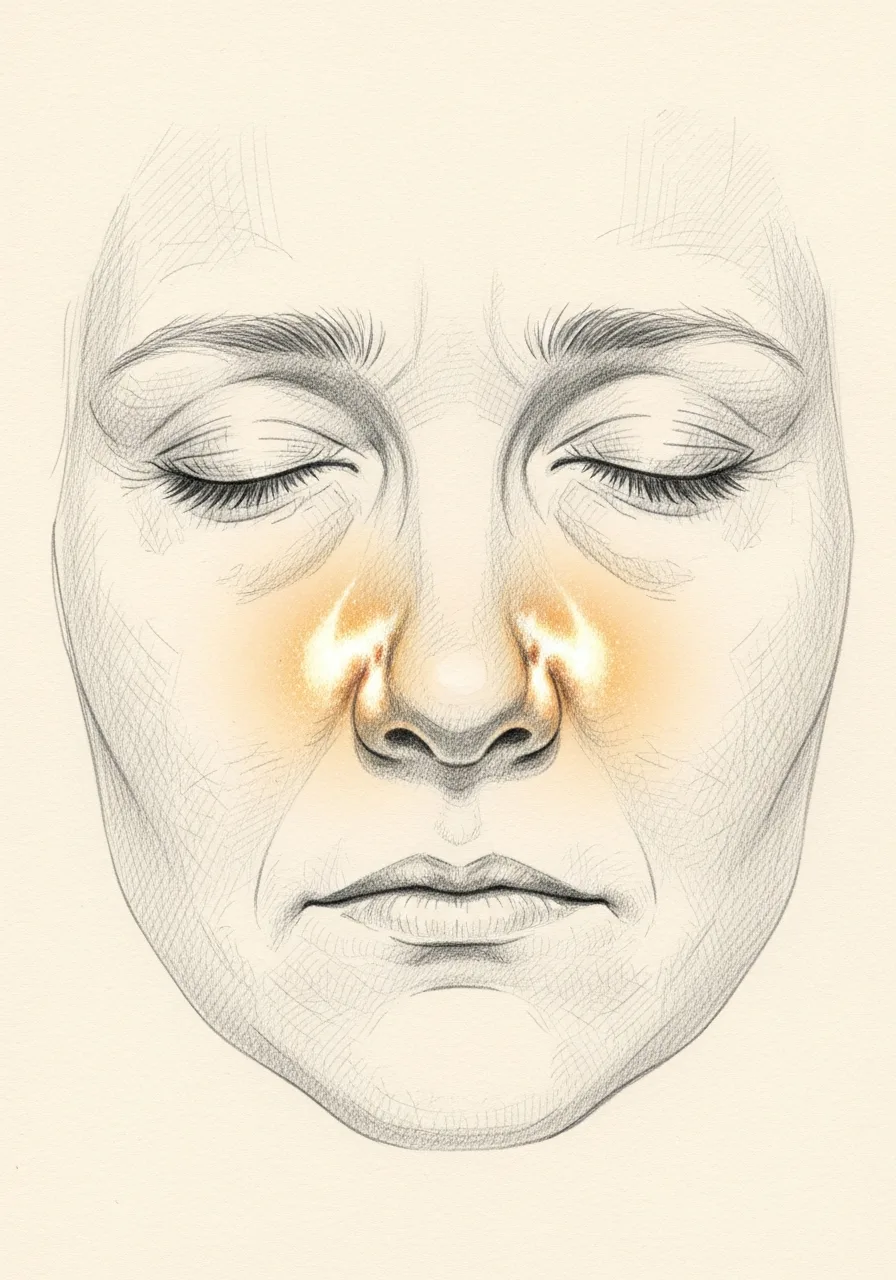
If you have four or more sinus infections a year, the problem usually isn't bad luck. A narrowed drainage pathway, untreated allergy, polyps, or a structural issue lets every cold turn into another infection. Finding that cause is how the cycle stops.
Key takeaways
- Recurrent sinus infections usually trace to inflammation, a narrowed drainage pathway, allergies, or polyps — not chance.
- Antibiotics often help only temporarily because they do not address the underlying blockage or inflammation.
- Evaluation looks at the nose, sinuses, and facial anatomy together, often with endoscopy and a CT scan.
- Medical and non-surgical management is tried first; surgery is considered when the pattern persists.
- Some symptoms that resemble sinus infections turn out to be a different condition entirely.
An Established Academic Authority
Double board certification. Fellowship director. Published author. A surgeon's surgeon.
ABFPRS
Board Certified
American Board of Facial Plastic & Reconstructive Surgery
ABOto
Board Certified
American Board of Otolaryngology — Head & Neck Surgery
AAFPRS
Fellowship Director
American Academy of Facial Plastic and Reconstructive Surgery
Textbook
Published Author
Contributions to the academic literature of facial plastic surgery
Dual board certification in both Facial Plastic & Reconstructive Surgery and Otolaryngology — Head & Neck Surgery.
Castle Connolly Top Doctor — Plastic Surgery, 2026Overview: when sinus infections keep returning
Almost everyone gets the occasional sinus infection after a bad cold, and most of those episodes settle on their own or with a short course of treatment. For a first episode, see our guide to acute sinus infection. Recurrent sinus infections are different. When the same cycle of congestion, facial pressure, and thick drainage returns several times a year — or comes back within days or weeks of finishing antibiotics — it usually means something underneath has not been fully addressed. The infection is a symptom of a deeper problem, not the whole story.
Dr. Moustafa Mourad evaluates recurrent sinus infections by looking at the whole picture: the sinuses themselves, the nasal airway that feeds and drains them, your prior treatment history, and imaging when it is appropriate. The goal is not simply to treat one more infection, but to understand why the infections keep happening so that treatment can be aimed at the cause rather than the flare.
Not every patient with repeated infections needs surgery. Many people improve significantly with medical therapy, allergy management, and better day-to-day sinus care once the underlying driver is identified. Surgery is reserved for situations where symptoms, examination findings, and imaging together suggest that a procedure may genuinely help. The first and most useful step is an accurate diagnosis. Schedule a consultation or call 212.832.0444 to begin that process.
What counts as recurrent sinus infections?
Patients usually describe recurrent sinus infections as repeated episodes of nasal congestion, facial pressure or fullness, thick or discolored drainage, reduced sense of smell, fatigue, and a general feeling of being unwell. The episodes tend to improve temporarily — often with antibiotics or decongestants — and then return, sometimes within a short window. The repetition is the part that distinguishes a recurrent problem from a single, isolated infection.
In clinical terms, recurrent acute rhinosinusitis is often defined as four or more acute sinus infections per year with complete clearing of symptoms between episodes. Not every patient meets this strict definition — but repeated antibiotic-treated episodes, or symptoms that return quickly after each course of antibiotics, still deserve a closer evaluation rather than another prescription.
When evaluating the pattern, it helps to think through a few specific questions. The answers often point toward the underlying cause:
- How many distinct infections occur over the course of a year, and are they becoming more frequent?
- Do symptoms fully clear between episodes, or is there always some lingering congestion or pressure in the background?
- Are antibiotics repeatedly needed, and do they help only briefly before symptoms return?
- Are the symptoms truly sinus-related, or could allergy, migraine, tension headache, or reflux be contributing?
- Is there objective evidence of sinus disease on examination or imaging, or only the symptoms themselves?
These distinctions matter because two very different conditions can look similar from the outside. The first is recurrent acute sinusitis — separate, well-defined infections with genuine symptom-free intervals in between. The second is chronic sinusitis with flares, where low-grade inflammation never fully resolves and simply worsens periodically. A sinus specialist can help separate the two, because they are managed differently. You can read more about persistent, low-grade disease on the chronic sinusitis treatment page.
Why infections get trapped: the anatomy of recurrence
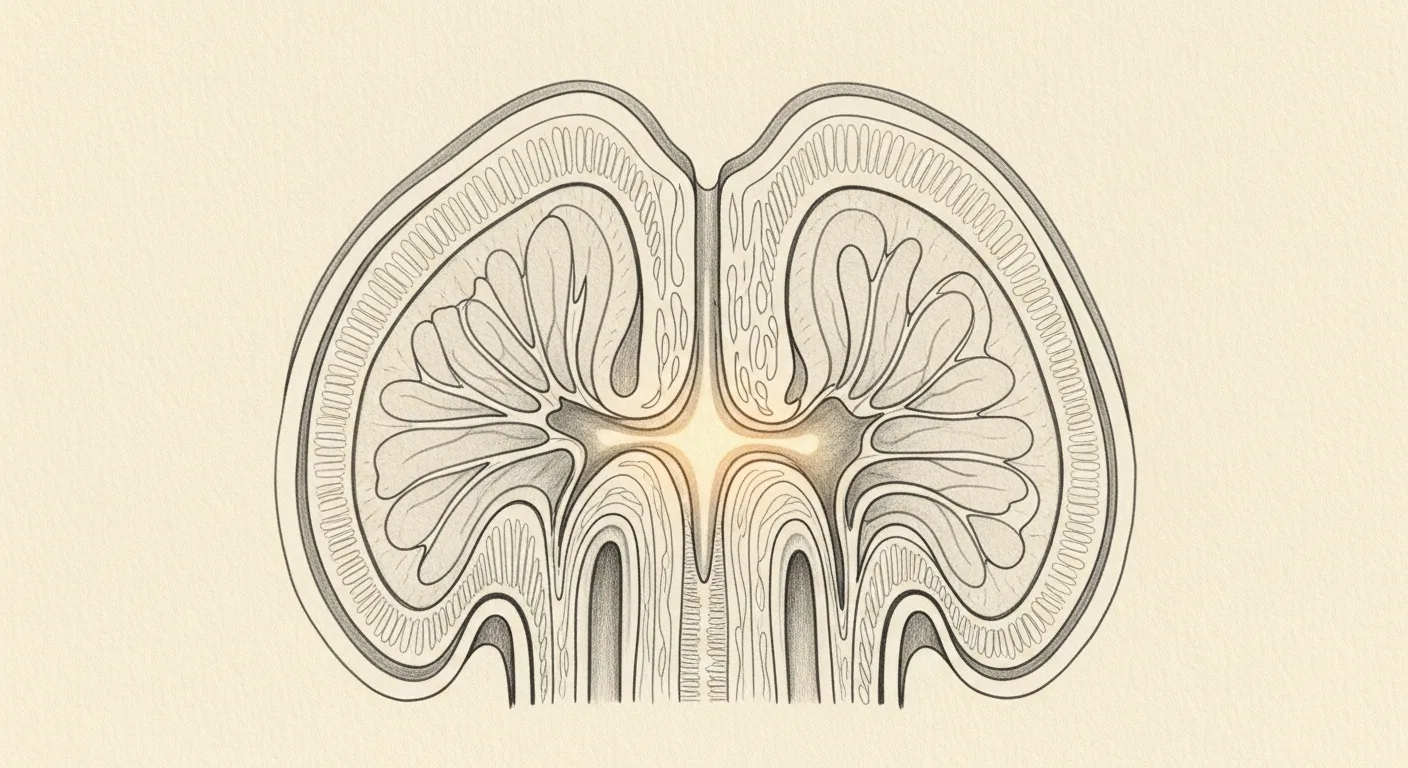
To understand why infections recur, it helps to understand how the sinuses are built. The sinuses are air-filled spaces within the bones of the face and forehead, lined with a thin layer of tissue that continuously produces mucus. That mucus is not a problem in itself — it traps dust, allergens, and bacteria, and it is meant to be swept steadily out of each sinus and into the nose, where it drains harmlessly toward the throat. Tiny hair-like structures called cilia move that mucus along a predictable pathway, much like an escalator that never stops running.
Each sinus drains through a relatively small opening. When that opening is wide and the lining is healthy, mucus clears efficiently and bacteria rarely have a chance to take hold. When the opening is narrowed — by swelling, by a structural issue, or by both — mucus begins to back up behind the blockage. Trapped, stagnant mucus is an ideal environment for bacteria to multiply, which is exactly the situation shown above: secretions building up behind a narrowed drainage point.
This is the central reason infections recur in the same person. If the drainage pathway is even slightly compromised, every cold, allergy flare, or irritant exposure causes the lining to swell, the opening to close further, and mucus to pool again. The infection clears with treatment, the swelling temporarily subsides, and then the next trigger restarts the same sequence. Until the drainage problem itself is addressed, the cycle tends to repeat.
Several anatomic factors can narrow these pathways, including swelling of the sinus lining, enlarged turbinates, a deviated nasal septum, prior scarring, or nasal polyps. Identifying which of these is present — and whether more than one is at play — is a key part of the evaluation, because it determines whether the problem can be managed with medication or whether a structural correction may eventually be warranted.
The cycle of recurrent infection
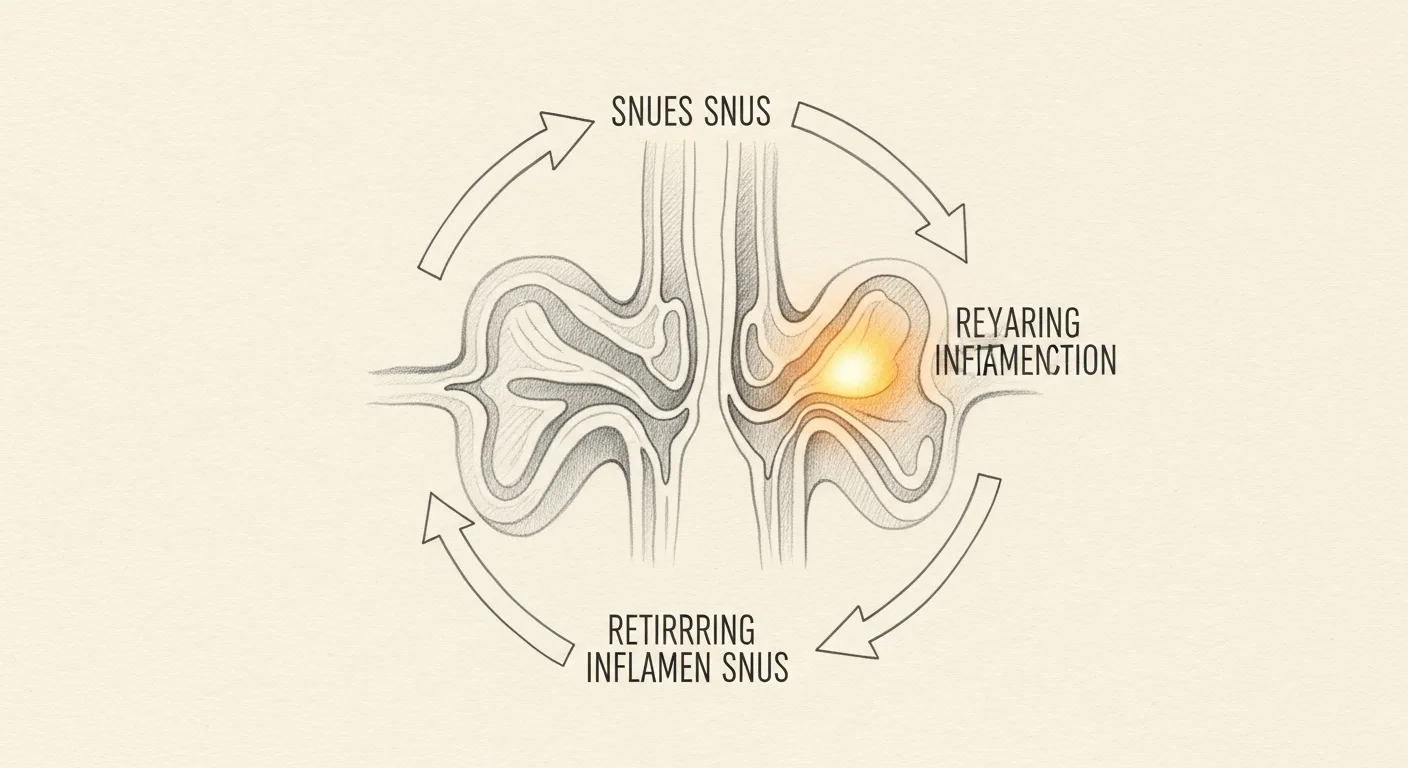
Recurrent sinus infections often follow a self-reinforcing loop. Recognizing that loop helps explain why each individual round of antibiotics can feel effective and yet the overall problem never goes away. The cycle typically unfolds in stages:
- 01A trigger — a viral cold, an allergy flare, exposure to smoke or pollution, or dry indoor air — causes the sinus lining to swell.
- 02The swelling narrows or closes the drainage opening, and mucus begins to collect behind it.
- 03Stagnant mucus becomes a place where bacteria can grow, and a bacterial sinus infection develops on top of the original inflammation.
- 04Treatment, often antibiotics, reduces the bacterial load and the most acute symptoms partially clear.
- 05Because the underlying narrowing and inflammation were never fully resolved, the next trigger restarts the sequence — sometimes within weeks.
Each loop can also leave the lining a little more inflamed than before. Over time, repeated inflammation may thicken the tissue and make the drainage pathway even more vulnerable, which is one of the ways recurrent acute infections can gradually shade into more persistent, chronic disease. This is why a pattern of frequent infections deserves a closer look rather than simply another prescription — the aim is to interrupt the loop, not just blunt the most recent flare.
Symptoms and patterns to pay attention to
The symptoms of a sinus infection are familiar to most people, but with recurrent infections the timing and pattern are as informative as the symptoms themselves. Common features include:
- Nasal congestion or obstruction that makes breathing through the nose difficult
- Facial pressure, fullness, or pain — often across the cheeks, around the eyes, or in the forehead
- Thick nasal drainage, which may be discolored, and drainage down the back of the throat
- A reduced or absent sense of smell, and sometimes a diminished sense of taste
- Fatigue, poor sleep, and a general run-down feeling during episodes
- Symptoms that improve with treatment but return on a recognizable schedule
It is worth noting how the symptoms behave between episodes. If you feel completely well in the intervals, that points toward recurrent acute infections. If there is always a baseline of congestion, pressure, or reduced smell — even on your better days — that suggests an ongoing inflammatory process that flares rather than fully resolves. Bringing this history to your evaluation, ideally with rough dates and a sense of how often antibiotics were used, gives a far more useful starting point than the symptoms of any single episode alone.
Why do sinus infections keep coming back?
There is rarely a single cause. More often, recurrent infections reflect a combination of factors that together keep the sinuses vulnerable. Possible contributors include:
- Blocked or narrowed sinus drainage pathways that trap mucus
- Chronic, low-grade inflammation of the sinus lining
- Nasal polyps, which obstruct airflow and drainage
- Allergies that drive recurrent swelling and congestion
- A deviated septum or enlarged turbinates that narrow the nasal airway
- Impaired mucus clearance, so secretions are not swept out efficiently
- Environmental irritants such as smoke, pollution, and very dry air
- Asthma or other inflammatory airway conditions that affect the nose and sinuses together
- Incomplete resolution of prior disease, or recurrence after earlier sinus surgery
Because these factors interact, treatment depends on identifying which ones are actually present in your case. Allergy-driven inflammation is approached very differently from a fixed structural narrowing, and nasal polyps require a different plan again. This is why a careful evaluation — rather than a default to repeated antibiotic courses — tends to produce more durable results. Polyps in particular change the strategy substantially; the nasal polyps treatment page describes that situation in more detail.
When the symptoms may not be sinus infections at all
An important and sometimes overlooked part of the evaluation is confirming that the recurrent episodes are genuinely bacterial sinus infections. Several other conditions can mimic the experience of a sinus infection, and treating them as infections leads to repeated antibiotics that do not help.
- Allergic rhinitis can cause congestion, drainage, and pressure without a true bacterial infection.
- Migraine and tension-type headaches frequently produce facial pain and pressure that feel sinus-related.
- Viral upper respiratory infections cause sinus symptoms that resolve on their own and do not respond to antibiotics.
- Reflux can contribute to throat clearing, post-nasal drainage, and irritation that mimics sinus disease.
- Non-allergic rhinitis can produce chronic congestion triggered by temperature changes, odors, or irritants.
Distinguishing these from recurrent bacterial sinusitis matters because the right treatment is entirely different. Repeated courses of antibiotics for what is actually allergy or migraine offer little benefit and carry their own downsides. Part of the value of a specialist evaluation is sorting out which symptoms are truly coming from the sinuses and which are not.
How Dr. Mourad evaluates recurrent sinus infections
The evaluation is designed to answer two questions: are these truly recurrent sinus infections, and if so, what is allowing them to keep coming back? A thorough workup may include several components, used selectively based on your history and findings:
- 01A detailed symptom timeline — how often episodes occur, how long they last, and how completely they resolve in between
- 02A medication history, including which treatments have helped, for how long, and how often antibiotics have been used
- 03A focused nasal and facial examination
- 04Nasal endoscopy when appropriate, using a thin camera to look directly at the drainage pathways, the septum, the turbinates, and any polyps
- 05A CT scan when recurrent or chronic sinus disease is suspected, to assess the sinus anatomy and the extent of any obstruction or inflammation
- 06A discussion of allergy and asthma factors, since these often drive recurrent inflammation
- 07A review of any prior cultures, imaging, or previous sinus surgery
Nasal endoscopy and CT imaging are particularly valuable because they move the assessment from symptoms alone to objective findings. Endoscopy can reveal swelling, pus, polyps, or a narrowed opening that an external exam cannot. A CT scan maps the sinus anatomy in detail and shows whether inflammation or blockage is genuinely present. Together, they help separate patients who will do well with continued medical management from those for whom a procedure may be reasonable — and they guide exactly what any procedure would need to address.
Non-surgical and medical management comes first
For most patients with recurrent infections, treatment begins with non-surgical measures aimed at reducing inflammation, improving drainage, and addressing the triggers that set off each episode. Many people improve substantially at this stage. Medical management may include:
- Saline irrigation to rinse mucus, allergens, and irritants from the nasal passages and support drainage
- Nasal steroid sprays to reduce lining inflammation and keep drainage pathways more open
- Targeted antibiotics when a bacterial infection is genuinely suspected, rather than reflexively for every episode
- Allergy management — which may include avoidance strategies, medications, or referral for allergy testing — when allergies are a driver
- Anti-inflammatory therapy and management of related conditions such as asthma
- Practical environmental adjustments, such as humidifying dry indoor air and reducing exposure to smoke and irritants
Consistency matters with these measures; several of them work most effectively when used regularly rather than only during a flare, and it can take some weeks of steady use before the full benefit is clear. When medical therapy is followed carefully and symptoms still recur, that information is itself useful — it helps clarify whether a structural problem is limiting how much medication alone can accomplish. Many patients are able to break the cycle of recurrence at this stage and never need anything more. The decision-making around that crossover point, for those who do not improve, is explored further in the do I need sinus surgery? guide.
Office-based and procedural options
Balloon sinuplasty
For selected patients whose recurrent infections are related to a limited, well-defined narrowing of certain sinus drainage openings, balloon sinuplasty may be considered. The technique uses a small balloon to gently widen a blocked sinus opening, with the goal of restoring more normal drainage. It is most appropriate for specific anatomic situations and is not the right answer for everyone — patients with nasal polyps or more extensive disease generally need a different approach.
Whether balloon sinuplasty is suitable depends heavily on the findings from endoscopy and CT imaging. The procedure addresses drainage at particular openings; it does not remove polyps or treat widespread inflammation. That is why candidacy is determined by the diagnosis and the anatomy, not by symptom frequency alone.
Endoscopic sinus surgery
When recurrent infections are tied to chronic disease, nasal polyps, or more complex or multi-sinus obstruction, sinus surgery — specifically endoscopic sinus surgery — may be appropriate. This approach uses a camera and fine instruments passed through the nostrils, with no external incisions, to remove obstructing tissue, address polyps, and open the natural drainage pathways of multiple sinuses. The aim is to restore drainage and ventilation and to make ongoing medical treatment more effective by allowing rinses and sprays to reach the sinuses.
Endoscopic sinus surgery is a tool for a specific set of problems, not a universal solution. For many patients it is never needed. When it is recommended, it is because objective findings show a correctable obstruction and because earlier, less invasive options have not adequately controlled the disease.
When should you consider surgery?
Surgery is one option among several, and the decision is individualized. It may be considered when:
- Infections are frequent enough to be genuinely disruptive to your work, sleep, or daily life
- Symptoms persist despite appropriate, consistent medical treatment
- CT imaging shows obstruction or chronic inflammation that explains the recurring pattern
- Nasal polyps are present and contributing to the blockage
- There is a correctable drainage problem that medication alone cannot resolve
Importantly, surgery is not based on how often you get infections by itself. The frequency of episodes is one input, but the decision should be tied to objective findings on examination and imaging and to a clear, specific treatment goal. A thoughtful evaluation weighs how much the symptoms are affecting your life against what a procedure can realistically address — and is honest about the fact that some patients will continue to need medical management even after a successful operation, particularly when allergies, asthma, or polyps are part of the picture.
How recurrent infections connect to related sinus and nasal conditions
Recurrent sinus infections rarely exist in isolation. They overlap with several related conditions, and recognizing those connections often explains why infections keep returning and what treatment should target.
- When inflammation never fully resolves between episodes, the picture may be one of chronic sinusitis rather than separate acute infections.
- When polyps obstruct the nasal cavity and sinus openings, nasal polyps treatment becomes central to controlling recurrence.
- When the nasal airway itself is narrowed by structure or swelling, drainage suffers and infections become more likely.
- When facial pressure and headache dominate, it is worth distinguishing true sinus pressure from other causes of head and facial pain.
Because these conditions interact, the most useful evaluations consider the nose and sinuses as a connected system rather than treating each symptom in isolation. Addressing only the most recent infection, without accounting for the polyps, allergies, or anatomic narrowing behind it, is a common reason the same problem keeps coming back.
Why evaluating the nose, sinuses, and facial anatomy together matters
Dr. Moustafa Mourad is a dual board-certified facial plastic and reconstructive surgeon and otolaryngologist in New York City. That combination of training allows him to evaluate sinus disease, nasal obstruction, and facial anatomy together — which is a meaningful advantage for patients whose recurring infections involve both inflammation and the underlying structure of the nose.
Recurrent infections are frequently driven by more than one issue at once. A patient may have allergy-related inflammation and a deviated septum and a narrowed drainage opening, all contributing to the same pattern. Assessing these elements together — rather than as separate, disconnected complaints — makes it possible to build a treatment plan that addresses the actual combination of factors keeping the infections coming back, with attention to both how the nose functions and how it looks.
When to seek care
It is reasonable to seek a more detailed evaluation when sinus infections become a recurring part of your life rather than an occasional event. Consider scheduling a consultation if:
- You are getting sinus infections several times a year, or they seem to be increasing in frequency
- Symptoms return soon after each course of antibiotics finishes
- You never feel fully clear between episodes, with lingering congestion, pressure, or reduced smell
- The infections are interfering with your sleep, breathing, work, or daily comfort
- You have already tried medical treatment without lasting improvement
Seeking care does not commit you to surgery. The purpose of the evaluation is to understand the cause and to lay out the full range of options — many of which are non-surgical. An accurate diagnosis is what makes any subsequent treatment, surgical or not, more likely to succeed.
Next steps
If sinus infections keep coming back, a careful evaluation can identify what is driving the pattern and clarify which treatments are most likely to help in your specific case. Dr. Mourad evaluates the nose, sinuses, and airway together, so that any plan is tailored to both your function and your anatomy.
Schedule a consultation or call 212.832.0444 to discuss recurrent sinus infections and your options. After your evaluation, the office can review insurance and next steps with you.
How to prevent recurrent sinus infections
Most sinus infections start as a cold. The virus inflames the lining, the drainage openings swell shut, and mucus trapped behind them becomes infected. Prevention is about keeping those openings clear.
Habits that help: rinse with saline daily during cold and allergy season; treat allergies consistently; use decongestant sprays for no more than three days; stay hydrated and use humidity; avoid smoke; wash hands and stay current on vaccines.
If infections keep returning despite these measures, something structural or inflammatory is usually involved: a narrowed sinus opening, a deviated septum, polyps, a dental source, or an immune problem. That is the point to be evaluated.
When habits aren't enough
If infections keep returning despite prevention measures, something structural or inflammatory is usually involved: a narrowed sinus opening, a deviated septum, polyps, a dental source, or an immune problem. That is the point to be evaluated — ideally during an episode, when endoscopy shows the most.
Frequently Asked
Recurrent Sinus Infections — Why They Keep Coming Back — patient questions, honestly answered.
Usually because something keeps the sinus drainage openings narrow, so every cold or allergy flare traps mucus again. Common causes are a naturally narrow drainage pathway, uncontrolled allergy, nasal polyps, a deviated septum, a dental infection, and — less often — an immune system problem. Identifying which applies is what makes lasting treatment possible.
Four or more distinct infections in a year, with clear recovery between them, meets the medical definition of recurrent acute sinusitis and is worth a specialist evaluation. Even fewer episodes justify a visit if they are severe or disrupting your life.
Continue exploring
Related resources
Chronic Sinusitis Treatment NYC
When inflammation never fully resolves between episodes, the picture may be chronic sinusitis rather than separate infections.
Sinus Surgery NYC
An overview of surgical options when a correctable obstruction is driving recurring infections.
Balloon Sinuplasty NYC
A less invasive option for selected patients with a limited, well-defined narrowing of certain sinus openings.
Endoscopic Sinus Surgery NYC
How functional endoscopic sinus surgery opens blocked drainage pathways without external incisions.
Nasal Polyps Treatment NYC
When polyps obstruct the nasal cavity and sinus openings, addressing them is central to controlling recurrence.
Do I Need Sinus Surgery?
How the decision is made between continued medical management and a procedural option.
Next step
Plans are individualized. The consultation is where that begins.
Reach the Manhattan office to schedule a private consultation with Dr. Mourad.