Sinus · Editorial Journal
What to Expect at a Sinus Consultation: Endoscopy, CT & Next Steps
A walkthrough of what actually happens during a sinus consultation — from history-taking and endoscopy to imaging review and the decision tree that follows.
Patients who arrive for a sinus consultation often have a long history behind them — antibiotics, nasal sprays, allergy treatment, perhaps a prior procedure elsewhere. Many have been told the next step is surgery without a clear explanation of which surgery, or why. A useful first consultation reverses that order.
Part one: a structured history
A new sinus or nasal-airway consultation is generally scheduled for about one hour, allowing time to review symptoms, prior treatment, imaging, surgical history, and goals. This is not paperwork; it is the foundation of the diagnostic plan.
Part two: examination and endoscopy
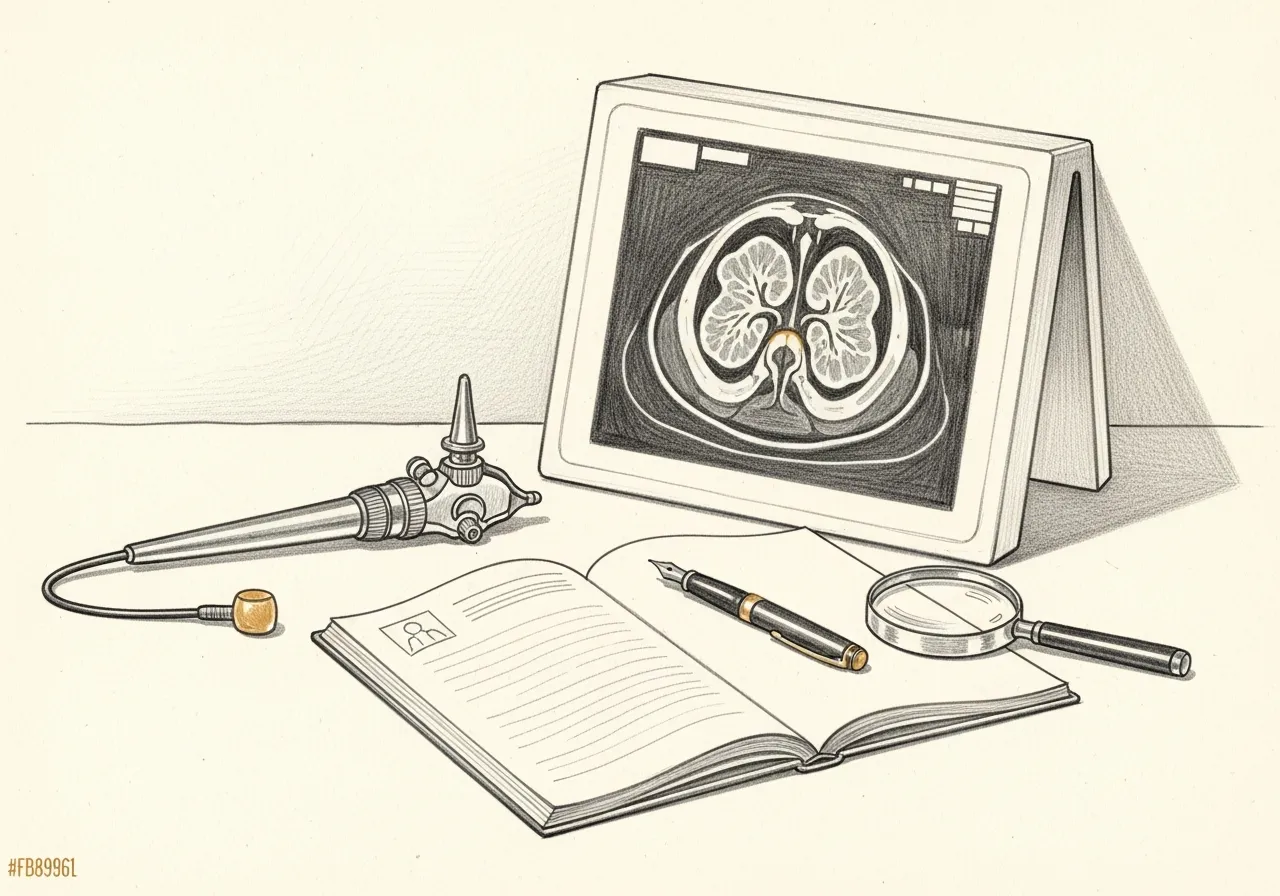
A complete head-and-neck examination is followed by nasal endoscopy when medically indicated. Flexible or rigid endoscopy can be performed during the visit; the nasal cavity is typically treated with topical decongestant and, when needed, topical anesthetic. The examination itself usually takes only a few minutes and allows direct assessment of the septum, turbinates, nasal passages, sinus drainage pathways, polyps, inflammation, mucus, and other abnormalities.
Findings are reviewed in real time on the monitor with the patient. This is often the first time a patient sees what is actually happening inside their own nose — a useful step in deciding what to do next.
Does nasal endoscopy hurt?
Most people find it mildly odd rather than painful. The nose is sprayed first with a decongestant and a numbing medicine, and the flexible scope is thinner than a pencil. It takes a few minutes. You may feel pressure or a tickle, and your eyes may water. There's no recovery time — you can drive and go back to work straight away.
What to bring to your consultation
- Any prior sinus CT scans, with the image files if available — the report alone is less useful.
- A list of current and previous nasal sprays, antibiotics, allergy medicines, and other treatments.
- A brief timeline of symptoms, including infections, loss of smell, and prior nasal or sinus procedures.
- Your insurance information and a list of questions; there is no need to stop prescribed medicines before the visit unless instructed.
How long the visit takes
Plan for about an hour. Most of that time is conversation — the history and the discussion of options — rather than the examination itself.
Part three: imaging review
When prior imaging is available, it is reviewed during the visit. When it is not, a sinus CT may be ordered before any surgical recommendation. The imaging plan is matched to the clinical question, not requested by default.
Part four: the decision tree
Only after examination, endoscopy, and (when needed) imaging is the conversation about treatment options appropriate. For some patients, optimization of medical therapy is the right next step. For others, a targeted intervention is indicated — and the technique is chosen to match the specific anatomy.
- Endoscopic sinus surgery (FESS) for established chronic disease or significant polyps
- Balloon sinuplasty for selected patients with recurrent obstruction in specific anatomical patterns
- Septoplasty or turbinate reduction when an obstructive component is contributing
- Conservative management with continued medical therapy when surgery is not yet indicated
Procedures used in this practice include endoscopic sinus surgery and balloon sinuplasty; the recommendation is matched to anatomy rather than chosen by default.
"A sinus operation chosen before a sinus diagnosis is not a clinical plan. The order matters."
Insurance and practical planning
Sinus procedures with a documented functional indication are frequently covered by insurance. Benefits are verified before any procedure is scheduled. The Manhattan office is at 923 Fifth Avenue on the Upper East Side; out-of-town patients can begin with a virtual consultation before traveling to the practice.
Sinus consultation FAQs
Do I need a CT scan before my first visit?
No. If you have a recent one, bring it. If not, a CT is ordered only if it would change the plan — for example, when symptoms are chronic or surgery is being considered.
Will I be told I need surgery at the first visit?
Only if the history, examination, and imaging clearly support it. Many patients leave with an adjusted medical plan instead. No decision is expected on the day.
Can I have a virtual consultation?
Yes, as a first step — particularly for out-of-town patients. An in-person examination with endoscopy is needed before any procedure is planned.
Continue Reading