Double Board Certified · Adolescent Rhinoplasty
Teenage Rhinoplasty
When a teenager can safely have rhinoplasty: nasal growth, emotional readiness, breathing, and timing around school and sports.
ABFPRS
Facial Plastic & Reconstructive Surgery
ABOto
Otolaryngology — Head & Neck Surgery
AAFPRS
Fellowship Director

In Consultation
"Adolescent rhinoplasty is a parent-and-patient conversation. The most important question is timing, not technique."

A Note from Dr. Mourad
"The decision is not simply whether rhinoplasty can be performed. It is whether the adolescent is physically mature, personally motivated, emotionally ready, and able to participate in a careful recovery."
— Dr. Moustafa Mourad, MD
Medically reviewed by Moustafa Mourad, MD, FACS — dual board-certified in Facial Plastic & Reconstructive Surgery and Otolaryngology–Head & Neck Surgery; Clinical Assistant Professor of Otolaryngology at New York Medical College; AAFPRS Fellowship Director. The medical review identifies the anatomy, evidence, limits, and questions patients should understand before choosing a procedure.
Last reviewed: June 2026
Overview
What is teenage rhinoplasty?
Teenage rhinoplasty is a first-time nasal operation considered only after nasal and facial growth has progressed sufficiently for the proposed change. The technical principles overlap with adult rhinoplasty; the difference is the developmental, emotional, consent, and family-support framework around the decision.
Age ranges can guide discussion, but they do not establish candidacy by themselves. Nasal growth, overall facial development, growth history, sex-related growth patterns, trauma, breathing symptoms, and physical examination are considered together. Some patients are ready within common adolescent age ranges; others should wait longer.
It is considered when a structural concern — a dorsal hump, a deviated bridge, a bulbous or droopy tip, post-traumatic deformity — or a functional concern such as a deviated septum has produced a persistent, patient-driven request, not a parent-driven one. Motivation must come from the teenager.
The teenager's motivation must be stable and personal. A request driven mainly by a parent, partner, bullying event, social-media trend, filter, or upcoming occasion requires more time and discussion. Deferring surgery is an appropriate clinical recommendation when maturity, expectations, health, or family support is not yet aligned.
Candidacy
Four questions before adolescent rhinoplasty is recommended
No single favorable answer is enough. The recommendation depends on the full clinical and developmental picture, and more than one consultation may be appropriate before a decision is made.
- —Has nasal and facial growth progressed enough? Growth history, examination, and dental or facial development are reviewed; imaging is used only when clinically useful
- —Does the teenager personally want the operation? The patient should describe the concern and desired change in their own words
- —Are expectations stable and realistic? The patient should understand swelling, asymmetry, risk, limits, and that simulation is not a guarantee
- —Can the family support recovery? Transportation, postoperative care, school absence, sports restrictions, medication supervision, and follow-up must be practical
Timing & Logistics
When breathing, trauma, school, or sports affects timing
Significant obstruction, severe septal deviation, nasal-valve compromise, or a post-traumatic deformity may justify earlier functional evaluation than a purely cosmetic concern. Medical treatment for allergy or inflammation is optimized when appropriate so reversible congestion can be separated from fixed structural obstruction. Functional need does not remove the requirements for careful consent, realistic expectations, preserved support, and family involvement.
Families commonly plan approximately one to two weeks away from highly visible school or social commitments, depending on bruising and comfort. Contact sports, collision-risk activities, heavy exertion, and pressure from glasses or protective equipment may require longer restrictions based on the operation and healing.
The general rhinoplasty gallery is provided for broad educational context only and does not establish an adolescent patient's candidacy or predict a result. Teenage cases should be identified as such only when age and consent documentation permit; adult or young-adult cases must never be relabeled as teenage outcomes.
An Established Academic Authority
Double board certification. Fellowship director. Published author. A surgeon's surgeon.
ABFPRS
Board Certified
American Board of Facial Plastic & Reconstructive Surgery
ABOto
Board Certified
American Board of Otolaryngology — Head & Neck Surgery
NYMC
Clinical Assistant Professor
Otolaryngology · Clinician Scholar Pathway
AAFPRS
Fellowship Director
American Academy of Facial Plastic and Reconstructive Surgery
Textbook
Published Author
Contributions to the academic literature of facial plastic surgery
Dual board certification in both Facial Plastic & Reconstructive Surgery and Otolaryngology — Head & Neck Surgery.
01 · Why Dr. Mourad
Diagnosis first, then a plan that fits.
Dr. Mourad evaluates adolescent candidacy across the anatomic, developmental, and family picture rather than relying on any one factor.
No teenage rhinoplasty is recommended at the first visit; multiple consultations with the patient and parent are the standard.
02 · Ideal Candidates
Who benefits most from this operation.
Candidacy is determined together at consultation. The most satisfied patients share three things in common.
I
Sufficiently Mature Anatomy
Growth history, nasal and facial development, trauma, breathing needs, and physical examination support the timing; a birthday alone does not establish candidacy.
II
Patient-Driven Motivation
The patient — not a parent — must clearly want the operation and be able to articulate specifically what bothers them.
III
Family Support
A supportive family environment is essential for recovery, post-operative care, and realistic expectation-setting.
Example Case
Teenage Rhinoplasty Before and After
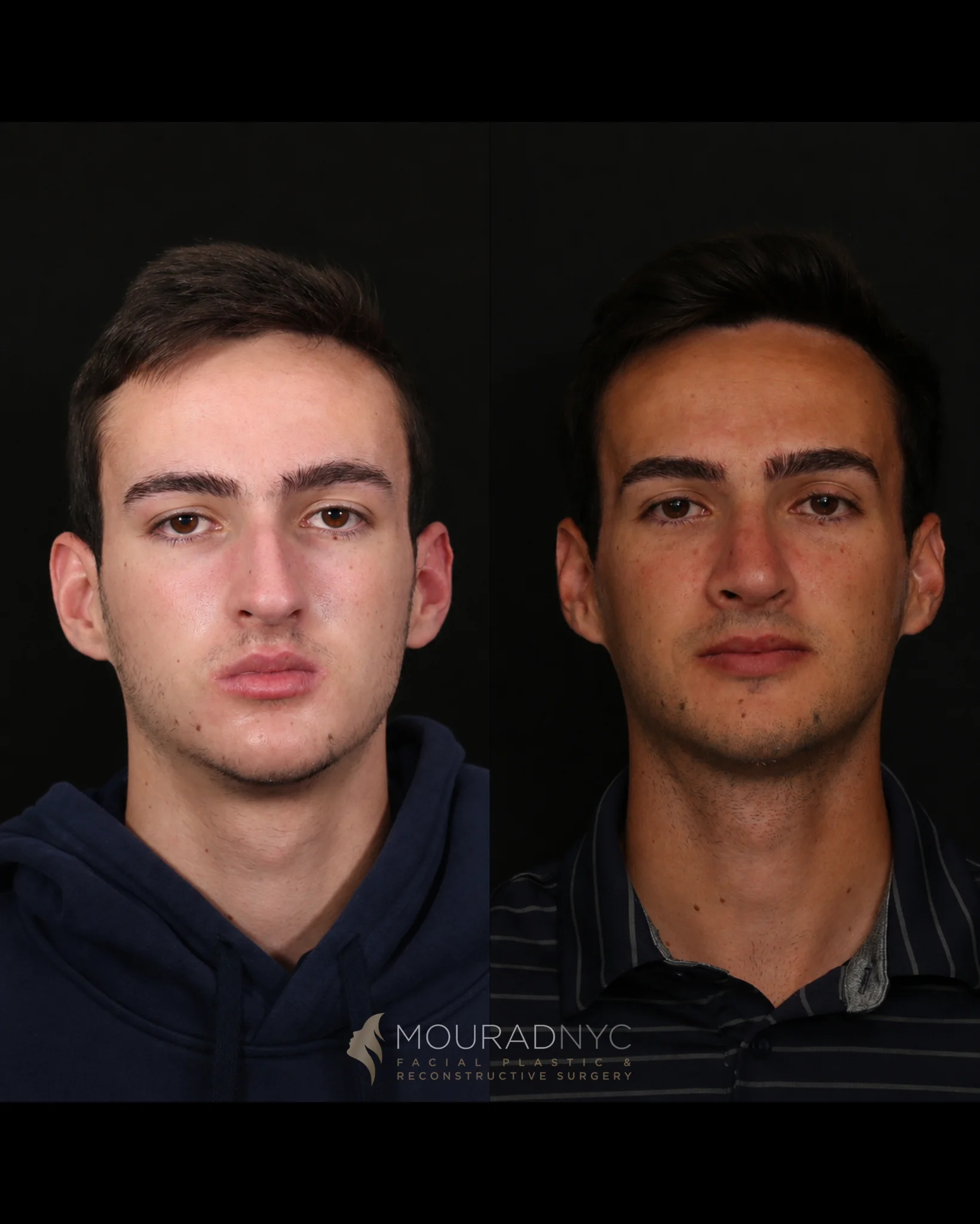
A documented male patient who underwent primary rhinoplasty at age 17, shown five years after surgery. Photographed in standardized studio conditions with written consent on file. Individual results vary; this case is representative, not predictive.
Rhinoplasty · Teen · Male
Primary rhinoplasty performed for a male patient at age 17, shown five years after surgery. Documented in frontal, lateral, and three-quarter views before and after surgery; photographed in standardized studio conditions with written consent on file. Results vary by patient; this case is representative, not predictive.
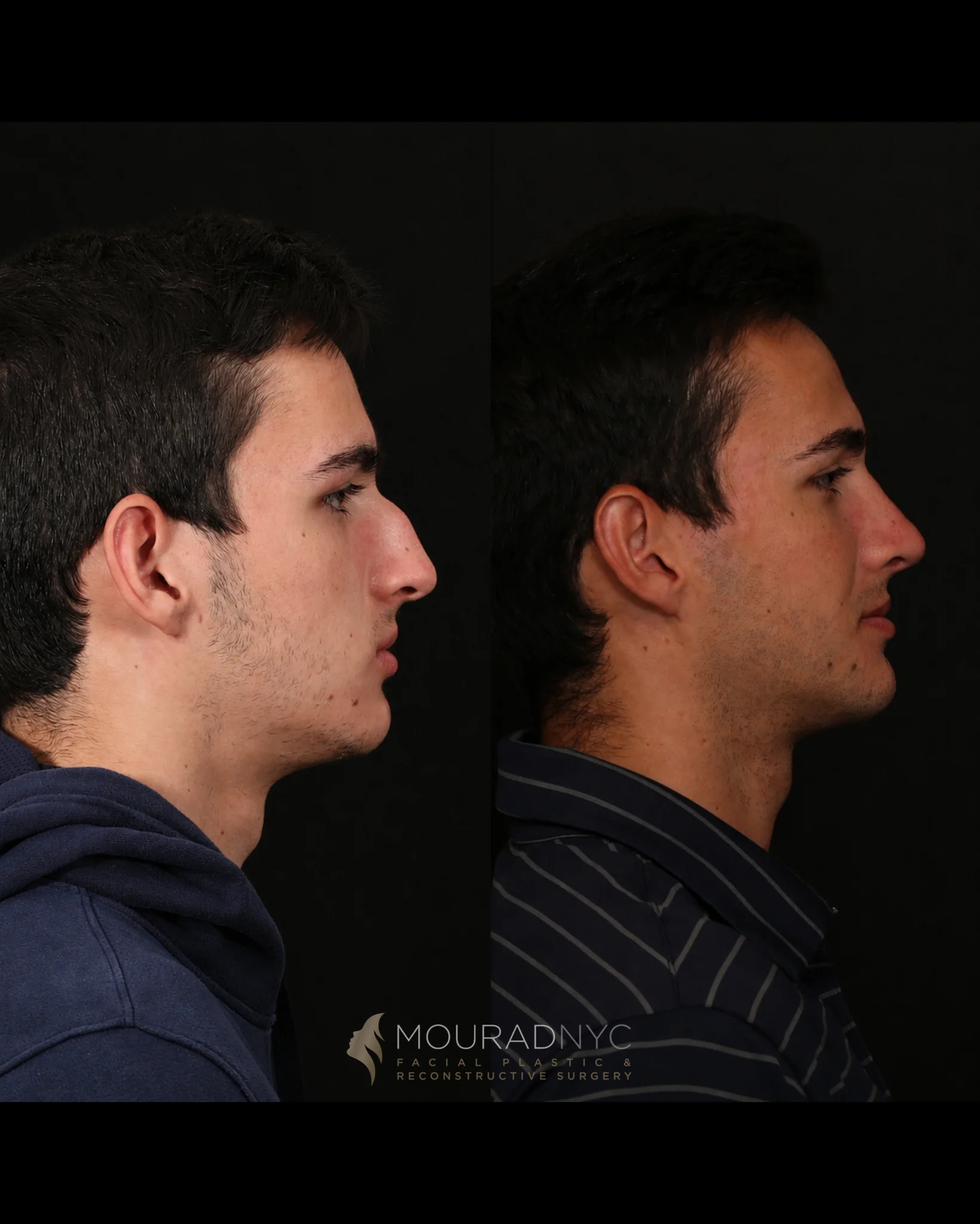
Right lateral profile — pre-operative and five years post-operative
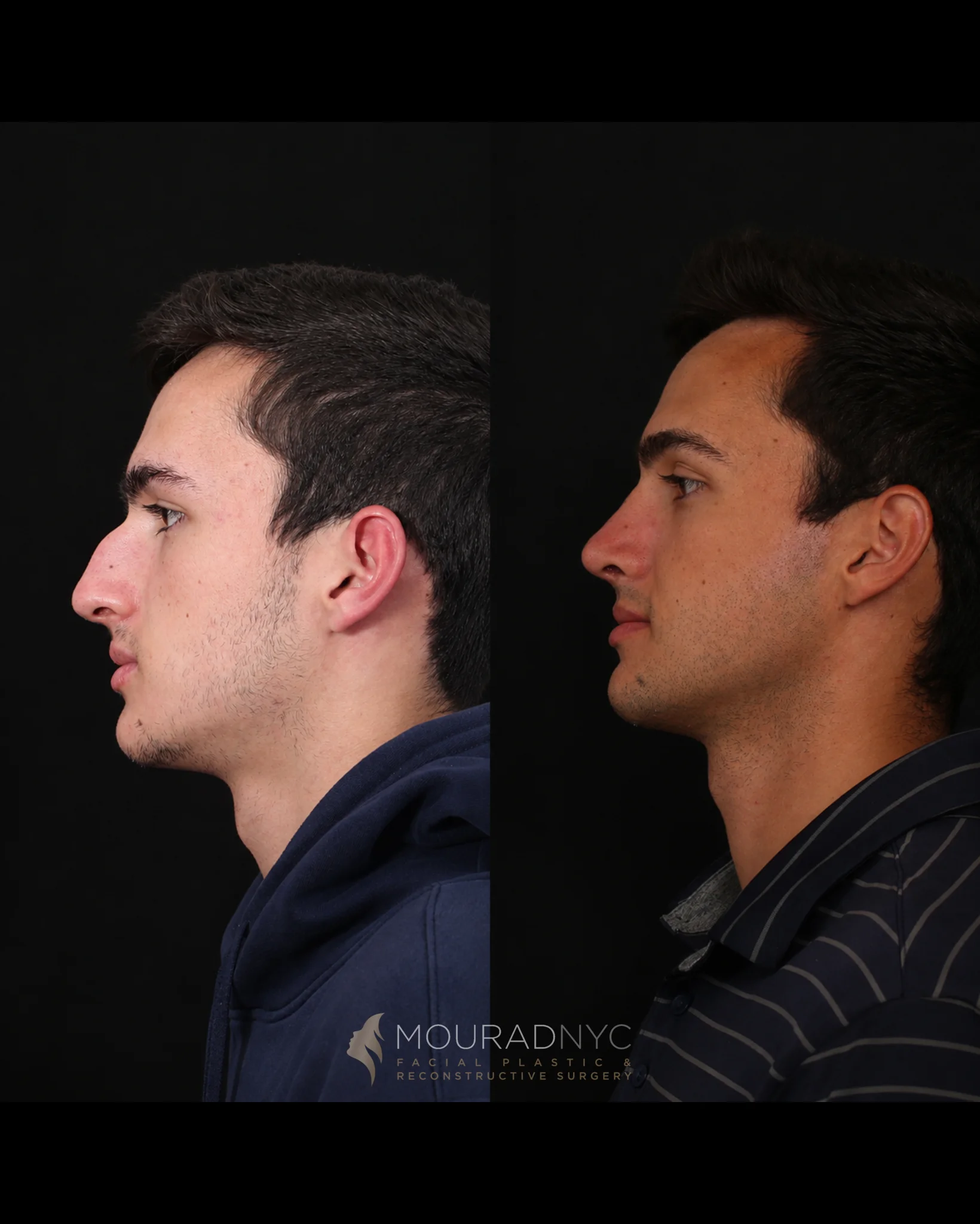
Left lateral profile — pre-operative and five years post-operative
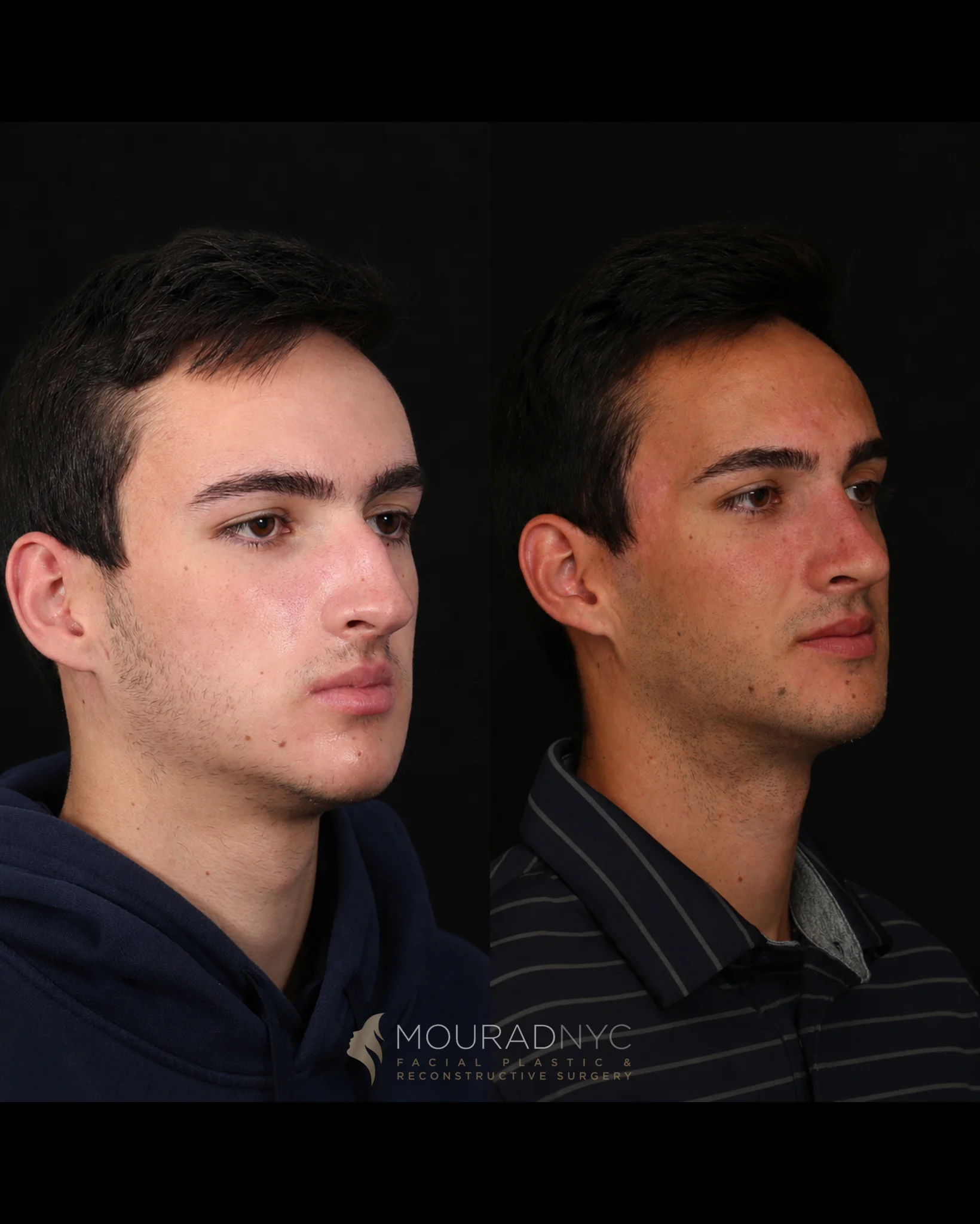
Right three-quarter view — pre-operative and five years post-operative
Pre and post-operative comparison · Photographed in standardized studio conditions · Written consent on file
If this describes you, the next step is a quiet, unhurried conversation — not a sales call.
An Honest Note
When this operation may not be right for you.
Patients whose motivation is to please a parent, partner, or social media audience are not the right candidates regardless of anatomic readiness.
Patients with active body dysmorphic features around the nose are managed with appropriate referral first.
Patients with ongoing acne or active intranasal allergic disease benefit from optimization before any nasal surgery.
Smokers — even occasional — must commit to abstinence well before and after surgery.
03 · Approaches
Three paths for the younger patient.
When candidacy is established, technique is selected for the anatomy, airway, goals, and long-term stability.
1 of 3 · Structural Rhinoplasty
04 · Technique
Conservative & structural — the right operation for the adolescent nose.
The adolescent nose is planned with restraint and long-term proportion in mind.
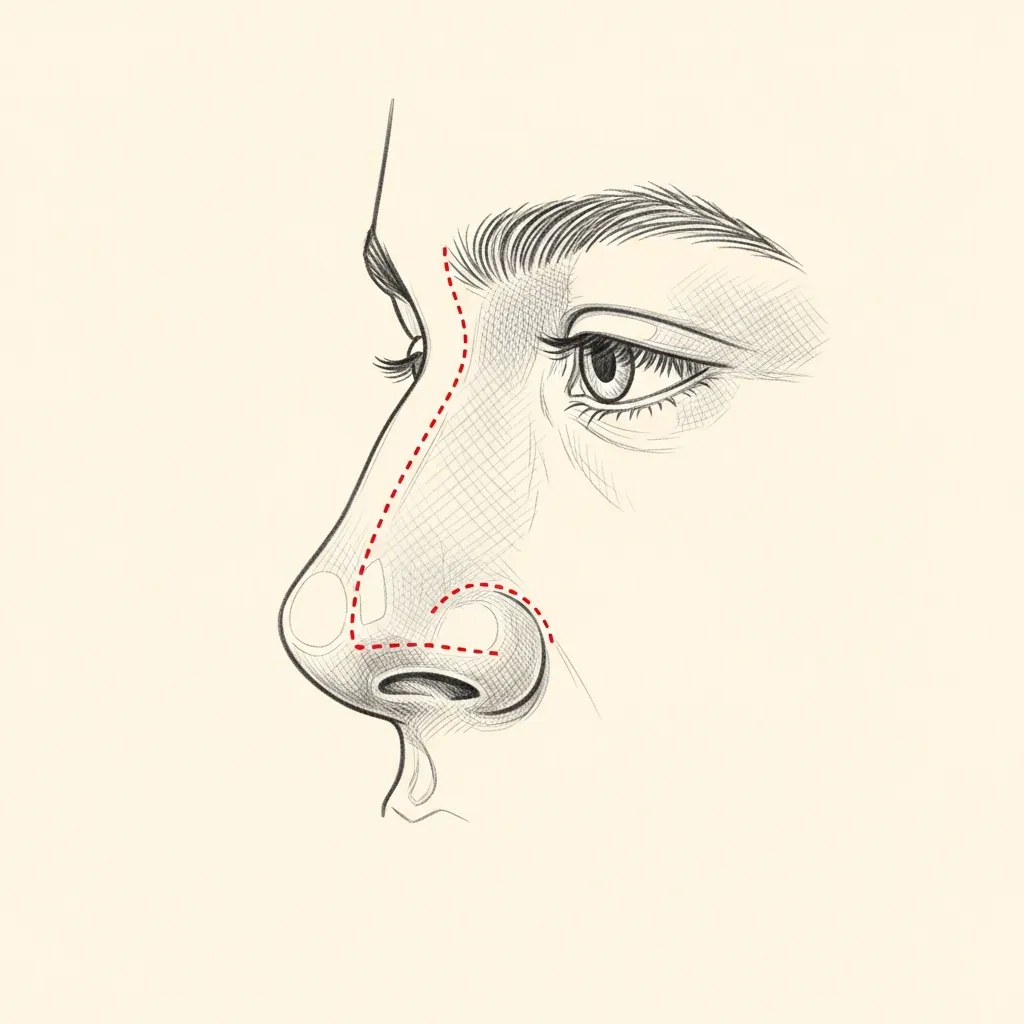
Conservative
No more than the anatomy requires
Modest reduction, conservative tip rotation, and preservation of support are considered according to the individual anatomy.
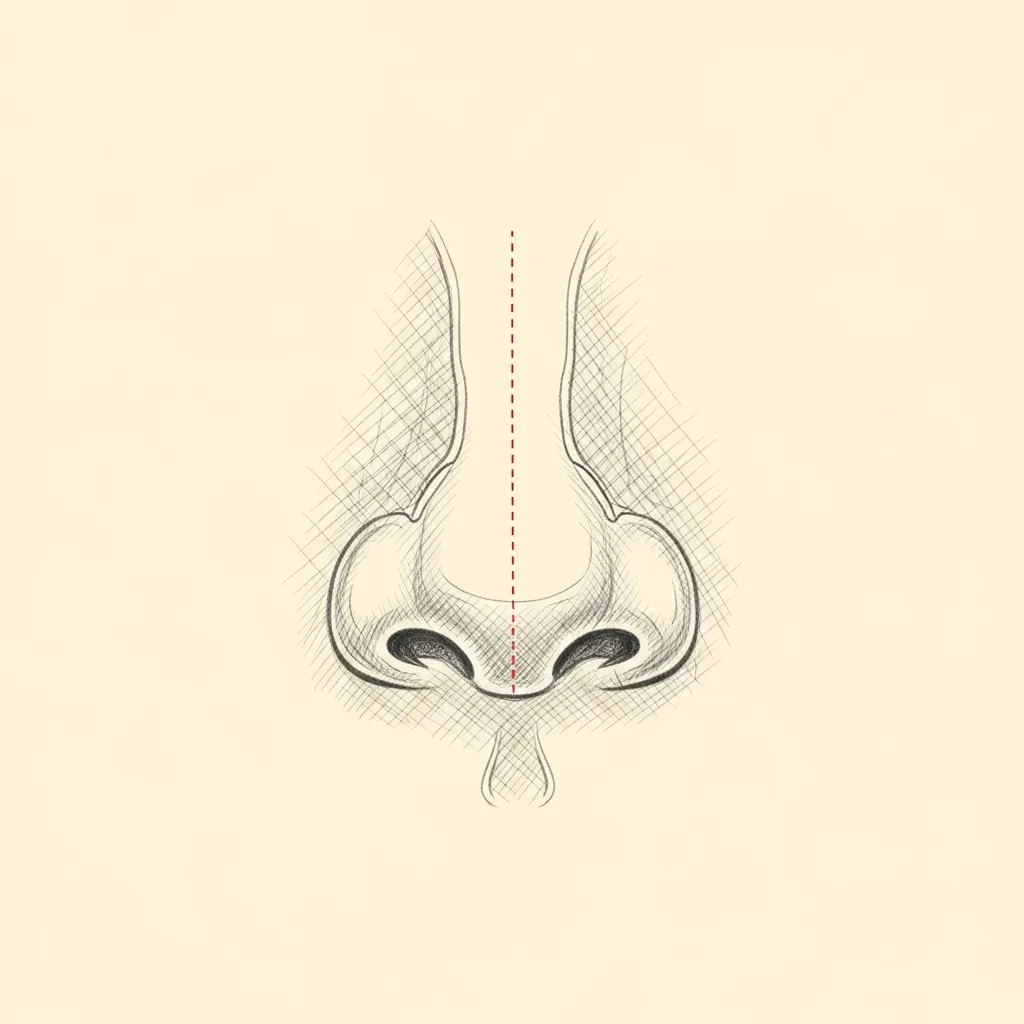
Structural
Cartilage support for long-term shape
Columellar struts, lateral crural reinforcement, or tip sutures may be used when the framework needs them.
Illustrative diagrams. Every adolescent rhinoplasty is individual and conservatively planned.
Begin the conversation
A careful, honest evaluation is the right first step.
Cost & Insurance
Teenage Rhinoplasty Cost & Insurance in NYC
The cost of teenage rhinoplasty depends on the surgical plan, the techniques required, the type of anesthesia, the surgical facility, and whether functional nasal airway concerns are addressed. Candidacy and timing are evaluated carefully, including physical maturity and motivation.
Cosmetic rhinoplasty is generally elective and self-pay. When functional nasal airway surgery is medically necessary and performed at the same time, that portion may be submitted only when the family's plan includes applicable out-of-network benefits and its documentation requirements are met. Coverage and payment are not guaranteed. After consultation, the office provides a personalized estimate. Payment is arranged directly with the practice.
What May Affect Cost
- Complexity of the surgical plan
- Techniques required
- Whether functional airway work is included
- Type of anesthesia
- Surgical facility
- Insurance plan requirements
The prices listed are provided as general estimates of typical surgical investment and are not guaranteed quotes. Surgical fees vary based on the patient's anatomy, the complexity of the procedure, previous surgery, operative time, anesthesia and facility requirements, implants or hardware, virtual surgical planning when applicable, and whether multiple procedures are performed together. An exact surgical fee is provided following consultation and development of an individualized treatment plan.
05 · In Dr. Mourad's Words
Educational videos.
Short educational films and patient perspectives from the Manhattan practice.
Dr. Mourad in Practice
An overview of the practice and philosophy.
Patient Perspective
A patient discusses her experience before, during, and after surgery.
Inside the Consultation
How Dr. Mourad evaluates anatomy, goals, and candidacy.
06 · Recovery
What healing actually looks like.
Stage 01
First 24 Hours
Initial recovery focuses on rest, hydration, and following all post-operative instructions exactly. Pain is managed with multi-modal non-narcotic protocols where appropriate.
Stage 02
Week 1
Swelling and bruising peak in the first few days and improve steadily through the first week. Most patients are presentable for casual social activity by the end of week two.
Stage 03
Weeks 2 – 4
Through weeks two to four the early result begins to settle. Return to exercise, contact sports, glasses, and protective equipment follows the individual operative plan rather than a fixed school or team calendar.
Stage 04
Months 1 – 6
The final refined result emerges progressively over the following months as residual swelling continues to resolve. Follow-up visits are scheduled across the first year.
Have a specific question?
Send a brief note describing your anatomy or concerns — the office will route it directly to Dr. Mourad for review.

Before You Arrive
Your consultation, prepared.
Bring photographs relevant to your concern, when available.
Bring records from any prior surgery, when available.
List current medications, supplements, and blood-thinning agents.
Note any prior anesthesia issues or chronic medical conditions.
Allow 60 minutes for the first consultation.
Bring questions; no decisions are made at the first visit.
Frequently Asked
Patient questions, honestly answered.
There is no universal birthday that makes surgery appropriate. Growth history, physical examination, facial maturity, breathing needs, motivation, expectations, and family support are considered together. Common age ranges are only general guidance.
A parent or guardian is essential for consent and recovery support, but the request should come from the teenager. A patient who does not personally want the operation or cannot explain the goal should not be pushed toward surgery.
Clinical references
This page draws on published clinical practice guidelines and public-health references. These sources inform general patient education and do not replace an individual evaluation with Dr. Mourad.
- 01Ishii LE, et al. Clinical Practice Guideline: Improving Nasal Form and Function after Rhinoplasty. Otolaryngology–Head and Neck Surgery. 2017;156(2 Suppl):S1–S30. PMID: 28145823. DOI: 10.1177/0194599816683153. AAO-HNSF guideline
- 02Fuller JC, Levesque PA, Lindsay RW. Functional septorhinoplasty in the pediatric and adolescent patient. International Journal of Pediatric Otorhinolaryngology. 2018;111:97–102. PMID: 29958624. DOI: 10.1016/j.ijporl.2018.06.003. PubMed
- 03van Zijl FVWJ, et al. Evaluation of Measurement Properties of Patient-Reported Outcome Measures After Rhinoplasty: A Systematic Review. JAMA Facial Plastic Surgery. 2019;21(2):152–162. PMID: 30605215. DOI: 10.1001/jamafacial.2018.1639. PubMed
- 04Chen K, Zhou L. The Effect of Functional Rhinoplasty on Quality of Life: A Systematic Review and Meta-Analysis. Aesthetic Plastic Surgery. 2024;48(5):847–854. PMID: 37173413. DOI: 10.1007/s00266-023-03390-3. PubMed
The Most Important Step
Your expert consultation.
A careful evaluation by a double board-certified physician is the right first step. The conversation is unhurried, the diagnosis is honest, and the operative plan is built around what your anatomy can sustain and what you actually want.